
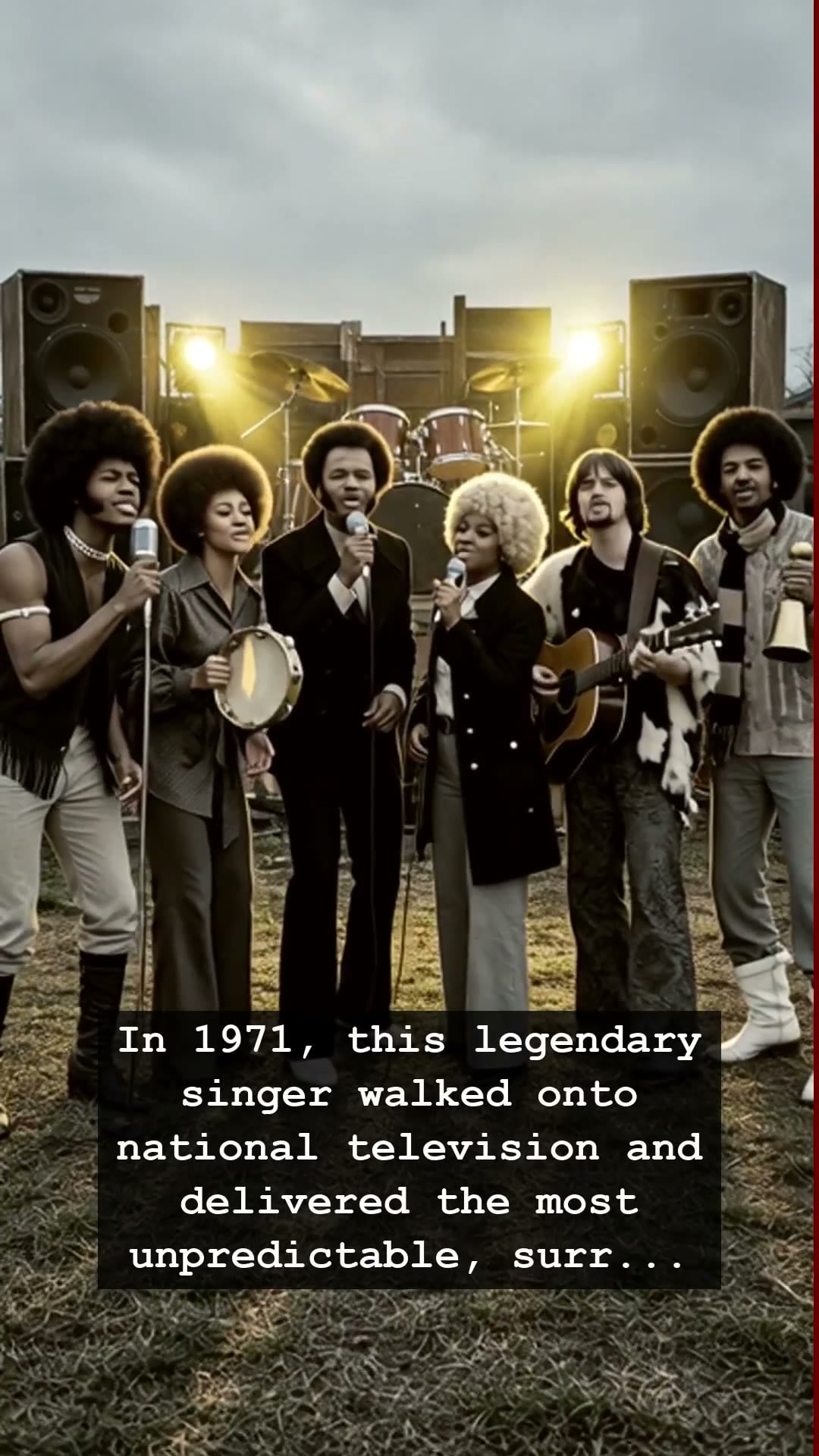
It was 1971, and America was settling into the colors of a new decade, but on the set of a major national broadcast, the air was turning cold. Sly and the Family Stone, the pioneers of funk who once bridged the gap between black and white audiences with infectious rhythms, were unraveling. The frontman, Sly Stone, walked onto that stage not as the charismatic leader fans adored, but as a man haunted by the suffocating weight of his own creation. Millions watched in silence as he delivered a performance so erratic, so cryptically whispered, that it felt like watching a fever dream unfold in real-time. The studio crew froze; the audience sat in a state of confused disbelief, witnessing the first public cracks in a genius who had reached the stratosphere of superstardom.
To understand the gravity of that moment, one must look back at the chaotic brilliance of Sly and the Family Stone. They were the architects of a sound that defined the late sixties—a blend of soul, funk, and psychedelic rock that turned Woodstock into a spiritual experience. But the transition into the seventies brought a darker, more cynical edge. Fame had become a prison, and the relentless pressure of constant touring and the temptations of the era began to take a toll. As the golden years of the Jukebox era faded, Sly Stone found himself caught in a spiral of disillusionment. That broadcast wasn’t just a performance; it was the public unraveling of a musical icon who had lost his way in the haze of substance abuse and professional alienation.
The scene on television was jarring. While the rest of the band tried to maintain their signature tight, syncopated rhythm, Sly appeared disconnected, almost ghostly, as if he were broadcasting from a different dimension. His murmurs were barely audible, his demeanor erratic—a stark contrast to the vibrant, high-energy icon who had electrified stadium crowds just months prior. It was a harrowing look at the darker side of fame, a narrative that rarely made it onto the polished covers of music magazines. Behind the scenes, the internal dynamics of the band were splintering as individual egos and creative differences made the family atmosphere crumble from within.
This incident remains one of the most surreal turning points in rock history. It captures the transition from the optimistic communal vibes of the late sixties to the jagged, unpredictable realities of the early seventies. For those of us who lived through the era of the Walkman and the vinyl crackle, it is a reminder that even our most untouchable heroes were mere mortals, fighting invisible wars. The legacy of Sly and the Family Stone is still felt in every beat of modern funk, but that chilling 1971 broadcast serves as a sobering memento of the cost of genius.
Decades later, we still find ourselves circling back to this story. We listen to their records, mesmerized by the basslines that once conquered the world, while acknowledging the fragility of the man who led the charge. The memory of that night on television lingers as a testament to the power and the peril of the spotlight. It was a raw, unfiltered look at a legend before the industry had learned how to sanitize its icons. Even now, when that music hits the airwaves, we cannot help but look back and wonder what else was happening behind the curtain. Do you remember where you were when the music started to shift, or is this a piece of history that slipped through your fingers like smoke?