
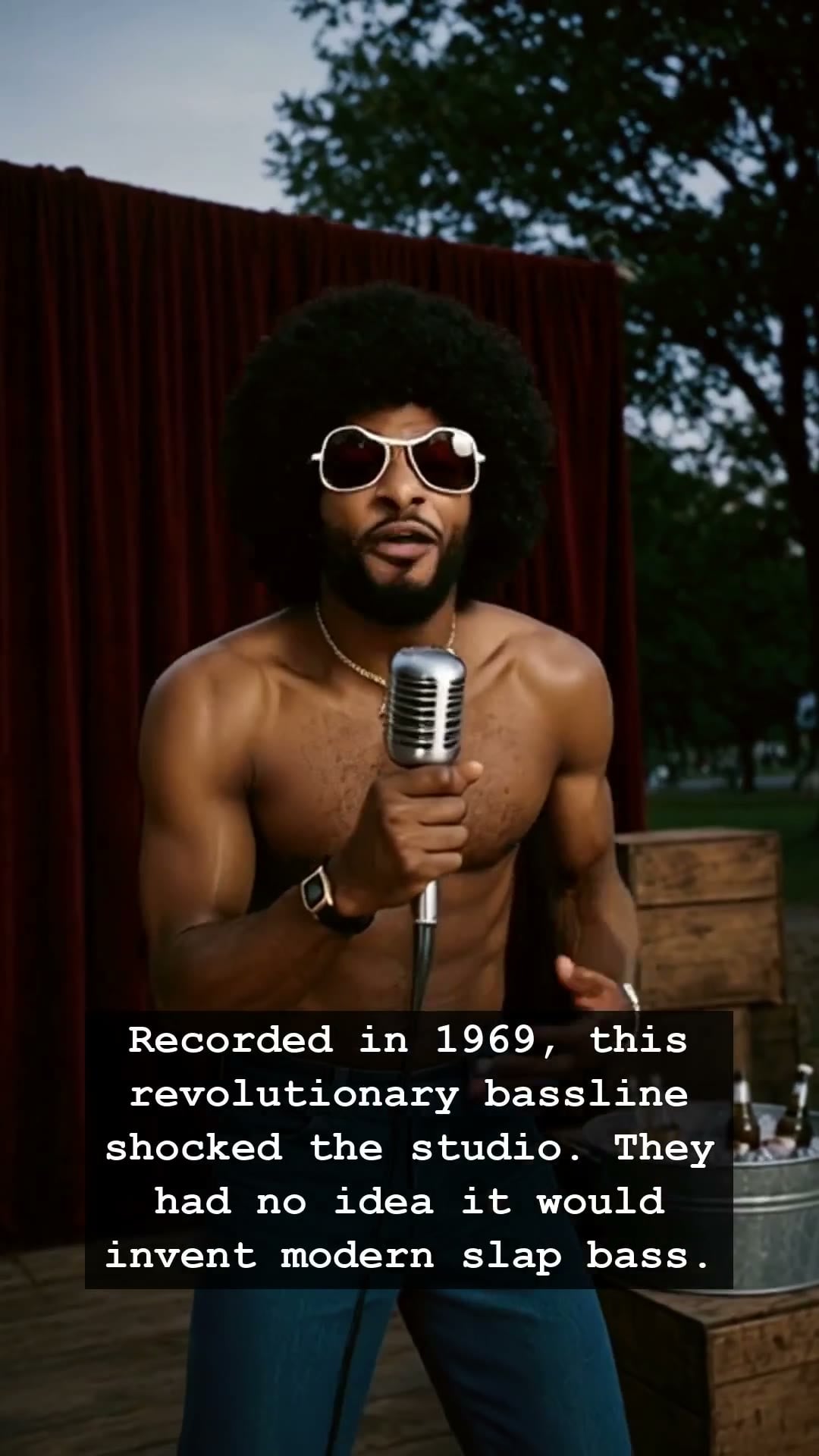
It was 1969, a year defined by the cultural earthquake of Woodstock and a seismic shift in the American sonic landscape. Inside a dimly lit, smoke-filled recording studio, Larry Graham, the bassist for Sly and the Family Stone, was about to do something that defied every rule in the book. As the tape rolled, he dug his thumb into the strings of his bass with a percussive snap that sounded more like a drum kit than a traditional guitar. The studio executives in the booth were not merely confused; they were visibly terrified. To their ears, this wasn’t music—it was noise. They had no idea that in that precise, rebellious moment, they were witnessing the birth of the slap bass technique, a revolutionary sound that would go on to define the DNA of funk and modern pop for decades to come.
Sly and the Family Stone were always a band operating on the fringes of convention. Led by the enigmatic Sly Stone, they were a vibrant, multi-racial, mixed-gender collective that felt like a glimpse into a utopian future, even as the realities of the late sixties threatened to tear the country apart. Their hit Thank You (Falettinme Be Mice Elf Agin) became the vehicle for this newfound rhythmic violence. Before this track, the bass was a background instrument, a steady heartbeat designed to stay out of the way. Graham turned it into a lead soloist, a rhythmic engine that demanded the listener’s absolute attention. It was raw, it was aggressive, and it was undeniably addictive.
Yet, the brilliance of the band was often overshadowed by the dark clouds of fame and personal instability. Behind the polished grooves and the infectious optimism of their hits, the internal tension within Sly and the Family Stone began to mount. The pressure of maintaining their status as funk pioneers, coupled with the heavy indulgence in the excesses of the era, turned the recording studio into a pressure cooker. This wasn’t just a band; it was a complex social experiment that eventually fractured under the weight of expectations and substance use. The same intensity that fueled their revolutionary sound also fueled the erratic behavior that would eventually lead to their decline.
Despite the drama and the eventual dissolution of the original lineup, the legacy of that 1969 session remains untouched. Every time you hear a modern track with a heavy, thumb-slapping bass line, you are hearing the ghost of Larry Graham in that studio. The band captured the soul of a generation that was looking to break free from the past. Whether you remember spinning their records on a heavy vinyl turntable or catching them on the radio during the height of the funk explosion, their music remains an essential chapter of American history.
Today, we look back at Sly and the Family Stone not just for their fashion or their bold arrangements, but for their sheer audacity. They risked everything to change the way we hear the world, proving that even a single, unconventional choice in a recording booth can echo through time. Does that iconic, snapping groove still make your foot tap? It is a testament to their enduring power that, even fifty years later, it still sounds like the future.