
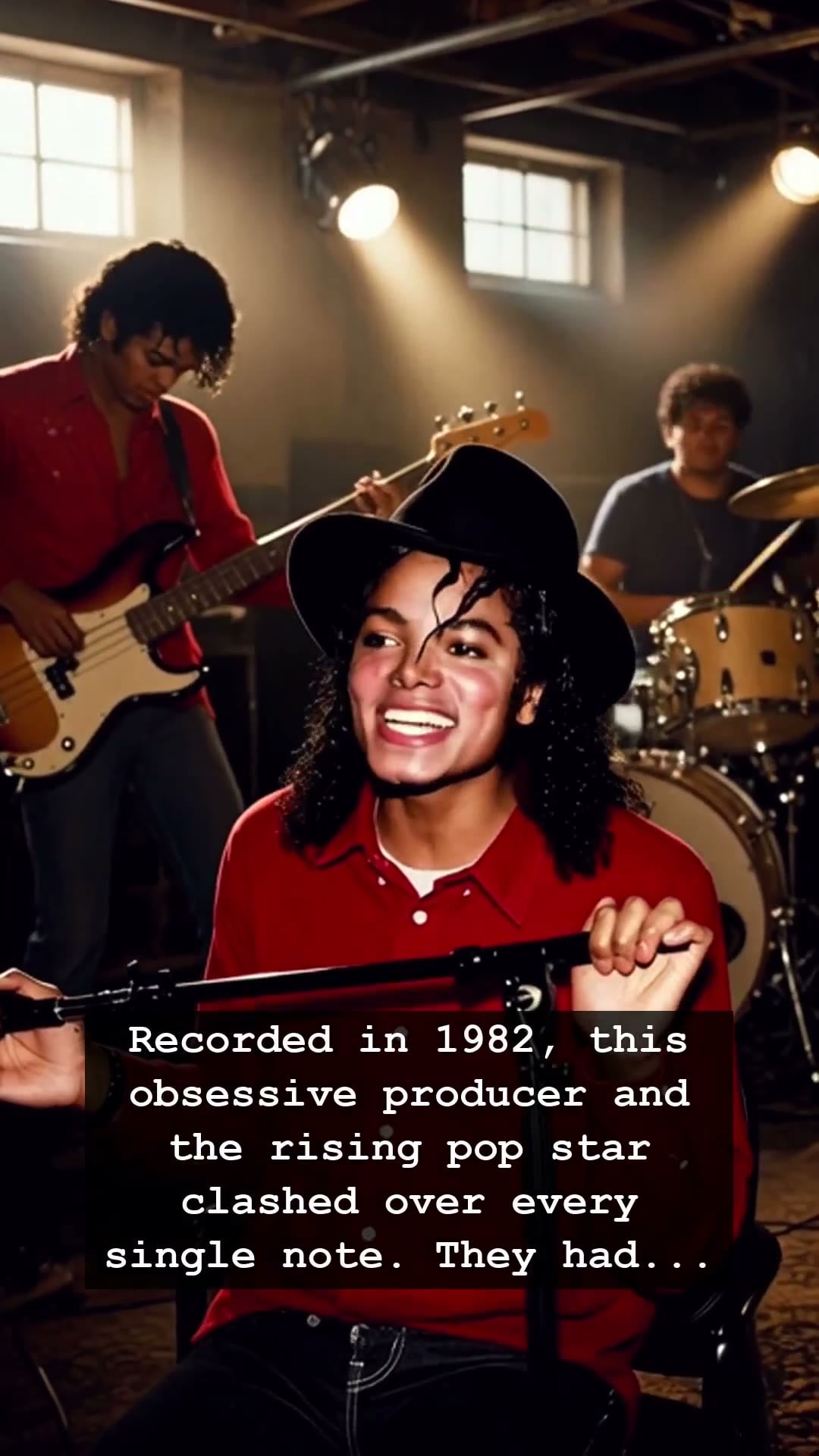
It was 1982, and the air inside Westlake Recording Studios in Los Angeles was thick with an electric, almost suffocating tension. The neon glow of the era’s burgeoning pop landscape felt worlds away from the claustrophobic booth where a perfectionist producer and an ambitious young star stood on the precipice of musical history. They were crafting what would become the best-selling album of all time, yet at the moment, they were locked in a grueling battle over every single note. For Michael Jackson, the vision was clear but raw; for Quincy Jones, it required the precision of a master surgeon. This wasn’t just a recording session; it was a high-stakes collision of genius that nearly tore the project apart before it could even begin.
At the heart of the friction was an obsession with sound that bordered on the fanatical. Quincy Jones, a man who had already conquered the jazz and orchestral worlds, viewed the album as a rigorous academic project. Michael Jackson, evolving from the child star of the Motown era into a global force, demanded a visceral, kinetic energy that defied traditional studio constraints. During the creation of tracks that would define the decade, they clashed repeatedly. The legendary bassline of Billie Jean, now a staple of every jukebox and radio station since the early eighties, was a bone of contention. Jones wanted to trim the song’s long intro; Jackson argued that it made him want to dance. That specific creative tug-of-war is precisely why the song possesses such an irresistible, hypnotic pull that remains unshakable forty years later.
This era was defined by the transition from the disco fever of Studio 54 to the polished, synth-heavy production that MTV would soon broadcast into every living room. Michael Jackson and Quincy Jones were the architects of this sonic evolution. Yet, behind the scenes, the pressure was immense. The studio became a sanctuary and a prison. Jackson spent days perfecting a single vocal take, his voice straining against his own sky-high expectations, while Quincy Jones paced the floor, his ears finely tuned to the ghost notes and rhythmic textures that would eventually be polished to perfection. They were exhausted, sleep-deprived, and constantly pushing against the boundaries of what pop music could actually achieve.
It is fascinating to look back at these moments of conflict, knowing the cultural earthquake that followed. Their partnership was a delicate, volatile mix of Jackson’s raw, intuitive talent and the structural genius of Quincy Jones. The drama that unfolded in 1982 wasn’t a sign of failure, but rather the necessary friction required to forge a diamond. They navigated the weight of expectation and the dark underbelly of fame, choosing to pour their anxieties into the music rather than letting the pressure consume them.
Today, when we hear those iconic opening chords, we aren’t just listening to a hit song. We are hearing the echoes of a fierce artistic debate that changed the course of pop history forever. Their story serves as a reminder that the greatest art often emerges from the most intense struggles. Do you remember where you were when you first heard the album that redefined an entire generation?