
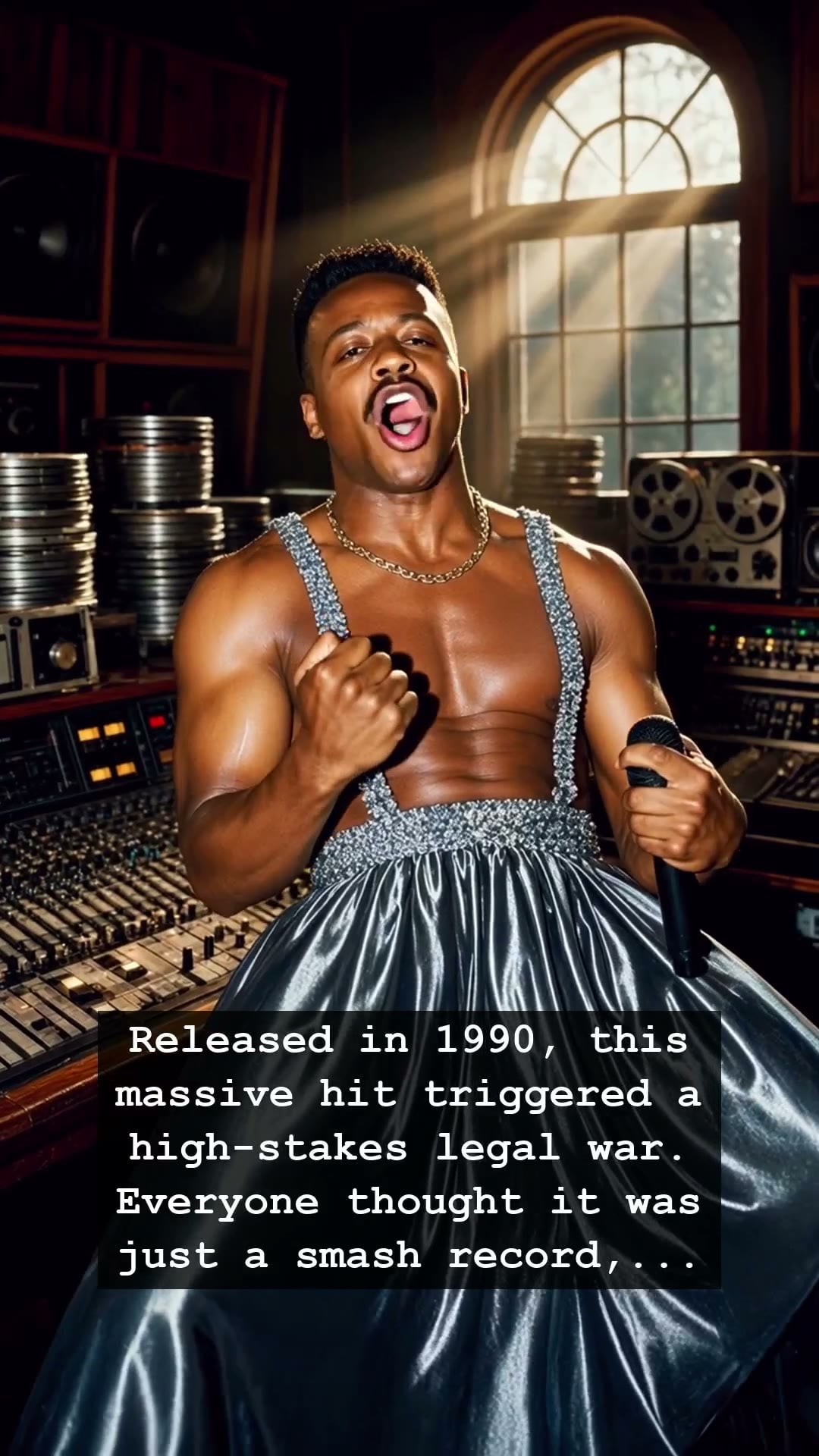
The year was 1990, and the world was dancing to a beat that felt like a neon-soaked dream. It was the era of oversized suits, hairspray, and the omnipresent pulse of MTV. When M.C. Hammer released his global mega-hit U Can’t Touch This, it felt like an overnight revolution that defined a generation. But behind the catchy synthesizers and the electrifying dance moves, a storm was brewing. The infectious, rhythmic bassline that drove the song to the top of the charts was not an original invention, but a direct lift from Rick James’s 1981 funk masterpiece, Super Freak. What started as a catchy pop moment soon descended into one of the most high-stakes legal battles in music history, forever altering how we view copyright and creativity.
Rick James was more than just a funk icon; he was a force of nature. With his signature braided hair and flamboyant stage presence, he lived life at full volume, often blurring the lines between raw artistic genius and the dark side of fame. During the peak of the disco and funk era, the studio was his sanctuary and his battlefield. When he heard his iconic riff being sampled without permission, his reaction was explosive. He didn’t just want credit; he wanted to challenge the very structure of the industry that had profited from his sweat and soul. The ensuing legal war wasn’t just about money; it was a desperate stand to reclaim ownership of his creative DNA in an age where sampling was quickly becoming the new industry standard.
Looking back, it is impossible to ignore the weight of that conflict. Before this case, the legal boundaries of music sampling were a murky wilderness. Artists were often left in the shadows, their lifework chopped, looped, and commodified without a second thought. Rick James stepped into the spotlight to fight for the rights of the originator. While he was often portrayed in the press as a volatile wildcard, his determination in the courtroom proved he was a fierce protector of his own legacy. The settlement ultimately required Hammer to credit James as a co-writer, a victory that sent shockwaves through the record labels of the time.
Even today, the reverberations of this 1990 legal clash are felt in every bedroom producer’s workstation and every major studio. Every time you hear a sample clearance credit on a modern track, you are witnessing the ghost of the battle Rick James fought decades ago. He forced the industry to reconcile with the fact that art is property, and even in the wild world of pop music, there are rules that demand respect. The drama of those days captured the essence of the transition from the analog grit of the seventies to the digital polish of the nineties.
When we listen to those classic tracks now, we hear more than just music; we hear the echoes of history. We hear the ambition, the betrayal, and the unyielding spirit of artists who refused to let their contributions be erased by time or corporate suits. Rick James remains a titan, a reminder that the best stories are often the ones that happened behind the velvet curtains of the recording booth. As you revisit his discography today, remember that every bass note carries a story, and every groove is a piece of a larger, much louder, musical war.