
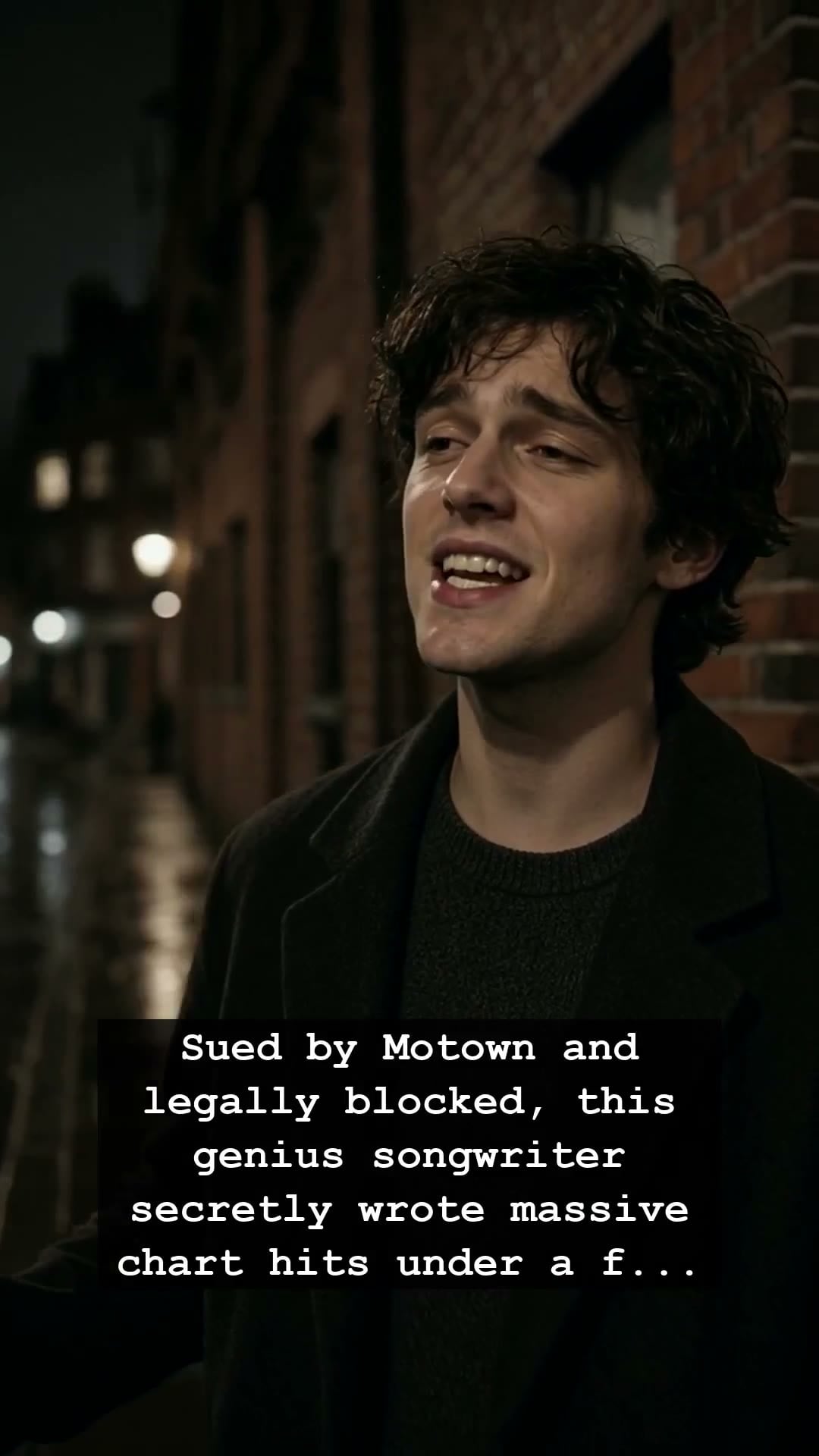
In the golden age of Motown, where the sound of young America was manufactured with clockwork precision, one man sat at the center of the storm. Brian Holland was not just a songwriter; he was an architect of the soul sound that defined the 1960s. Yet, his story is marred by the bitter sting of legal warfare. When a contract dispute turned into a scorched-earth battle with Motown Records, Brian Holland found himself in a nightmare: legally silenced and blocked from using his own name to release music. The label thought they had effectively neutered their greatest creative asset, assuming that without his name on the credits, his career would simply evaporate into the neon haze of history.
But genius is rarely contained by a courtroom gavel. While the executives at Motown were busy celebrating their legal triumph, the radio airwaves were being flooded with fresh, infectious hits that sounded suspiciously familiar. Listeners across America were dancing to tunes that captured the quintessential Motown magic, unaware that the mastermind behind these tracks was hiding in plain sight. Brian Holland had adopted an unlikely alias, a secret identity that allowed him to bypass the industry’s suffocating grip. He began writing under the name Edythe Wayne, a fictional persona that left record executives completely bewildered as to who this new songwriting powerhouse could possibly be.
It is a fascinating piece of music history that feels like a scene from a noir film. Picture the scene: the mid-sixties, the era of the jukebox and the transistor radio. Brian Holland, having been pushed into a corner, channeled his frustration into a stream of melodies that resonated with millions. Every time a hit record featuring the name Edythe Wayne hit the charts, it was a quiet, triumphant jab at the suits who thought they could silence his brilliance. It was a gamble that defied the rigid industrial machine of the era, proving that talent—much like the spirit of rock and roll itself—cannot be fully regulated or controlled by legal paperwork.
This period of musical espionage adds a layer of depth to the tracks we still hum today. When you look back at the craftsmanship of his work, from the complex harmonies to the infectious drum patterns, you realize that Brian Holland was not just writing songs; he was weaving the very fabric of American culture. The fact that he could sustain such a high level of quality while operating in the shadows speaks volumes about his work ethic and his stubborn refusal to fade away. It is the kind of drama that makes the history of soul and pop music so addictive to those who lived through the era and those who have discovered it since.
Today, we look back at the era of Motown as a golden age of artistic collaboration, yet stories like this remind us that it was also a place of intense personal conflict and professional betrayal. Brian Holland eventually emerged from the shadows, but the saga of Edythe Wayne remains a testament to the resilience of the artist. The next time you hear one of those classic Motown hits crackle through the speakers, remember the genius who had to hide his name just to keep his heartbeat in the music. True art, as Brian Holland proved, always finds a way to reach the people.