
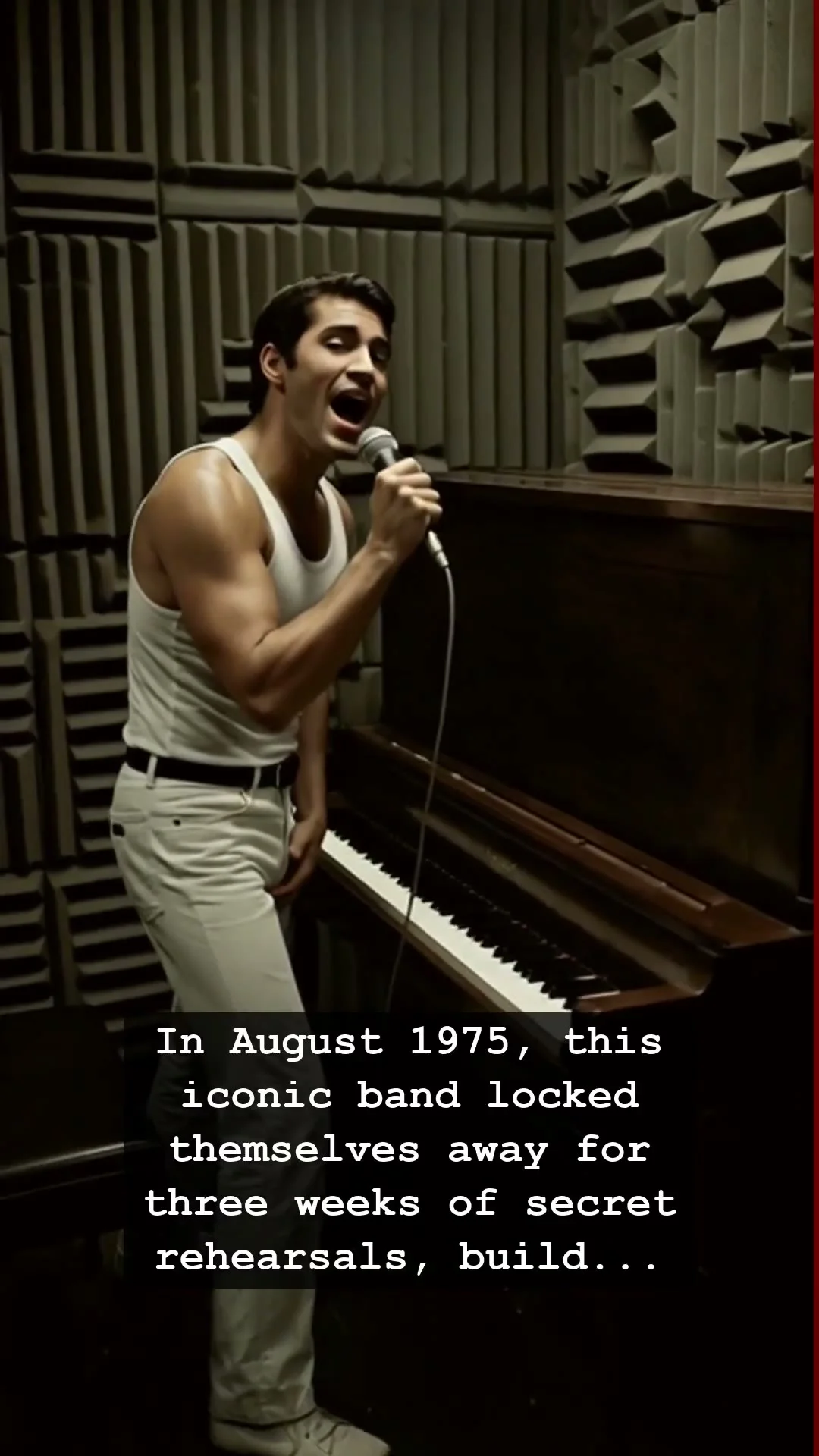
In August 1975, the British countryside held a secret that would forever change the trajectory of rock music. Deep within a secluded estate, far from the prying eyes of the press and the noise of London, the four members of Queen locked themselves away. The air was thick with the scent of cigarettes and the hum of amplifiers that had been pushed to their absolute limits. They weren’t just rehearsing; they were architecting what would become the most daring operatic masterpiece in the history of the genre. For three weeks, they operated in a veil of total silence, meticulously crafting a song that industry executives would soon label as far too long and utterly unmarketable for radio.
At the time, the band was struggling against the limitations of their own ambition. Freddie Mercury, Brian May, Roger Taylor, and John Deacon were under immense pressure to follow up their previous successes, yet they felt trapped by the conventional boundaries of rock. While the world outside was transitioning from the fading embers of the psychedelic era toward the polished sheen of the mid-seventies, Queen chose to retreat into the shadows. They spent countless hours in the studio, layering voices upon voices until the track sounded like a cathedral made of sound. Every note, every pause, and every operatic shift was debated with the intensity of a blood feud, yet they moved as a single, visionary unit.
Most people today remember the sheer spectacle of the song, but they often forget the suffocating uncertainty that preceded its release. When Bohemian Rhapsody finally hit the airwaves, it was an anomaly. In an era where the three-minute pop single reigned supreme, this six-minute epic defied logic. It was a bizarre, beautiful cocktail of hard rock and Victorian opera that seemed destined to fail. Yet, the public responded with an fervor that caught the music industry completely off guard. It wasn’t just a song; it was a cultural event that redefined what rock music could achieve when artists were given the freedom to push past their breaking points.
The isolation of that summer in 1975 serves as a testament to the band’s relentless pursuit of perfection. The drama of the rehearsals, the internal friction of four creative geniuses, and the daring gamble they took remains a pinnacle of rock history. It is a reminder of a time when albums were crafted with patience rather than computer algorithms. When you listen to the swirling harmonies today, you are hearing the echo of those three weeks in the dark, where the members of Queen gambled their legacy on a daring artistic vision.
Even decades later, Bohemian Rhapsody remains a ghost of a golden era. It takes us back to the time of the Jukebox, the vinyl record, and the raw, unpolished magic of the mid-seventies studio experience. It reminds us that sometimes, the greatest treasures in music history are born in solitude, away from the applause, forged in the fires of obsession and the quiet courage to be completely, unapologetically different. Do you remember the first time those operatic notes filled your room?