
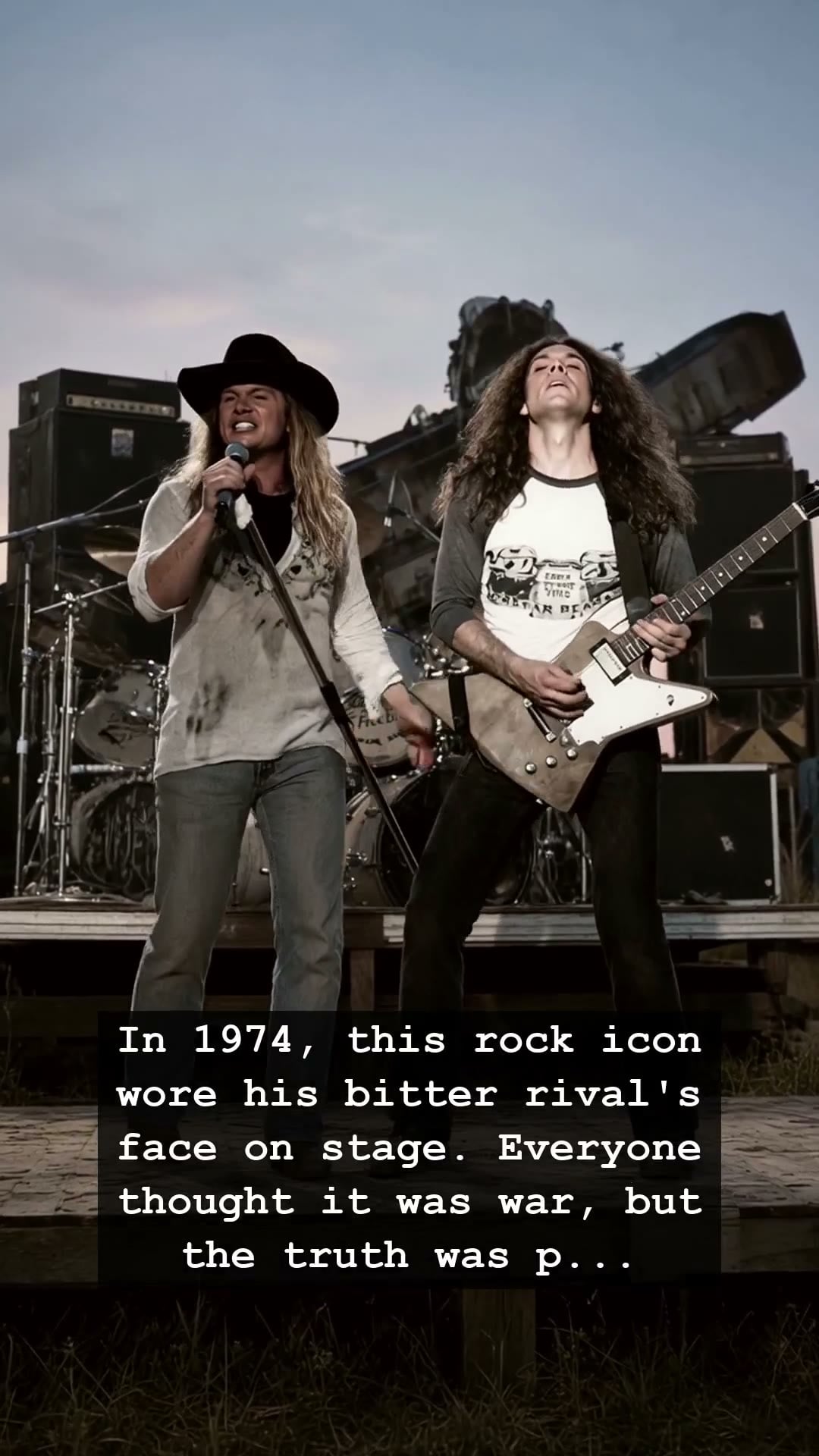
In the sweltering heat of 1974, the American rock scene was a battlefield of egos and amplified distortion. The air was thick with the scent of cheap beer and cigarette smoke, and at the center of the Southern rock storm stood Lynyrd Skynyrd, a band defined by its grit and unwavering defiance. That year, during a high-profile performance, frontman Ronnie Van Zant shocked thousands by stepping onto the stage wearing a t-shirt featuring the face of his supposed arch-rival, Neil Young. In an era when public feuds were the lifeblood of music journalism, the audience froze. Was this a declaration of war or a bizarre mockery? The truth, as it often does, lay far deeper in the trenches of mutual respect.
The tension between Lynyrd Skynyrd and Neil Young had been simmering ever since Van Zant took aim at the Canadian folk-rocker in the anthem Sweet Home Alabama. Lines calling out Young by name over his critiques of the American South were interpreted by the press as a vicious declaration of hostility. To the media, it was a classic case of Southern pride clashing with West Coast sensibilities. Jukeboxes across the country blared the tracks, while fans took sides, fueling a rivalry that seemed as authentic as the denim and leather they wore. But beneath the surface of record label posturing, there was a profound, quiet brotherhood that the headlines failed to capture.
Ronnie Van Zant was a man who lived with the raw intensity of a poet. He possessed an uncanny ability to turn personal conflicts into enduring myths, but he never truly held malice for Neil Young. By wearing that t-shirt on stage, Van Zant wasn’t signaling a skirmish; he was signaling an alliance. It was a bold, performative gesture that bridged the divide between the gritty realism of Southern rock and the introspective soul of folk-rock. For those who lived through the era of Woodstock and the rising influence of FM radio, this moment remains a haunting reminder that rock and roll was never just about the music—it was about the messy, human connections formed in the spotlight.
The tragedy of Lynyrd Skynyrd, cemented by the horrific 1977 plane crash that claimed Van Zant’s life, cast a permanent shadow over their legacy. Yet, the story of the shirt remains a bright, defiant piece of rock lore. It tells us that what we perceive as drama is often merely the language of artists navigating a complex world. Even decades later, the bond between Ronnie Van Zant and Neil Young stands as a testament to the fact that true icons don’t compete; they converse through their art, leaving us to piece together the pieces of their complicated, beautiful history.
As we look back at the glory days of analog recording and the spirit of an era that changed popular culture forever, we are reminded that history is often stranger—and kinder—than the rumors suggest. The next time you find yourself listening to the opening guitar riffs of a Lynyrd Skynyrd classic, take a moment to look past the fire and the rebellion. You might just find the genuine heart of a legend who, above all else, knew how to honor a friend in the middle of a war.