
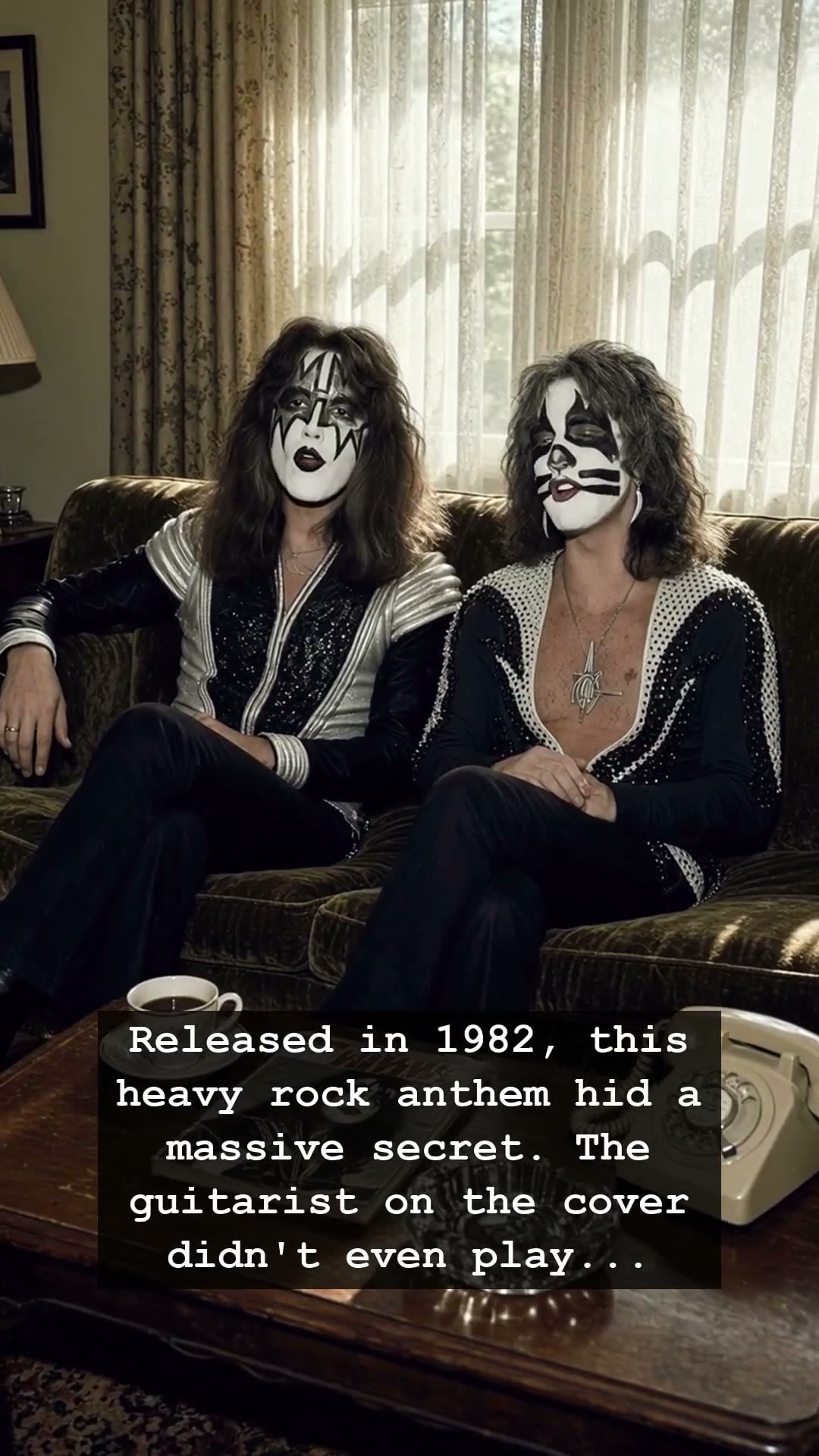
The year was 1982. The golden age of hairspray and arena rock was hitting its peak, and KISS, the kings of theatrical deception, were desperate to reclaim their throne. With the release of Creatures of the Night, the band promised a return to the heavy, muscular rock that first made them icons. The album cover was a masterpiece of smoke and shadow, featuring the familiar faces of Gene Simmons and Paul Stanley looming over a world of pyrotechnics and grit. Fans clutched their vinyl copies, sliding them onto turntables in dimly lit bedrooms, expecting the signature lightning-in-a-bottle magic of the KISS machine. But beneath the thunderous percussion and the iconic, jagged makeup, a massive deception was unfolding that would remain buried for years.
Most listeners were captivated by the blazing guitar solos that defined the record’s heavy, dark atmosphere. They envisioned the band members shredding away in a dimly lit studio, sweat dripping from their painted faces as they crafted hard rock history. However, the reality was a far cry from the myth. The high-octane guitar work on several tracks, most notably on the heavier cuts of the album, did not come from the fingers of the band’s official lineup. Instead, the music was the product of a revolving door of talented, uncredited session musicians who were quietly brought in to save a project that was struggling to find its footing amidst internal turmoil and dwindling popularity.
The most shocking part of this revelation is that the man featured prominently on the album cover—the guitarist who fans thought was pouring his soul into those riffs—was nowhere near the recording console for those specific solos. It was a classic case of the music industry putting image before integrity. During an era where MTV was just beginning to dictate how a band should look, KISS understood better than anyone that the makeup was the brand. If the public believed they were listening to their heroes, the music would sell. It was a cold, calculated move in a business that often traded authenticity for the sake of arena-filling spectacle.
Looking back from the vantage point of today, this story serves as a poignant reminder of the fragility of the rock and roll mythos. We idolized these larger-than-life figures, living vicariously through their supposed exploits, while the real machinery of the industry worked in the shadows. Yet, somehow, the deception doesn’t tarnish the legacy of the music itself. For those who grew up in the eighties, blasting KISS through a Walkman while dreaming of the big stage, the feeling remains pure. It is a testament to the fact that sometimes, the legend we want to believe in is far more powerful than the technical reality of the recording session.
As the dust settles on the legacy of the 1982 era, we see KISS for what they truly were: architects of a massive cultural phenomenon who were willing to do whatever it took to stay relevant. Whether or not the man on the cover played the notes, the impact of their sound remains etched into the history of American rock. When you drop the needle on that record today, you aren’t just hearing a guitar solo; you are hearing the echo of a time when the spectacle was everything, and the secrets behind the music were the best part of the mystery.