
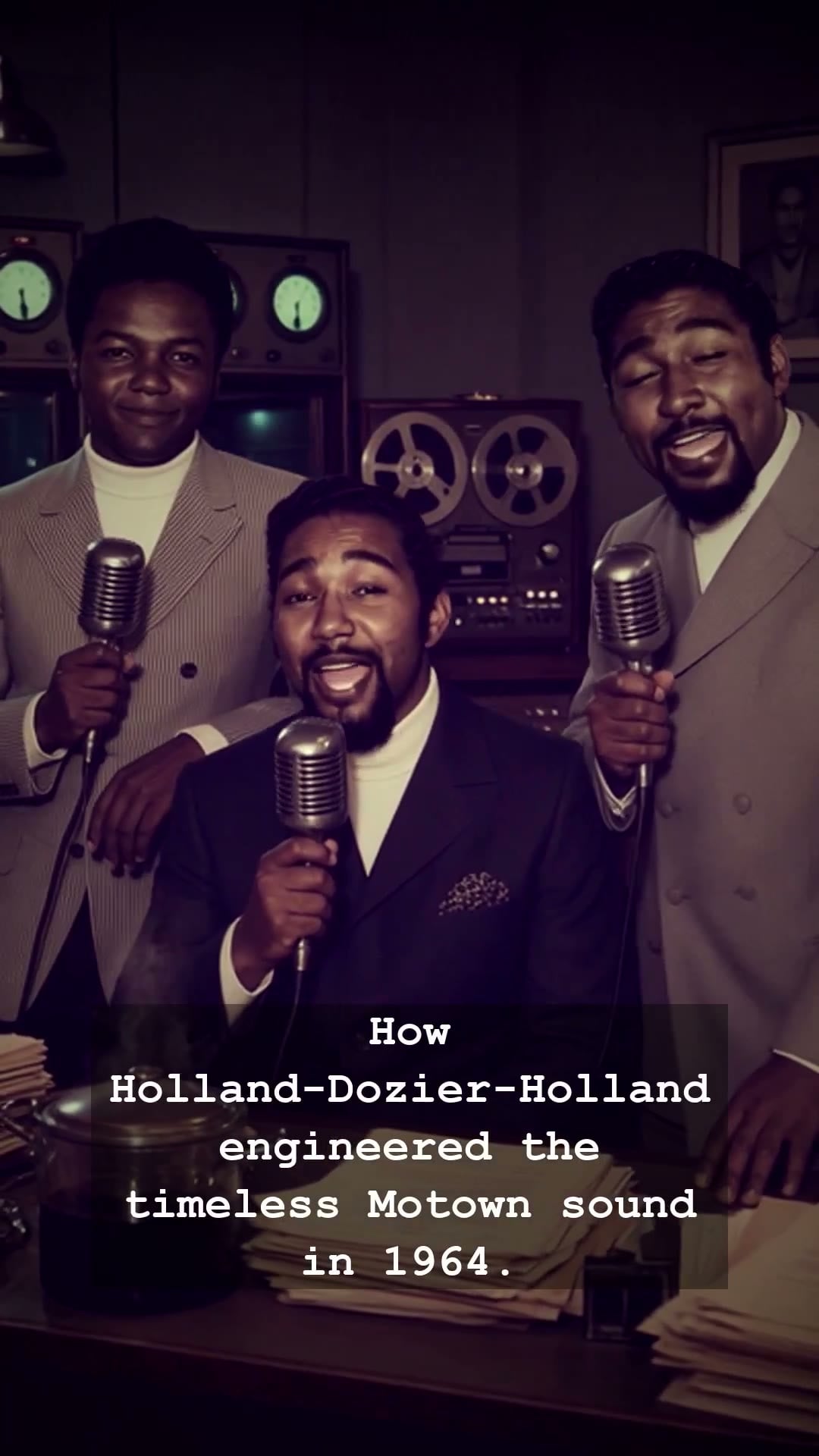
It was 1964, and the air inside the cramped Detroit studio known as Hitsville U.S.A. was thick with the scent of coffee, cigarette smoke, and pure creative tension. While the world outside was just beginning to feel the tremors of the British Invasion, a trio of unassuming men—Brian Holland, Lamont Dozier, and Eddie Holland—were quietly soldering the circuitry of an entire generation’s soundtrack. These were not just songwriters; they were the alchemists of the Motown sound, crafting hits that felt as inevitable as the sunrise. Before their run, radio was a fragmented landscape, but Holland-Dozier-Holland changed the frequency, forever etching their names into the bedrock of American soul.
The genius of Holland-Dozier-Holland lay in their obsessive perfectionism, a trait that often pushed the Motown house band, the Funk Brothers, to the brink. They understood that a hit record required more than just talent; it demanded a mathematical precision to its rhythm. They layered tambourines against snapping snare drums and wove gospel-infused melodies into tight, three-minute pop structures that felt like prayers delivered on a jukebox. When you hear the opening chords of Where Did Our Love Go, you aren’t just listening to a song; you are hearing the sonic architecture of a factory floor transformed into pure gold. It was a formula so potent that it didn’t just top the charts—it dictated the heartbeat of a nation.
However, the brilliance of Holland-Dozier-Holland was fueled by a relentless, high-pressure environment that eventually boiled over. Living in the shadow of Berry Gordy’s empire, the trio operated with a “sink or swim” intensity. They were tasked with turning teenagers into international icons overnight, a mission that required late-night studio sessions and constant artistic clashes. This was the era of the Walkman and the transistor radio, where these songs became the companions of every lonely commute and summer romance. Yet, behind the polished, joyous exterior of The Supremes or The Four Tops, there existed a grueling reality of contractual battles and the crushing weight of expectation that ultimately led to the trio’s bitter departure from the label in the late sixties.
Despite the eventual legal firestorm and the creative divorce that rocked the industry, the output of Holland-Dozier-Holland remains untarnished by time. Their work defined the transition from the innocent early sixties into the more complex, socially conscious soundscapes that followed. Every time a drum fill hits or a vocal harmony swells in those vintage tracks, you are feeling the invisible hand of a trio that mastered the art of manufacturing joy. They captured a flickering moment of American history, freezing the collective dreams of a generation into vinyl grooves.
Today, as we look back through the hazy lens of nostalgia, the music of Holland-Dozier-Holland serves as a reminder of a simpler, albeit more demanding, era of songwriting. They didn’t just compose; they engineered emotion. As you spin those old records, pause for a moment to consider the three men in a Detroit basement who, with nothing but a piano and a vision, built the golden sound that never truly grew old.