
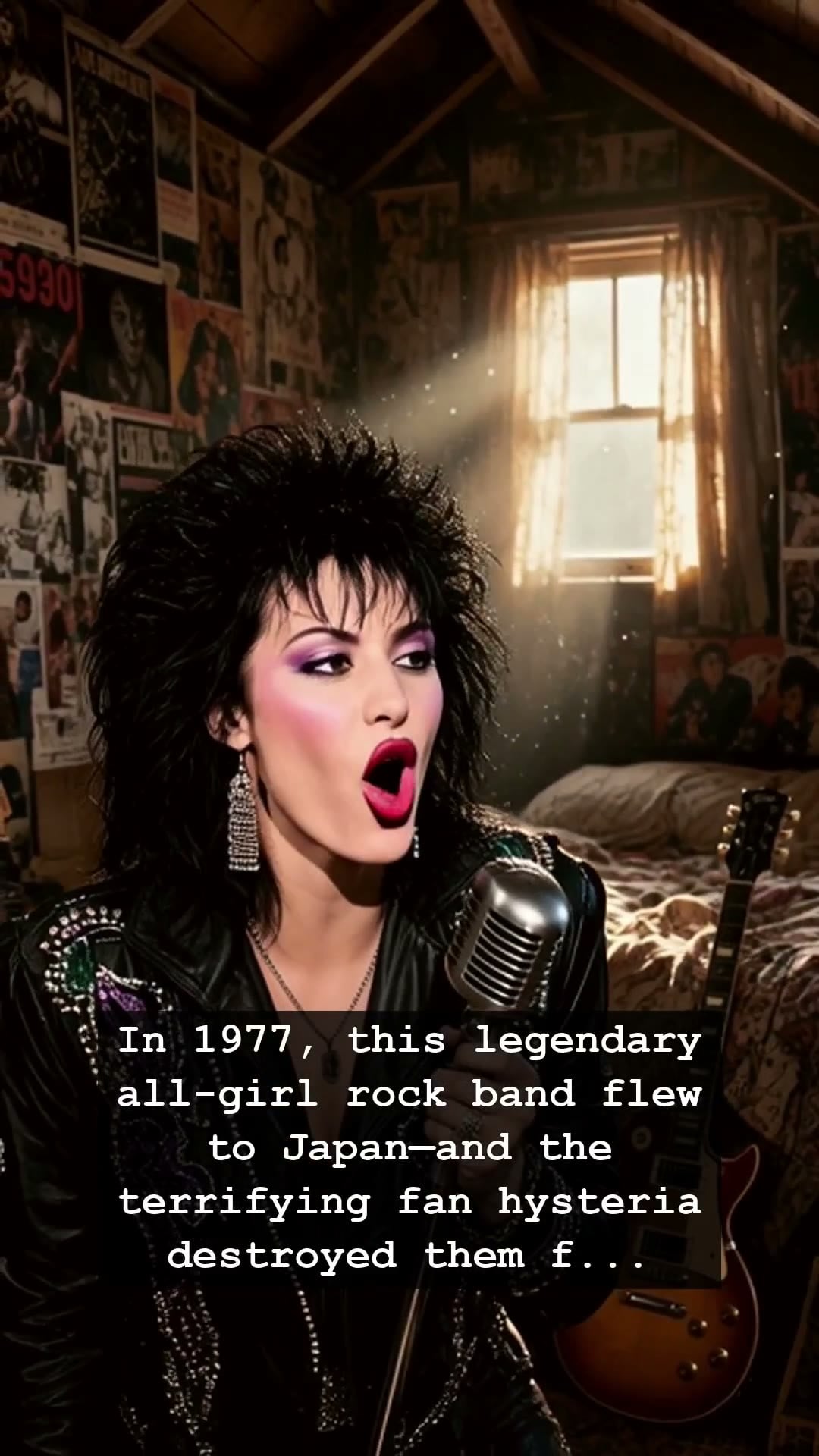
It was 1977, and the air in Tokyo felt electric, charged with a level of intensity that would have brought even the most seasoned stadium-filling icons to their knees. But for five young women known as The Runaways, the frenzy awaiting them at the airport was not a dream—it was a descent into a psychological nightmare. As they stepped off the plane, they were not greeted by simple adoration; they were engulfed by a tidal wave of shrieking fans, surging bodies, and a suffocating, visceral chaos that had never been seen before for an all-girl rock act. In the golden era of the Jukebox and the burgeoning power of international television, the band members found themselves trapped in a pressure cooker that would eventually lead to their shattering.
Joan Jett and her bandmates were the pioneers of a movement that the conservative music industry of the 1970s was desperate to suppress. With their leather-clad rebellion and gritty, raw sound, The Runaways were a middle finger to the status quo. Yet, behind the scenes, the glory was dissolving. The Japanese tour served as the final breaking point. Exhausted by relentless promotion, suffocated by the internal fractures between members, and pushed to the brink by the sheer force of the hysteria surrounding them, the band began to cannibalize itself from the inside out. The very energy that fueled their rise became the anchor that dragged them down into the depths of burnout.
To understand the magnitude of this collapse, one must look at the dark side of teenage stardom in the seventies. The Runaways weren’t just playing music; they were acting out a cultural rebellion against the era of Woodstock’s fading peace and the dawn of a more cynical rock landscape. For Joan Jett, the experience was a transformative crucible. The isolation of being an all-girl band in a world dominated by male gatekeepers meant they had no template for survival. They were pioneers left to navigate the wreckage of their own fame alone, often resorting to the numbing crutches of the era to silence the deafening noise of their own success.
Even today, the legend of that tour persists as a haunting reminder of the high price paid for rock and roll immortality. The images of them barely escaping the crowds in Japan are etched into the annals of music history, serving as a stark contrast to the polished glamour that would later define the MTV age. It is a story of resilience, yes, but also of the tragic vulnerability of youth thrown into the predatory maw of the global music machine.
Joan Jett eventually emerged from the debris of The Runaways to define her own legacy, but the internal scars of 1977 remained a defining chapter. When we look back at the jagged, rebellious tracks they left behind, we aren’t just hearing catchy riffs; we are hearing the sound of a band fighting for their dignity against a world that wanted to own them. Their story still resonates because it is fundamentally human—the collision of wild dreams and the heavy reality of a life lived too fast and too loud. Do you remember where you were when you first heard their defiant, iconic chords?