
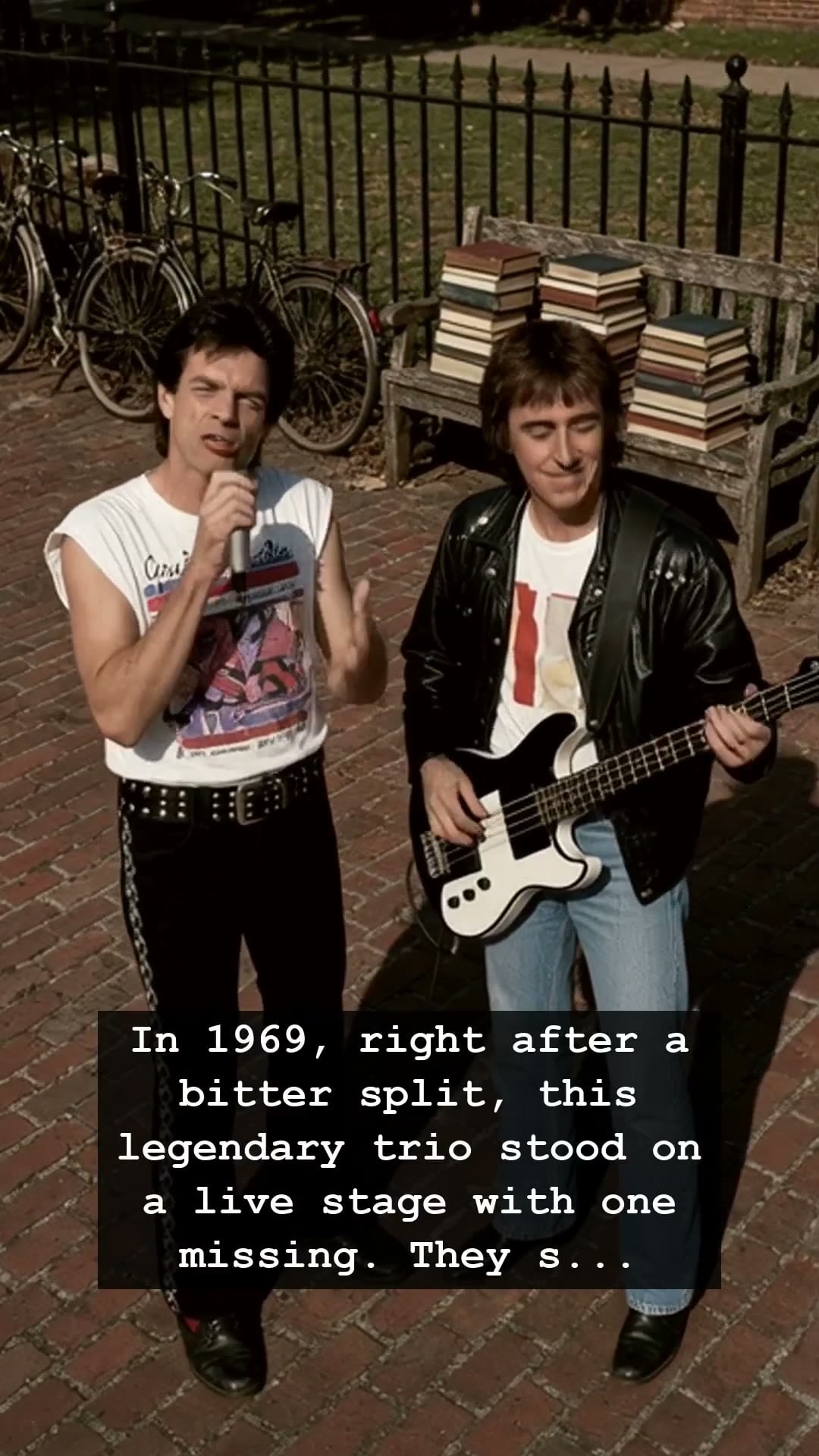
The year was 1969, a pivotal moment when the golden era of rock was beginning to fray at the edges. While the world was reeling from the echoes of Woodstock and the fading heat of the Summer of Love, the Bee Gees—a group synonymous with perfect vocal harmonies—found themselves in the middle of a jarring, public disintegration. Imagine a stage bathed in a cold, unforgiving spotlight, where the iconic trio was suddenly reduced to a duo. For fans who lived through that era of vinyl crackles and radio magic, that moment of silence where a third voice should have been was deafening. It was a fragile, haunting performance that proved even the most polished musical machines could succumb to the raw, human friction of ego and exhaustion.
At the heart of the crisis was the friction between brothers Barry, Robin, and Maurice Gibb. By 1969, the weight of rapid-fire international success had taken its toll. Robin Gibb, feeling sidelined by his brothers and the management, abruptly quit the band, leaving a void that felt like a missing heartbeat in the classic Bee Gees sound. During that brief, turbulent period, the remaining members performed with a sense of vulnerability that had never been seen before. Their voices, usually locked in a crystalline, three-part alchemy, sounded thin and exposed. It was a stark reminder that beneath the glitz of the charts and the carefully curated industry persona, they were just brothers caught in a cycle of creative suffocation.
This era was defined by intense artistic pressure. While the Jukeboxes across America were still spinning their early hits, the music world was shifting toward heavier, more psychedelic landscapes. The Bee Gees were caught between their identity as melodic pop architects and the desire to be taken seriously as songwriters. The drama of the 1969 split was not just a tabloid headline; it was an existential crisis. When they stood on stage during those months of separation, the tension was palpable. Every note felt like a confession, a desperate attempt to maintain relevance while their foundation was crumbling. It was a dark, private tragedy played out in the glaring public eye.
Fans often look back at this period as the moment the Bee Gees learned that their power resided solely in their unity. The haunting quality of their 1969 performances remains a fascinating footnote in pop history because it was so rare to see such vulnerability. It wasn’t just about missing a harmony; it was about the death of an illusion. The public saw that the brothers were not invincible icons but individuals dealing with the messy realities of fame, drugs, and the corrosive nature of constant competition.
Decades later, the legacy of the Bee Gees stands taller than ever, but it is this kind of raw, human imperfection that keeps their story alive. We remember them for the disco anthems and the soaring falsettos of the late seventies, but we understand them because of the cracks in the armor they showed in 1969. That night on stage, when the harmony was incomplete, reminds us that the greatest art often emerges from the deepest personal discord. As we look back through the lens of nostalgia, do you still feel the weight of those missing notes echoing in the distance?