
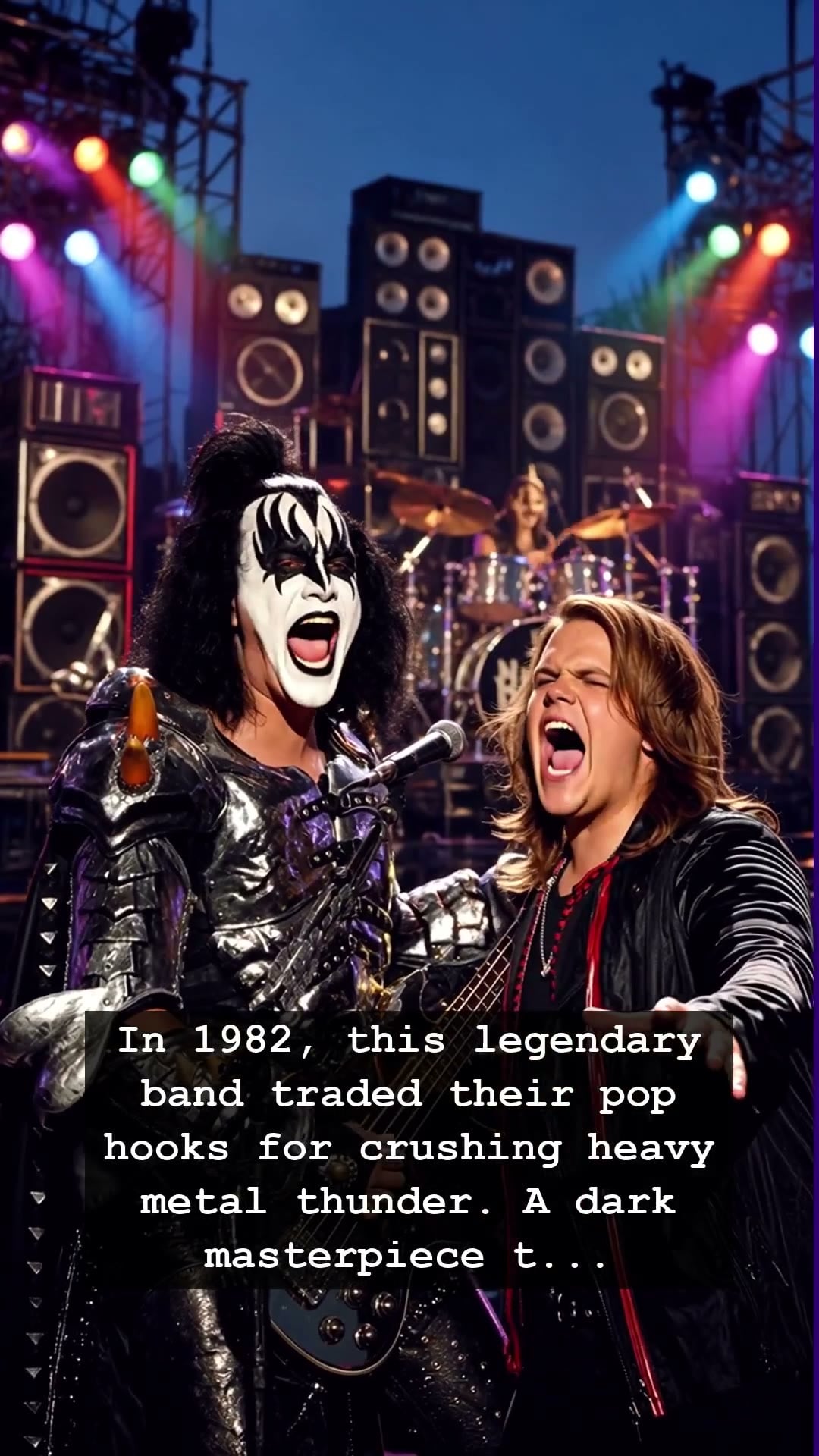
It was 1982, and the world of rock and roll was shifting beneath the feet of its biggest titans. For the members of KISS, the glitter and glam that had defined their meteoric rise through the seventies were beginning to feel like a gilded cage. After the commercial disappointment of their experimental concept albums, the band stood at a terrifying crossroads. They were bleeding fans, struggling with internal fractures, and facing the harsh reality that their pop-infused arena anthems were losing steam in an era dominated by the growing hunger for heavier, raw guitar sounds. Desperate to reclaim their throne, they made a gamble that would either cement their legacy or bury it for good.
The result was the release of Creatures of the Night, an album that stripped away the disco-tinged polish and replaced it with a crushing, militaristic heavy metal thunder. For the long-time fans who had grown accustomed to the infectious melodies of the mid-seventies, this new sound was jarring. It was darker, grittier, and possessed a weight that the band had never truly leaned into before. Listening to it felt like watching the masks they wore—those iconic, painted faces—finally reveal the scarred reality underneath. It was a masterpiece of tension, born from the chaos of a band fighting for its very survival against the rising tide of new wave and emerging metal.
The studio atmosphere during those sessions was reportedly volatile. The band members were exhausted by the relentless pace of their career and the pressures of superstardom. Yet, the adversity fueled the music. The title track alone serves as a chilling testament to their state of mind, delivering a wall of sound that terrified those who expected the standard radio-friendly pop hooks. It was a cold, calculated move toward the heavy metal mainstream, but it was also the most authentic project KISS had delivered in years. They weren’t just playing for the charts anymore; they were playing to save their existence.
Looking back, Creatures of the Night stands as a pivotal moment in rock history, a haunting bridge between their glitzy past and the heavier trajectory of the eighties. It captures the exact moment the band decided that if they were going to fall, they would do so with a thunderous roar. This transition defined a new standard for their live shows, where pyrotechnics became more violent and the stage presence more intense. It was the quintessential high-stakes drama of the era, proving that sometimes, you have to burn your own house down to build something stronger.
Today, the album is revered by collectors and die-hard fans as the final, desperate triumph of the original KISS era. It remains a fascinating relic of a time when icons were willing to risk everything to stay relevant. Does the heavy, haunting echo of those 1982 sessions still ring in your ears today?