
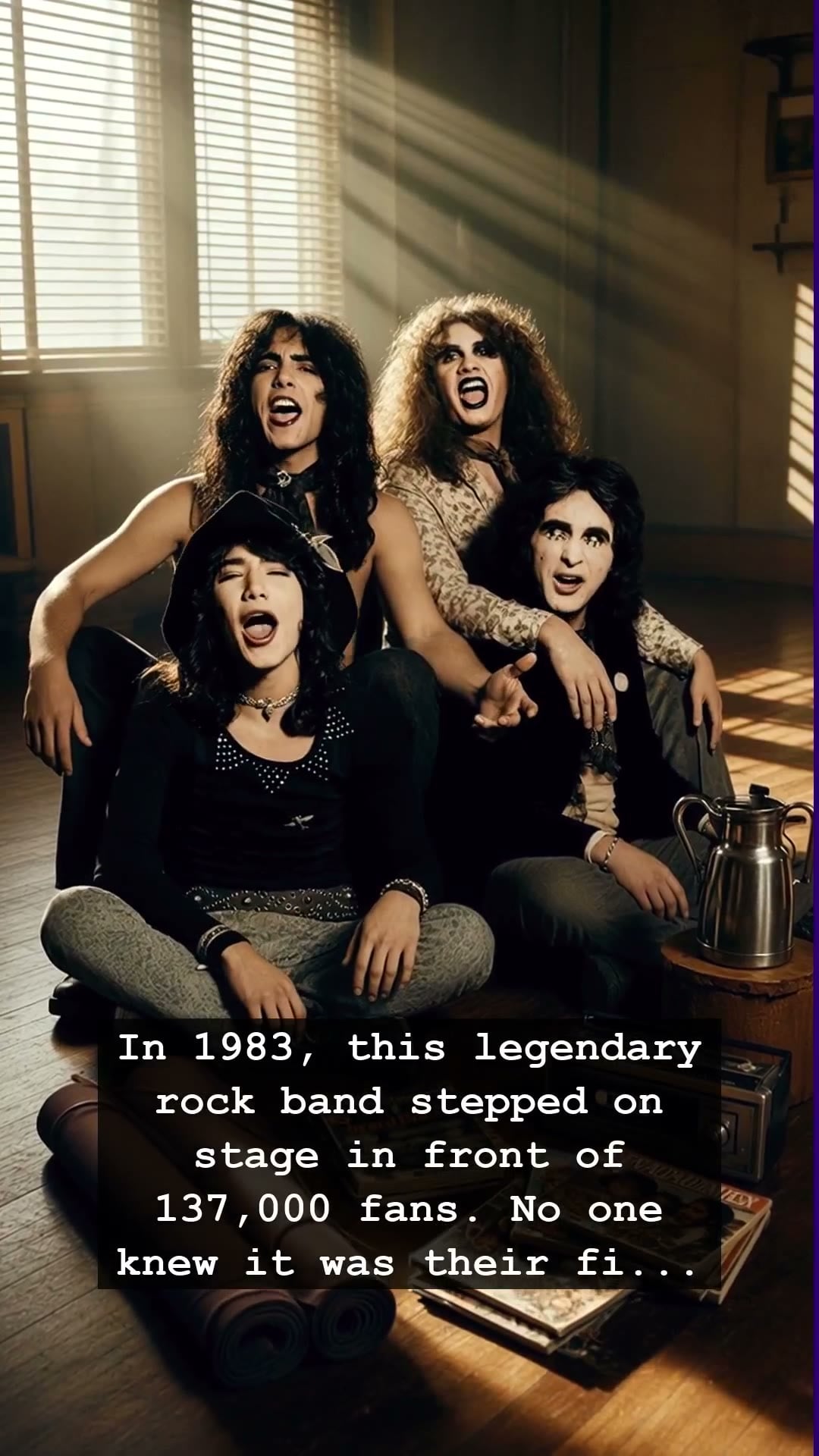
The year was 1983, and the air at Rio de Janeiro’s Maracanã Stadium was thick with a humid, electric intensity. Over 137,000 fans, a sea of humanity pulsing with feverish anticipation, had gathered to witness a spectacle that had defined the rock and roll landscape for a decade. They were there to see the gods of thunder, the architects of excess, the quartet that turned stagecraft into a religion: KISS. As the opening anthem tore through the humid night, the crowd roared, oblivious to the fact that they were witnessing the end of an era. This was the final night the band would ever perform in their legendary, terrifying, and awe-inspiring makeup. It was the night the masks officially began to slip.
To understand the magnitude of this moment, one must remember what KISS represented in the late 1970s and early 1980s. In an age of Jukebox hits and the looming dawn of MTV, KISS wasn’t just a band; they were comic book characters come to life. They were the Demon, the Starchild, the Spaceman, and the Catman. For years, their faces were hidden behind layers of greasepaint and mystery. Their concerts were theaters of war, featuring pyrotechnics that defied safety regulations and personas that dared every parent to forbid their children from listening to rock music. Yet, by 1983, the magic was beginning to fray under the weight of creative exhaustion and the shifting tides of the music industry.
Behind the scenes, the internal dynamics of KISS were far from the unified front they presented on stage. The glam metal scene was changing, and the group faced intense pressure to adapt to a world that was becoming increasingly cynical about the very theatricality that had made them stars. The constant grueling tours and the isolation inherent in their painted personas had taken a massive psychological toll on the members. The decision to unmask was not just a promotional pivot; it was a desperate act of survival, a shedding of skins to reclaim the human beings trapped beneath the heavy makeup and the iconic boots.
When they finally stepped out without the war paint in the months that followed, the shockwave was felt across the global rock community. For the die-hard fans who had grown up in the era of vinyl records and arena rock, the unmasking felt like a betrayal of the mystery that had once felt so essential. Yet, looking back from today, that night in Rio remains a poignant chapter in music history. It captures the exact moment where the myth surrendered to the man. It serves as a reminder of the fragility of fame and the high cost of maintaining a persona that becomes larger than life.
Today, the legacy of KISS remains as immortal as the makeup they finally chose to retire. Whether you remember the era through the crackle of a Walkman or the vivid memories of your first concert, the story of their unmasking continues to fascinate. It was a bridge between the wild, unrestrained theatricality of the seventies and the gritty, exposed reality of the mid-eighties. We look back at that night in 1983 not just as the death of a gimmick, but as the enduring human story of a band daring to face the music without a mask to hide behind. Perhaps the real magic wasn’t in the paint after all, but in the legends who dared to define a generation.