
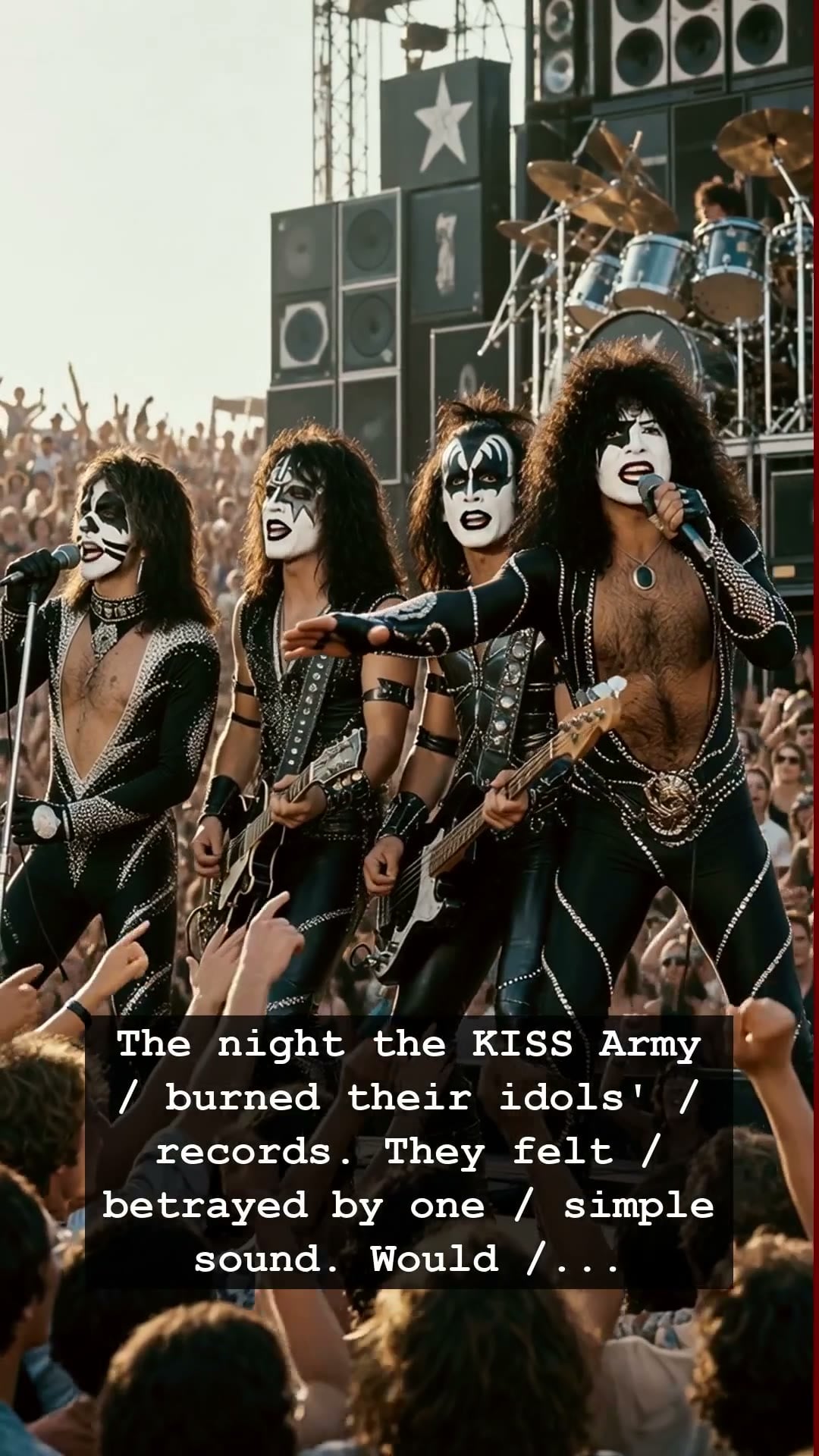
It was 1979, an era defined by the rise of the personal Walkman and the neon-soaked excess of the late seventies. For the members of the KISS Army, the world was simple: you wore your greasepaint with pride, you cranked the volume to eleven, and you lived for the raw, thundering power of hard rock. But then came the single that tore a subculture apart. When KISS released I Was Made for Lovin’ You, they didn’t just release a new song; they crossed a sacred line. As the pulsating, synthetic disco beat hit the airwaves, the die-hard fans who had spent years worshiping the gods of arena rock felt a stinging, personal sense of betrayal. To them, the band had traded their souls for the shimmering, shallow glitter of the dance floor.
The reaction was nothing short of a sonic civil war. In parking lots across America, heartbroken teenagers staged massive bonfires, piling high their beloved KISS vinyl records like sacrificial offerings. They watched the flames consume the faces of Gene Simmons and Paul Stanley, feeling that the very people who defined their identity had sold out to the mainstream. It was a bizarre, passionate display of loyalty turned sour. These fans weren’t just protesting a song; they were mourning the death of the uncompromising, rebellious spirit that had made KISS the ultimate outlaw icons of the decade. The air was thick with the scent of melting plastic and broken dreams.
Looking back, this moment remains one of the most fascinating crossroads in rock history. KISS was never just a band; they were a spectacle, a theatrical force that bridged the gap between comic book fantasy and stadium performance. Yet, the pressure to evolve—or perhaps the temptation to conquer the disco-dominated charts—led them down a path that alienated their core base. It highlights the eternal struggle of every legendary artist: how do you grow without losing the magic that ignited your audience in the first place? It was a clash of cultures, a collision between the grit of seventies hard rock and the sleek, infectious rhythm of the disco era that was sweeping the world.
While the band survived the backlash and continued to fill arenas for decades, the 1979 disco incident remains a powerful, gritty reminder of the bond between an artist and their followers. It proves that music is never just sound; it is a vital organ of the fan’s existence. When an artist shifts their sound, they are essentially shifting the landscape of their listeners’ lives. For many who stood by those fires, it was the final night of their childhood innocence, a realization that even their idols were subject to the cold, shifting winds of industry trends and commercial expectations.
Even today, the story of the KISS Army’s revolt resonates because it is a raw, human tale of betrayal and devotion. It captures the essence of an era when music felt like a battleground, a time when your record collection was your identity. If you could go back to 1979, knowing what you know now, would you have joined the bonfire or would you have hit the dance floor to embrace the new sound? Perhaps the most iconic rock stars are not those who never change, but those who dare to make us feel something—even if that feeling is righteous, burning indignation.