
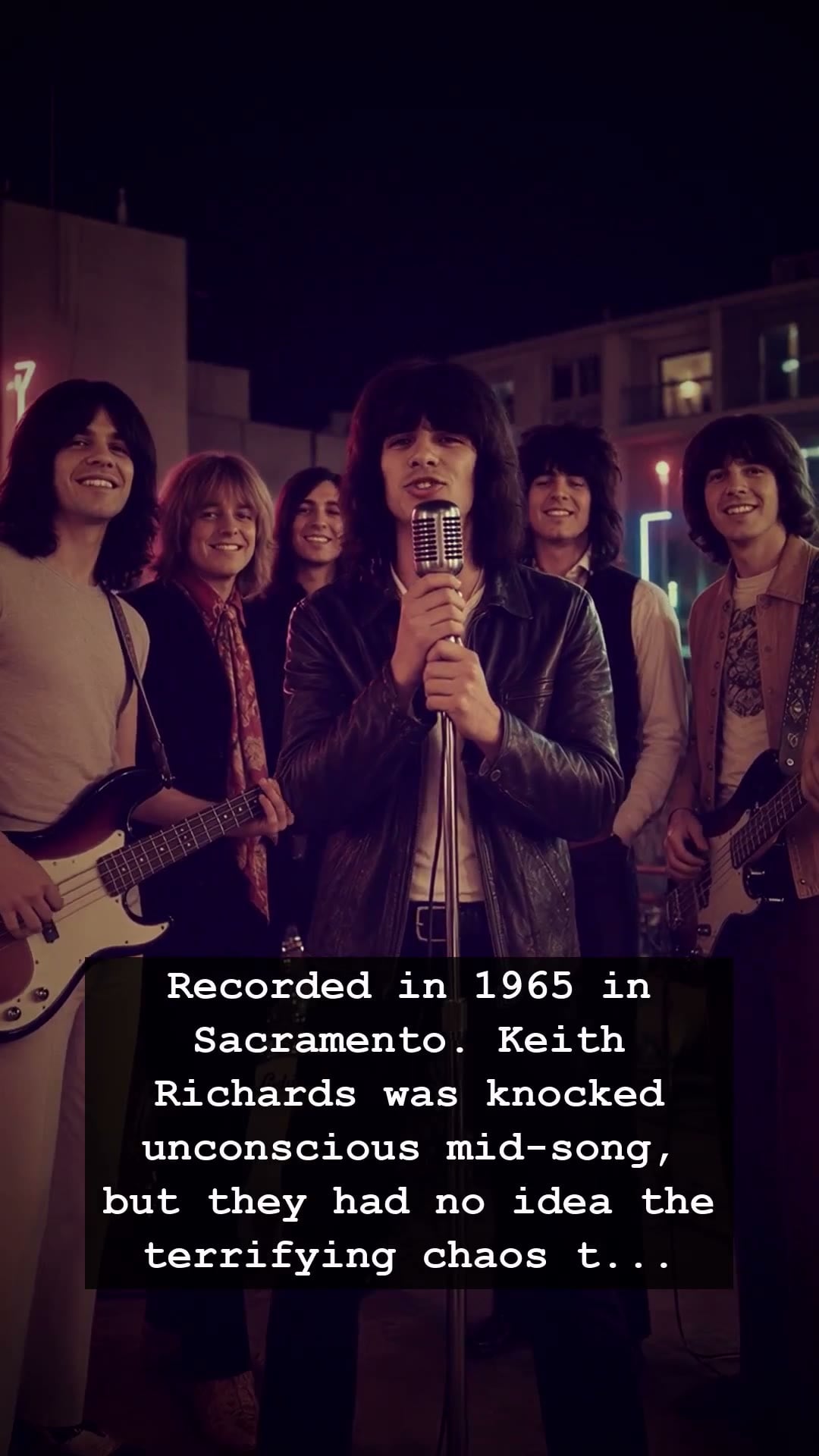
The year was 1965. The Rolling Stones were in the middle of a meteoric rise, fueled by the raw, untamed energy of the British Invasion. They were young, reckless, and practically vibrating with the kind of cultural electricity that defines a generation. Yet, during a sweltering concert in Sacramento, that electricity took a literal and terrifying turn. As the band tore into their set, Keith Richards stepped toward his microphone, only to be jolted backward by a lethal surge of power. The human conduit for rock and roll had just been struck down, collapsing onto the stage in a moment of haunting silence that would remain etched in music history forever.
In those early, unrefined days of touring, safety regulations were often a mere suggestion. The equipment was notoriously faulty, and the wiring in many makeshift venues was a death trap waiting to snap shut. When Keith Richards made contact with the mic stand, the circuit completed through his body, sending him face-first onto the wooden stage. For his bandmates, the confusion was instantaneous. The sheer, terrifying crackle of an electric shock is a sound no musician ever forgets. As the music ground to a jarring, sickening halt, the atmosphere shifted from teenage euphoria to absolute, primal panic.
Chaos erupted as the band members fled the stage, fearing the worst. The audience, unaware of the life-or-death drama unfolding behind the monitors, initially mistook the sudden exit for a temperamental rock star walk-off. But for Keith Richards, there was no theater involved; he had been rendered completely unconscious by the voltage. It was a stark reminder of the fragile reality behind the glamorized image of the 1960s touring circuit. Behind the Jukebox hits and the burgeoning stardom lay a world where gear failures could turn a sold-out show into a tragedy in a heartbeat.
This incident serves as a visceral window into the grit of the era. Keith Richards eventually recovered, emerging with his signature resilience, but the memory of that Sacramento night lingered like a phantom. It highlights the dangerous, pioneering spirit of a time when rock bands traveled in station wagons and played through gear that would make modern sound engineers shudder. The Rolling Stones were not just artists; they were survivors of a lawless industry that had yet to develop the safety nets that professional tours demand today.
Today, we look back at this moment not just as a piece of trivia, but as a defining snapshot of Keith Richards as the ultimate survivor. His ability to walk away from that stage, only to return to his guitar and define the sound of the 20th century, is nothing short of legendary. It reminds us that behind every iconic riff and every platinum record lies a story of survival, of near-misses, and of the unyielding human spirit. As we listen to those timeless tracks today, we are reminded that rock and roll was built on much more than just rhythm; it was built on survival.