
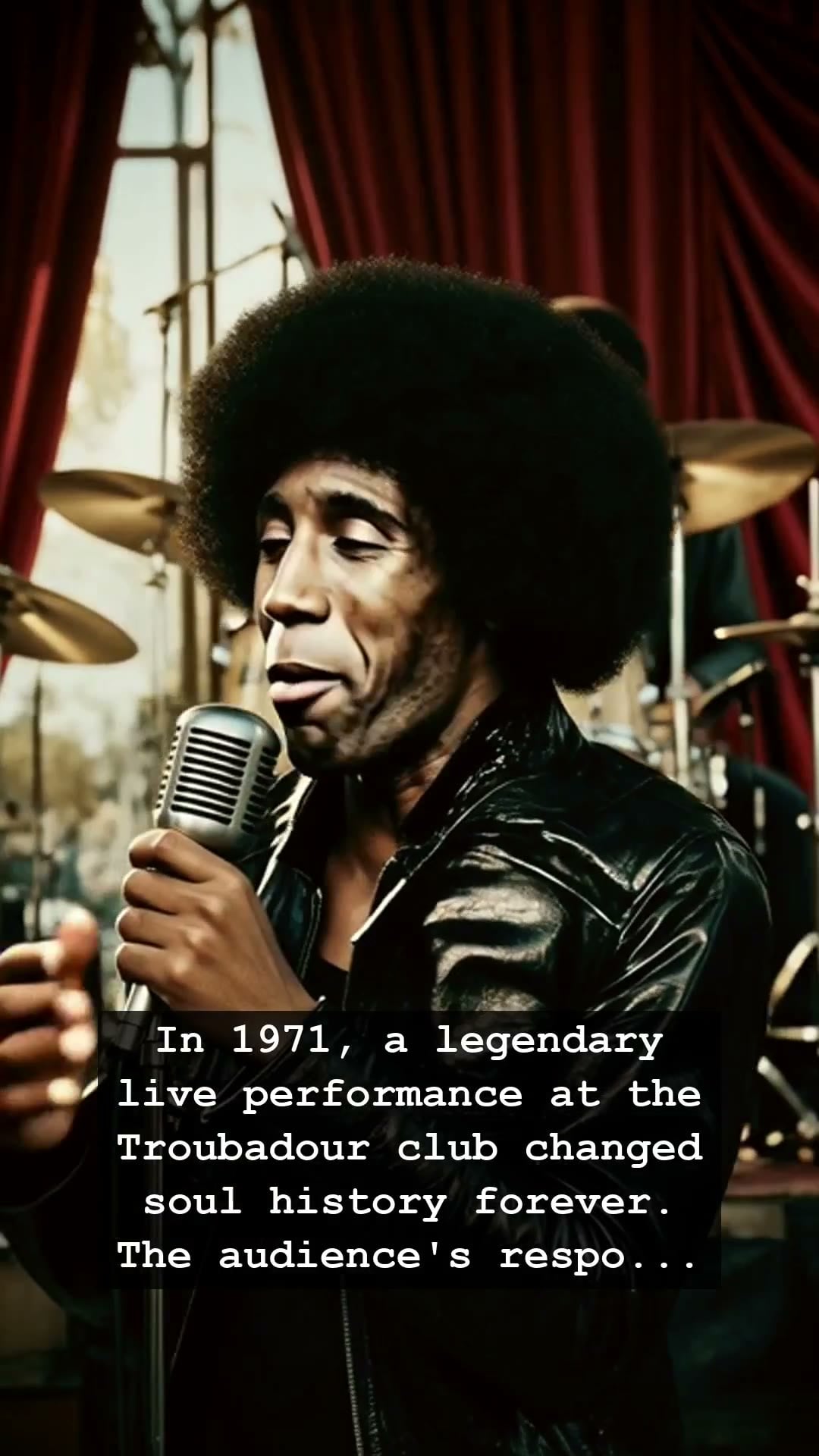
The year was 1971. The air inside the Troubadour in West Hollywood was thick with the scent of cheap cigarettes, expensive perfume, and the palpable tension of a city on the brink of change. Outside, the Vietnam War raged on, and the cultural landscape of America was shifting beneath everyone’s feet. But inside this small, wood-paneled sanctuary, a quiet genius was about to rewrite the rulebook of soul music. Donny Hathaway stepped up to the microphone, his unassuming presence masking a voice that felt like it had been carved from the very foundations of the earth. He was not a showman in the flashy sense; he was a conduit for something far more profound.
As the band settled into the rhythm of The Ghetto, a song that functioned as a stark social protest, something miraculous began to unfold. It started with a hum from the audience, a collective vibration that grew into a resonant, gospel-inflected harmony. Donny Hathaway had a unique gift for turning a concert into a community experience, erasing the divide between the performer and the crowd. By the time the chorus swelled, the Troubadour had ceased to be just a nightclub. It was a cathedral of sound, a moment of pure, unadulterated musical alchemy that captured the spirit of the early seventies soul era.
Donny Hathaway was often described as a musician’s musician, a man whose complex arrangements and haunting vocal range earned him the deep respect of industry titans, yet he remained a tragic, somewhat fragile figure in the public eye. His partnership with Roberta Flack remains legendary, but it was in these intimate live settings that his true spirit lived. He was a pioneer of the era, operating during the peak years of Motown and the rising influence of radio, yet he managed to maintain a raw, unfiltered vulnerability that few could replicate. That 1971 performance did not just showcase a hit song; it immortalized the pain and the hope of a generation.
Reflecting on that night, one realizes why the legend of Donny Hathaway continues to endure. In an age before the digital smoothing of vocal tracks and the sterile perfection of modern studio production, he relied on his own blood, sweat, and soul. Every note he sang carried the weight of his personal struggles with mental health and the immense pressure of his genius. He turned the isolation of the human condition into a communal anthem, proving that music could be a sanctuary for the weary and the disillusioned.
Today, the legacy of Donny Hathaway stands as a reminder of what live music should feel like: transformative, risky, and deeply honest. Even decades later, when we listen to the scratchy recordings of that Troubadour night, we are transported back to that smoky room, feeling the same chills that hit the audience in 1971. His voice remains a timeless thread in the tapestry of American soul, a hauntingly beautiful echo that refuses to fade away. Perhaps it is time we all return to the source and listen to the master once again.