
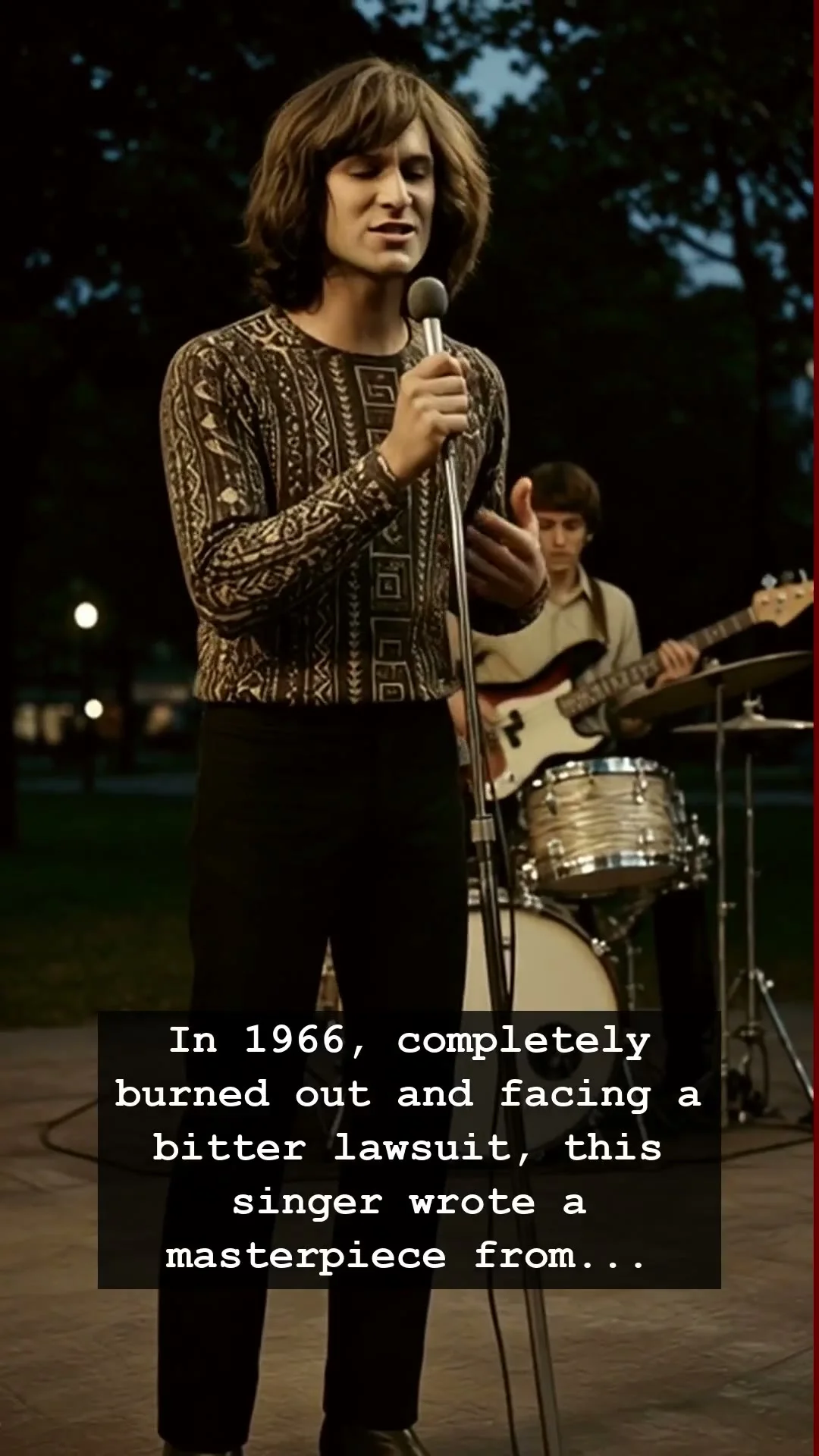
In 1966, the world seemed to be moving at a frantic, neon-lit pace, but for Ray Davies, lead singer of The Kinks, the walls were rapidly closing in. While the British Invasion was in full swing and the charts were flooded with high-energy anthems, Ray Davies was experiencing a total psychic collapse. Exhausted by the relentless cycle of touring, trapped in a bitter, soul-crushing legal battle with the band’s management, and physically incapacitated by sheer nervous exhaustion, he found himself confined to his bed. The man who had defined the swinging sixties for millions was, in his own words, effectively finished.
Yet, it was in this state of profound isolation and misery that Ray Davies reached for his piano. He was not looking to create a chart-topping hit; he was looking for an escape from his own reality. The result was Sunny Afternoon, a track that felt impossibly detached from the burning anxiety of his private life. While he was drowning in debt and professional betrayal, the song emerged as a lazy, ironic, and strangely buoyant masterpiece. It offered a bitter yet melodic observation of wealth and class, sung by a man who felt he was losing everything while the rest of the world danced on a pristine, metaphorical beach.
There is a peculiar, haunting beauty in the way Ray Davies crafted this song. It captures the essence of the mid-sixties transition—a time when the innocence of the early rock era began to warp under the pressure of fame and legal scrutiny. The track stands as a testament to the way suffering often strips away artifice. Ray Davies did not write about being a rock star; he wrote about the crushing weight of being human under the gaze of a fickle public. It remains one of the most ironic masterpieces of the decade, a tune that sounds like a summer breeze but hides a cold, sharp edge of desperation that only becomes clearer with time.
Looking back, the success of the song feels almost like a sick joke of fate. The Kinks were at the height of their artistic powers, yet internally, the band was a pressure cooker of resentment and instability. The contrast between the breezy, music-hall influenced piano chords and the stark reality of Ray Davies lying in bed, staring at the ceiling and wondering if he would ever perform again, is a classic trope of the music industry’s dark underbelly. It is a reminder that the songs we hummed while riding the bus or lounging in the backyard were often born from the most volatile, broken moments in an artist’s journey.
Decades later, Ray Davies remains a legendary figure because he possessed the rare ability to turn his personal agony into collective nostalgia. When we hear the opening notes of that piano today, we aren’t just hearing a sixties relic; we are hearing the sound of a man clawing his way back from the brink. It serves as a permanent bridge to an era where music was dangerous, fragile, and undeniably honest. Next time you catch the song on the radio, listen closely to the weary inflection in his voice. You are hearing the exact moment a broken artist chose to immortalize his exhaustion, leaving us with a masterpiece that refuses to fade away.