
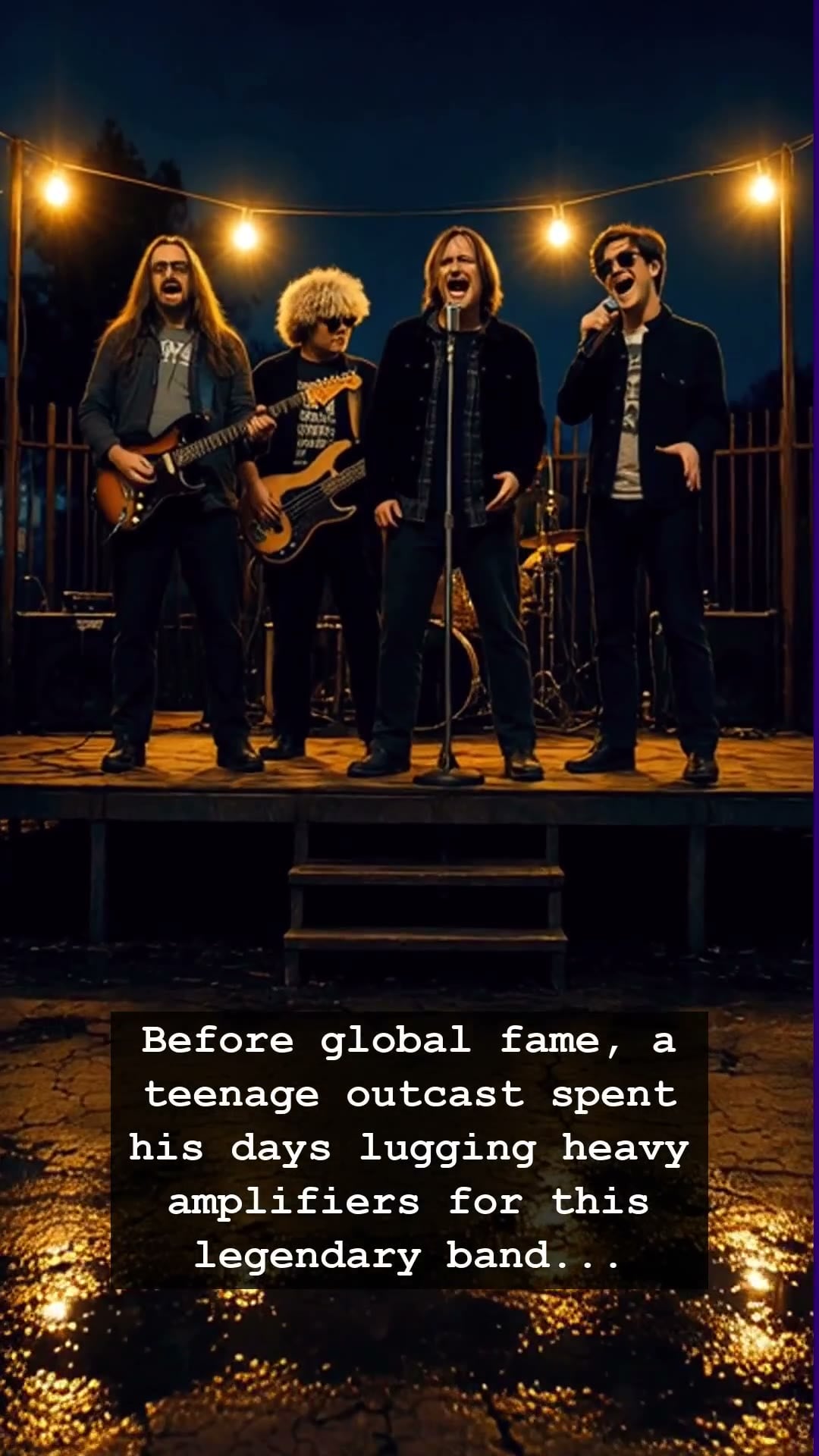
In the damp, mist-covered corners of Aberdeen, Washington, the air didn’t just smell like pine needles and rain; it tasted like the industrial decay of a forgotten era. Long before the world fixated on the polished synthesizers of the eighties or the neon glare of MTV, something far heavier was brewing in the garage. At the center of this sonic transformation was The Melvins, a band that didn’t just play music; they weaponized distortion. While the mainstream was busy chasing the polished hooks of stadium rock, The Melvins were busy pioneering a sound so thick, sludge-like, and abrasive that it felt like an earthquake trapped in a confined space. It was the antithesis of the radio-friendly soundscapes of the time, and it was glorious.
Yet, the most fascinating chapter of this story involves an unlikely observer—a teenage outcast who spent his formative days serving as a roadie for The Melvins. While his peers were preoccupied with prom nights or the latest Walkman hits, this young man was busy lugging heavy amplifiers through the drizzle, watching the band conjure sonic thunder. He wasn’t just a helper; he was an apprentice to the dark arts of dissonance. He watched how Buzz Osborne channeled frustration into a singular, crushing guitar tone, and how Dale Crover played drums with a ferocity that defied human biology. In those cramped studios, he was absorbing the dark, visceral ethos that would eventually become the blueprint for the grunge explosion.
That teenager, of course, was Kurt Cobain. Before the flannel-clad global fame and the tragic descent into the spotlight, he was just a kid in the orbit of The Melvins, refining his own ragged sensibilities. The band provided him with the raw ingredients—a mixture of punk’s reckless abandon and Black Sabbath’s funeral-march weight. It is a striking thought to consider that the seismic shift of the early nineties had its humble, unglamorous roots in the back of a beat-up van, moving gear for a group that refused to compromise their sound for commercial gain. The Melvins were the gatekeepers of a movement that hadn’t even named itself yet.
This era, sandwiched between the fading embers of seventies arena rock and the impending takeover of the Seattle sound, feels like a lost epoch today. The Melvins stood as a bridge between the avant-garde experimentation of the underground and the explosion of alternative rock that would soon dominate the airwaves. Their commitment to staying underground, even as those around them achieved global stardom, turned them into a cult legend. They survived the shift from vinyl to CD, the rise of the digital age, and the constant flux of music trends without ever losing their jagged edge.
Looking back, the story of The Melvins is a reminder that history is rarely written by those at the top of the charts. It is written in the rehearsal spaces, by the roadies who haul the gear, and by the artists who prioritize soul over sales. Their influence lingers in every heavy chord struck today. Next time you drop the needle on a record that sounds like it’s being dragged through gravel, spare a thought for the heavy amps and the heavy hearts that started it all in the heart of Washington. It was a time of true authenticity, a reminder that the loudest truths are often the ones told in the shadows.