
In the golden age of country music, there was no sound quite as chillingly beautiful as the high-lonesome harmonies of The Louvin Brothers. To the audiences of the 1950s, Charlie and Ira Louvin were the personification of musical grace. Their voices intertwined with a precision that felt divinely inspired, turning songs about faith, sorrow, and redemption into radio staples. But beneath the polished veneer of their public persona, a hellish reality was simmering. The same blood that allowed them to sing with such haunting synchronicity was the very fuel for a toxic, lifelong rivalry that often threatened to tear their career apart at the seams.
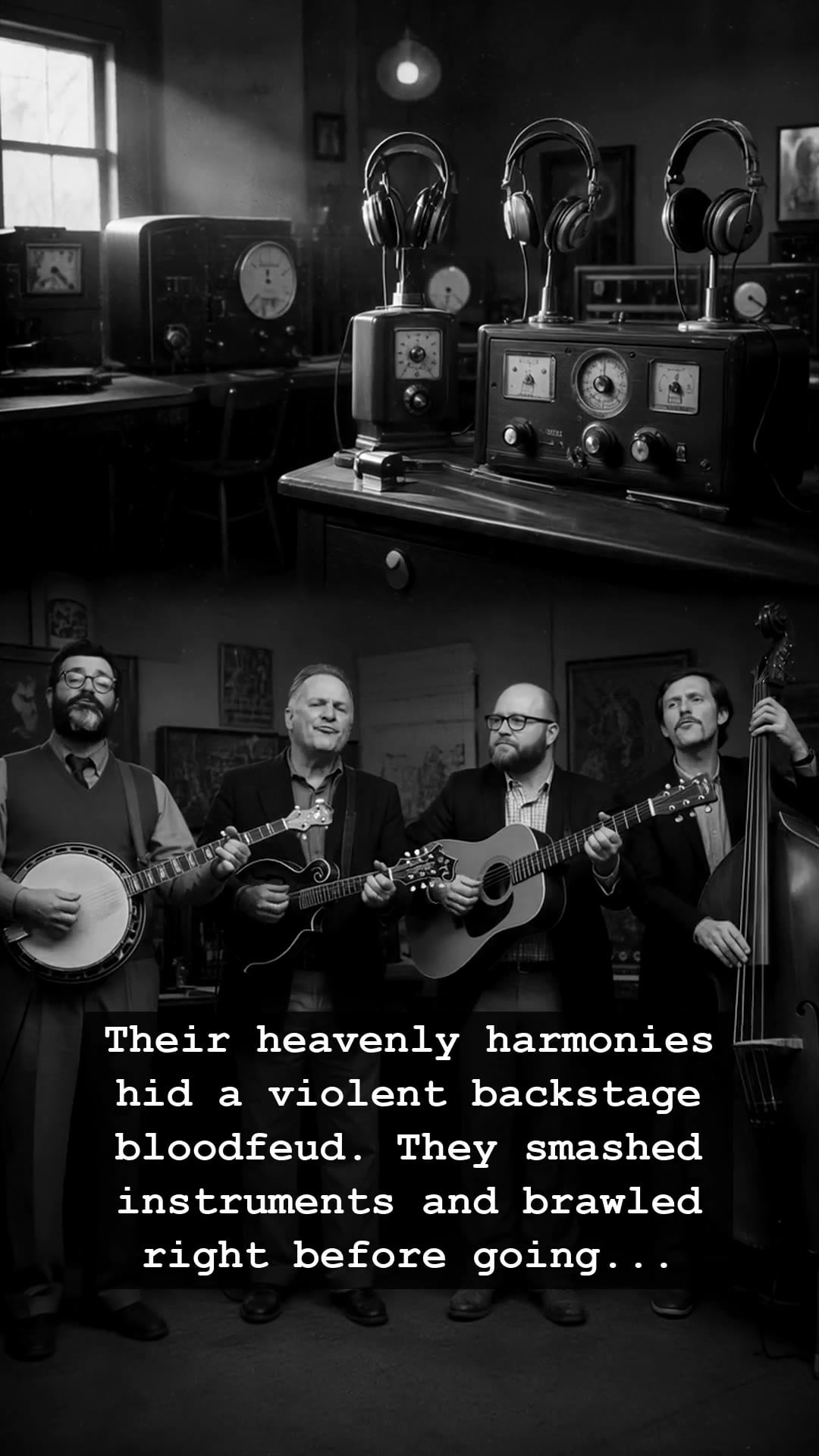
While the rest of the world was catching the early wave of Rock ‘n’ Roll and the cultural shifts of the post-war era, The Louvin Brothers were locked in a cycle of dysfunction that would shock even the most jaded modern observer. It was not uncommon for the brothers to be seen backstage at the Grand Ole Opry, engaged in a full-blown physical brawl just minutes before their cue. They were known to smash their mandolins and guitars in fits of rage, only to walk out onto the stage seconds later, wipe the sweat and fury from their brows, and deliver a flawless, angelic performance that left the crowd weeping in the aisles.
Ira Louvin was a man possessed by his own demons, prone to fits of violence and a volatile temper that stood in stark contrast to the spiritual messages they projected. Charlie, the more tempered of the two, often bore the brunt of his brother’s unpredictable nature. Their relationship was a battlefield, a tug-of-war between the music they loved and the hatred they harbored for one another’s lifestyle choices. It is a testament to their immense talent that they could compartmentalize their hatred so effectively, producing timeless records that defined the era of the Jukebox and the small-town radio circuit.
Historians of the genre often look back at The Louvin Brothers as a cautionary tale of the dark side of fame. Their conflict was not merely a sibling spat; it was a complex dance of resentment, ego, and the immense pressure of keeping up with a changing musical landscape. As the 1960s approached and the world moved toward the louder, more electric sounds of the British Invasion, the brothers’ influence remained etched in the DNA of country music. Artists ranging from The Byrds to Emmylou Harris later cited them as essential architects of the vocal harmony sound, proving that art can survive, and even flourish, amidst the wreckage of a personal life.
Today, when we listen to their records, the crackle of the vinyl reminds us of a simpler time, even if the stories behind the tracks are anything but simple. Their legacy is not just the beauty of the music, but the visceral, human complexity they left behind. If you ever find yourself drawn to the haunting, high-pitched wail of classic country, take a moment to listen closely to The Louvin Brothers. You might just hear the echoes of a war that was never truly won, fought by two brothers who were bound together by blood, music, and a lifetime of secrets.