
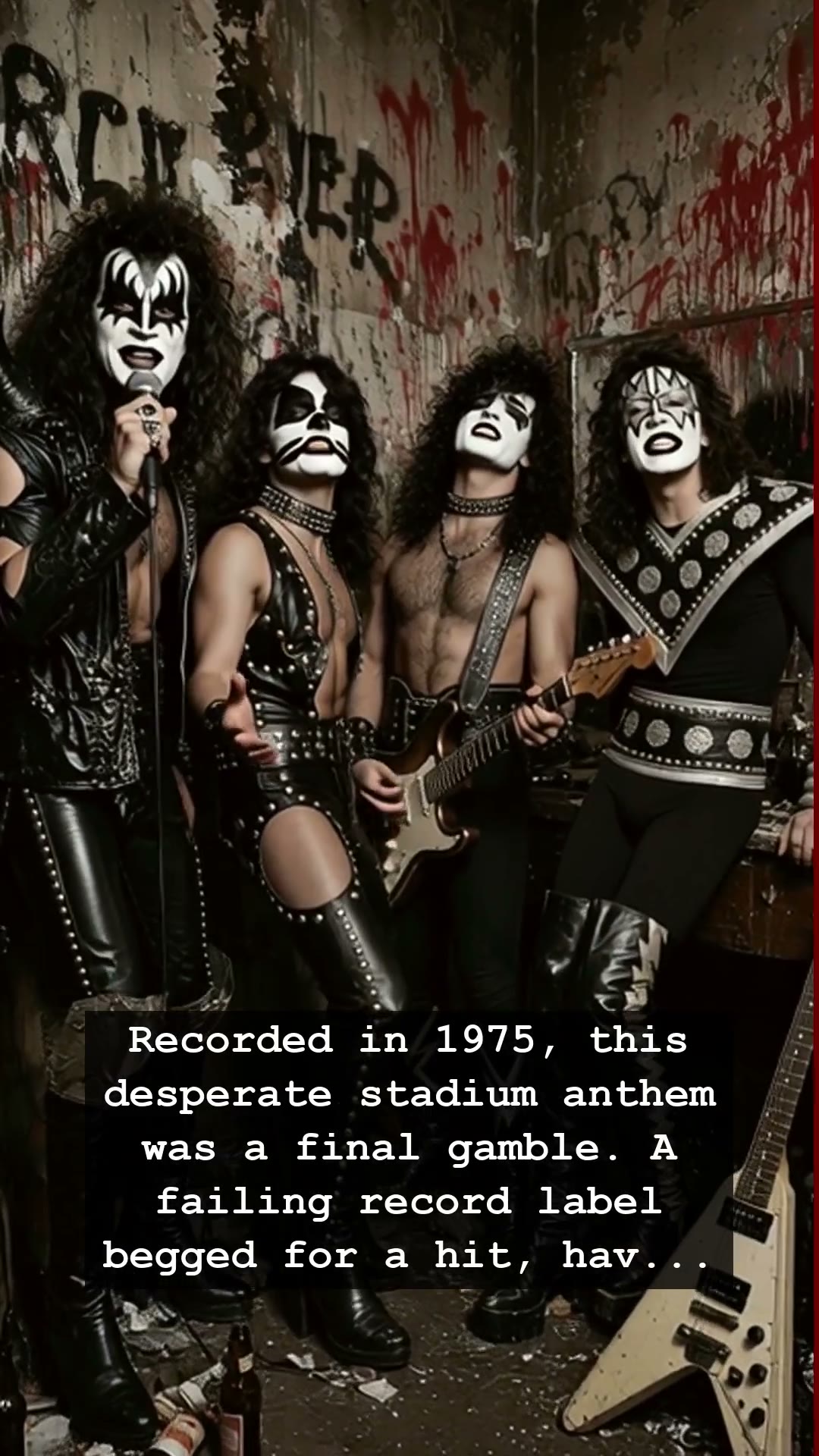
The year was 1975, and the neon lights of the music industry were flickering out for one specific label. Casablanca Records, the brainchild of Neil Bogart, was bleeding money at an alarming rate. With empty coffers and a mounting pile of debt that threatened to sink the ship entirely, the label was desperate. They had one final, frantic gamble left: a band that wore masks, spit blood, and seemed more like a circus act than a commercially viable rock outfit. That band was KISS, and the song they delivered, Rock and Roll All Nite, would change the trajectory of arena rock forever.
At the time, KISS was struggling to break out of the underground clubs. They had the theatricality and the greasepaint, but they lacked the chart-topping anthem that could bridge the gap between niche curiosities and stadium-filling gods. When they entered the studio to record what would become their signature masterpiece, the air was thick with the suffocating pressure of survival. If this record failed, the lights at the label would go out for good. The band knew they needed something anthemic, something that would resonate from the cheap seats to the front row of every arena in America.
When Rock and Roll All Nite hit the airwaves, it was an immediate jolt of adrenaline to the system. It wasn’t just a song; it was a manifesto for a generation of teenagers who lived for the weekend. The track captured the raw, unpolished energy of the seventies—a decade characterized by the grit of the streets and the rising power of FM radio. It transformed KISS from a risky investment into the undisputed kings of the stage, effectively pulling Casablanca Records back from the brink of total financial ruin and cementing the label’s place in rock history.
Looking back, it is incredible to think how close we came to never knowing the legend of KISS. The band’s rise mirrored the chaotic, explosive nature of the era. They navigated the pitfalls of sudden fame, the exhausting cycle of touring, and the intense internal pressures that define many great rock outfits. They were the ultimate spectacle, turning every performance into an event that rivaled the glitz of Studio 54 or the massive scale of Woodstock. By embracing the excess of the decade, they created a brand that transcended the music itself, turning comic books and merchandise into symbols of a cultural phenomenon.
Even decades later, that iconic guitar riff serves as a time machine. It transports us back to a time when music felt dangerous, tactile, and larger than life. The legacy of KISS proves that behind every massive stadium anthem, there is often a story of desperation, sacrifice, and the sheer will to keep the music playing against all odds. Today, their music continues to echo in arenas around the world, reminding us that sometimes, the biggest hits are born in the darkest hours of uncertainty. Keep spinning those records and letting the music take you back to where it all began.