
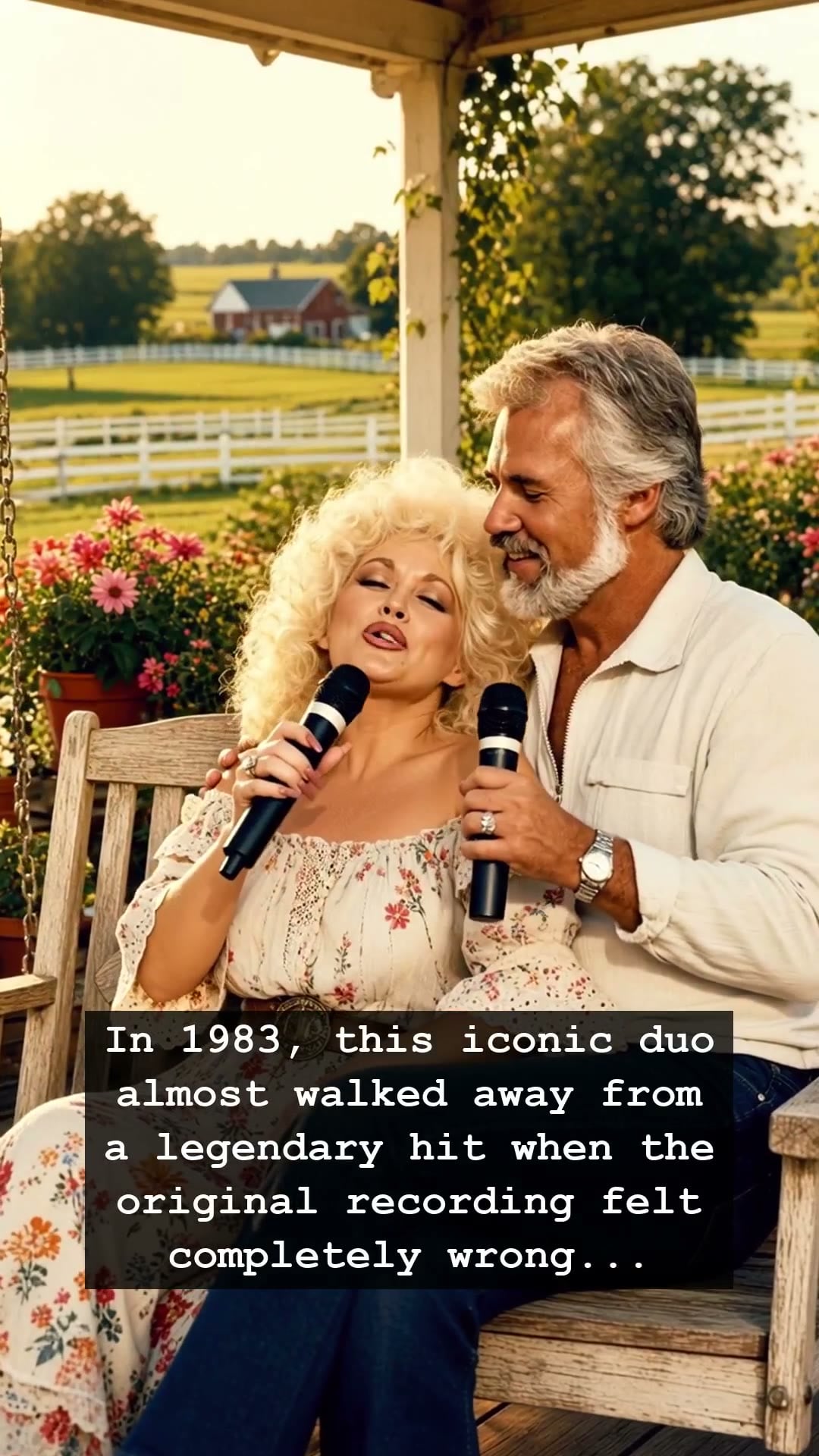
The year was 1983. The airwaves were shifting, with the neon glow of MTV just beginning to redefine how we consumed culture, and the sleek sounds of synth-pop fighting for space against the gritty soul of the seventies. In the middle of this creative tug-of-war stood two titans of country music: Dolly Parton and Kenny Rogers. They were at the peak of their powers, yet they were staring at a potential disaster that could have erased one of the most beloved duets in history. They were in the studio working on a track written by the Bee Gees, titled Islands in the Stream, but the original recording felt hollow, lifeless, and frankly, like a mistake that was destined for the cutting room floor.
Imagine the tension inside that booth. Kenny Rogers, known for his gravelly, soulful baritone, and the luminous Dolly Parton, with her iconic vibrato, were struggling to find the chemistry that the song demanded. The track sounded tired, lacking that essential magic that turns a studio session into a generational anthem. Behind the scenes, there was a palpable sense of panic. They were ready to scrap the entire project, believing they had simply missed the mark. If they had walked away, the pop charts of the eighties would have looked vastly different, and we would have been robbed of a song that defined late-night drives and romantic slow dances for decades to come.
Then came the frantic, last-minute rescue. It was a moment of pure musical alchemy. Realizing that the production was stifling their natural rapport, they stripped back the layers and leaned into their genuine, magnetic friendship. Dolly Parton often speaks about how she and Kenny Rogers were like brother and sister, a connection that allowed them to transcend the stiff formality of the original arrangement. As they focused on the raw emotion of the lyrics rather than the technical precision, the song finally breathed. That frantic scramble to save the track transformed a forgettable recording into an undisputed masterpiece of the era.
When Islands in the Stream was finally released, it didn’t just top the charts; it bridged the divide between country loyalists and pop audiences. It became a staple on Jukeboxes across America and solidified the legacy of both Dolly Parton and Kenny Rogers as icons who could navigate any sonic landscape. It stands today as a testament to the idea that sometimes, perfection isn’t found in a flawless take, but in the spontaneous, human moments that happen when you almost give up.
Why does this story still resonate so deeply today? Because it reminds us of the fragility of art. We often view these legends through the lens of their polished hits, forgetting that even the greatest stars face moments of doubt and near-failure. Listening to that familiar opening piano riff now, we aren’t just hearing a song; we are hearing a narrow escape, a triumph of spirit, and the enduring bond between two legends. The next time you hear those opening notes, remember the studio chaos that birthed them, and enjoy the harmony that nearly never was.