
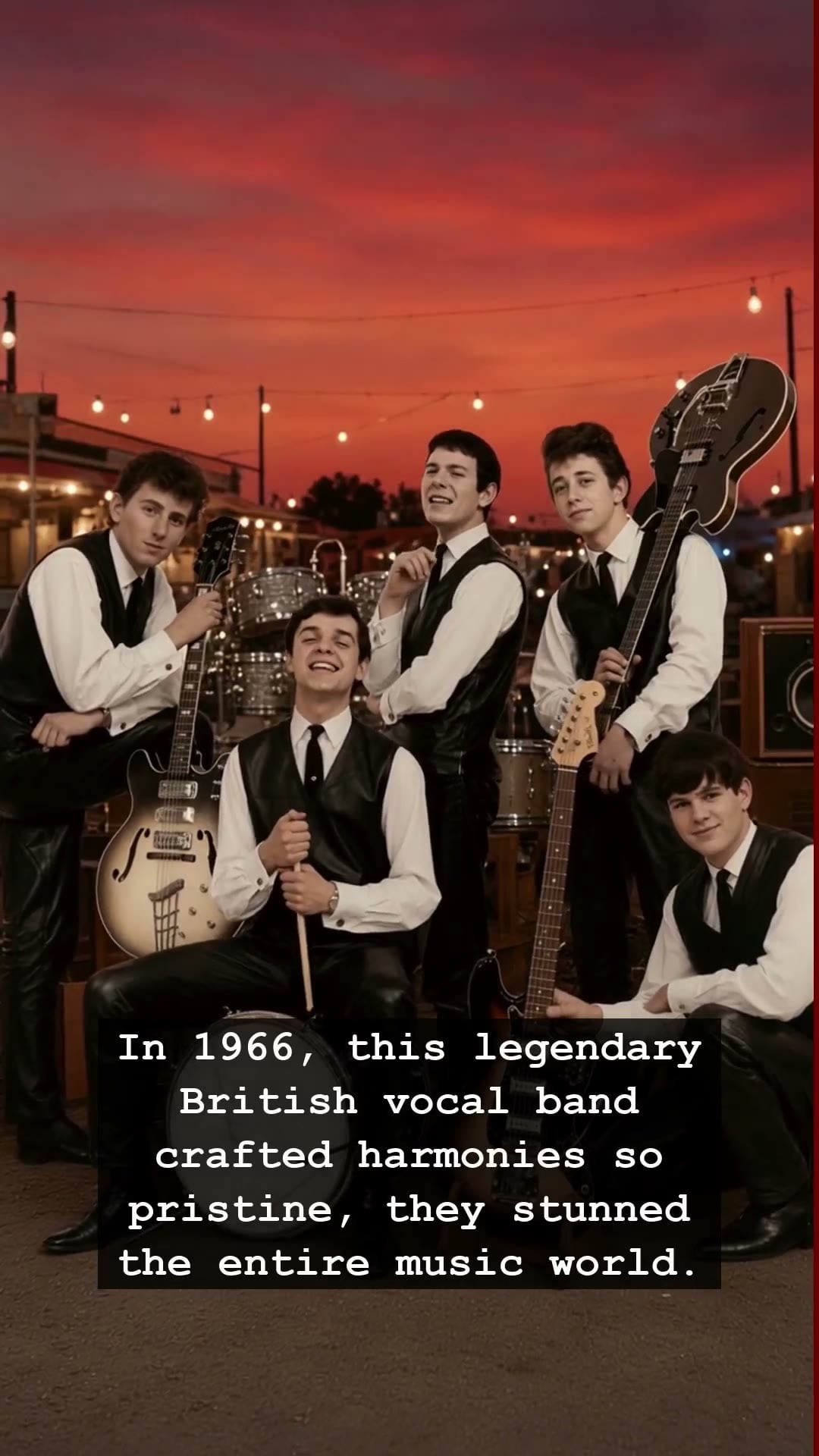
In 1966, while the world was obsessed with the rebellious roar of electric guitars, a British vocal group was busy crafting something far more dangerous: pure, crystalline perfection. The Hollies did not just sing; they wove tapestries of sound so intricate that they left even the most seasoned studio engineers in complete disbelief. If you place the needle on a vintage pressing of their mid-sixties work, you can still feel the hum of the era, a time when the Jukebox was king and every vocal chord felt like a direct line to the divine.
It is easy to forget today that The Hollies were the architects of a vocal precision that few have ever matched. Their harmonies were not merely melodic accompaniments; they were the heartbeat of a rapidly changing musical landscape. While bands like The Beatles and The Rolling Stones were chasing the edge of controversy, The Hollies were perfecting the science of the song. They operated in a space where technical virtuosity met pure, unadulterated emotion, creating a sonic blueprint that would influence generations of pop artists who followed in their wake.
Behind the pristine output, however, lay the grind of a decade defined by relentless touring and the crushing pressure of the British Invasion. Life on the road during the mid-sixties was a blur of smoke-filled venues, cramped transit vans, and the suffocating glare of fame that destroyed so many of their contemporaries. Yet, The Hollies managed to maintain an air of composure that masked the internal friction common to any legendary outfit. There were clashes over creative direction and the exhausting demand to replicate studio magic night after night before screaming crowds that often drowned out the nuances of their craft.
What makes the legacy of The Hollies so enduring is that their music refuses to age. They represent a specific, golden window in pop history—a time before the synthesizers of the eighties took over and before the raw, cynical edge of grunge defined the decade. When you hear those stacked three-part harmonies today, it transports you back to the era of the transistor radio, back when a song could truly define a summer. They captured a fleeting, idealistic moment of the sixties, bottling it within the grooves of vinyl records that collectors still treasure as sacred relics.
Today, as we look back at the giants of the mid-1960s, it is crucial to recognize that The Hollies were the secret weapon of the British Invasion. Their ability to turn a simple pop song into a vocal masterpiece remains a high-water mark for the industry. They remind us that before the pyrotechnics of Arena Rock or the excess of the disco era, the most powerful instrument on stage was simply the human voice. Their work serves as a haunting, beautiful reminder of a time when melody was the only thing that mattered, and for that reason alone, their music will always find a home in the hearts of those who still value the soul of a classic record.