
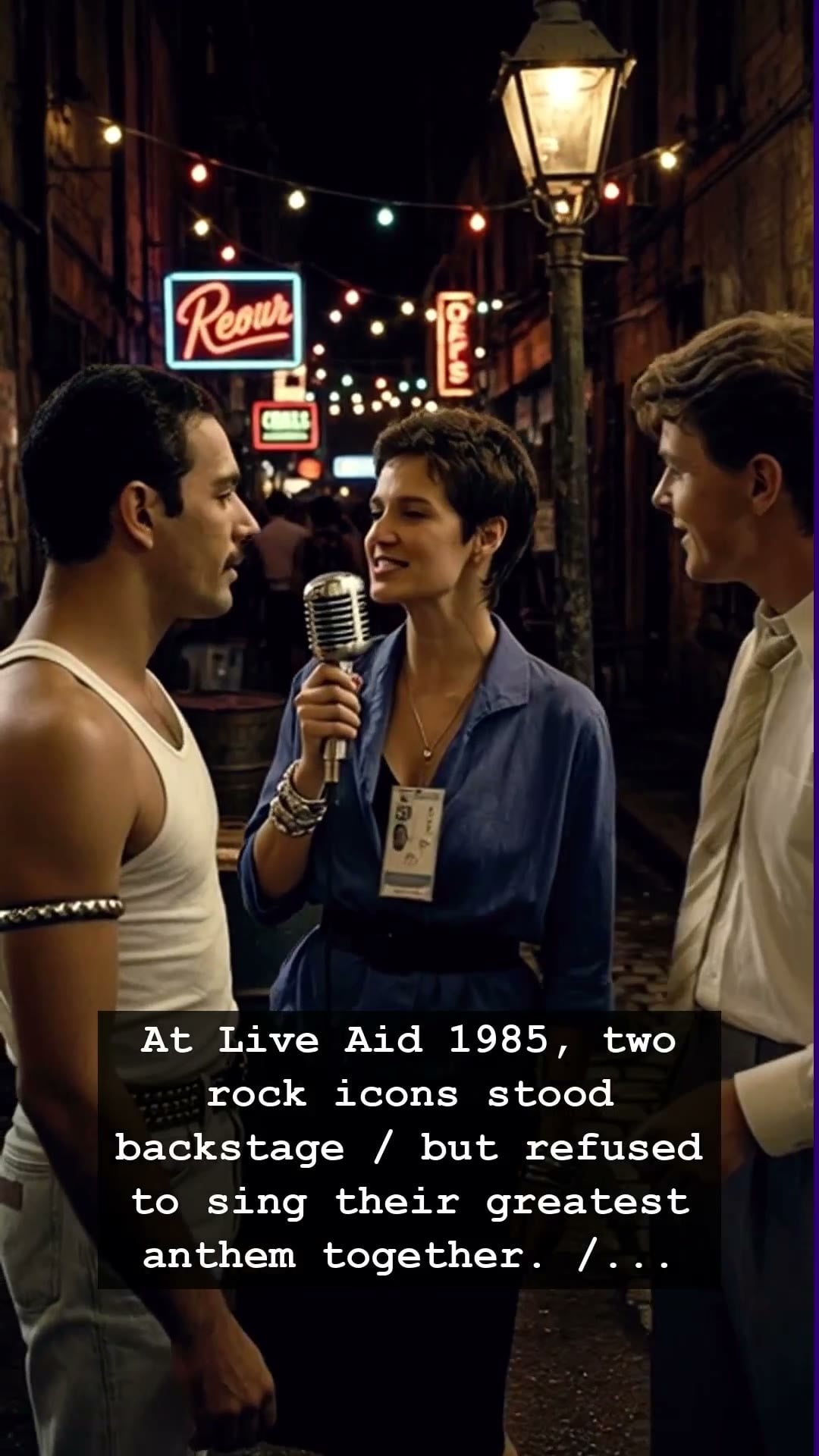
It was July 13, 1985, and the air at Wembley Stadium felt thick with the static of history in the making. Millions around the world were glued to their television sets, witnessing the spectacle of Live Aid, an event that would define the era of arena rock forever. Amidst the chaos and the glittering stars, two titans of music stood backstage, separated by an invisible wall of artistic ego and unspoken friction. Freddie Mercury, the flamboyant heart of Queen, and the chameleon himself, David Bowie, were both scheduled to grace the stage. Yet, the one thing the world craved—a live performance of their collaborative masterpiece Under Pressure—remained a haunting, missing piece of the day.
The song, recorded years prior in a cramped Swiss studio, had been a tense, cigarette-fueled experiment in musical brilliance. It was a clash of two giants, each pushing the boundaries of what pop music could become. When the track was finally released in 1981, it shook the foundations of the charts, but the relationship between Freddie Mercury and David Bowie during those sessions was reportedly volatile. They were perfectionists, visionaries, and, at times, rivals. Despite the sonic perfection of their duet, the lack of a live rendition during the 1985 spectacle left a bitter taste for fans who had hoped for a moment of harmonious unity in the face of global charity.
The drama backstage at Live Aid was palpable. While the world celebrated the rise of MTV and the global connectivity of rock, Freddie Mercury and David Bowie were navigating the complex psychological pressure that accompanied their legendary status. They were icons living in the golden age of excess, where the line between private turmoil and public adoration often blurred into dangerous territory. Their refusal to perform together on that specific afternoon wasn’t just a scheduling oversight; it was a reflection of the creative intensity that fueled both men. They were legends who operated on different wavelengths, and their mutual respect was often veiled by the competitive fire that kept them at the top of the food chain.
It would take seven long, agonizing years after that fateful afternoon for the true weight of their synergy to be honored. Following the tragic passing of Freddie Mercury, the tribute concert at Wembley finally saw Under Pressure performed live, reminding the world exactly what had been held back during the Live Aid era. Looking back, the silence between them in 1985 feels like a poetic tragedy. It captures the essence of a time when rock stars were larger than life, carrying burdens that only they could understand, and ego was the fuel that turned raw talent into eternal history.
Today, when we spin a vinyl copy of that record, the friction in their voices feels intentional. The song stands as a testament to the fact that greatness is rarely easy. It requires the collision of opposing forces, a dance of fire and ice that continues to captivate new generations. Even decades later, the story of Freddie Mercury and David Bowie remains a haunting reminder that the best music is often born from the most complicated human relationships. May their voices continue to echo in our hearts long after the stadium lights have dimmed.