
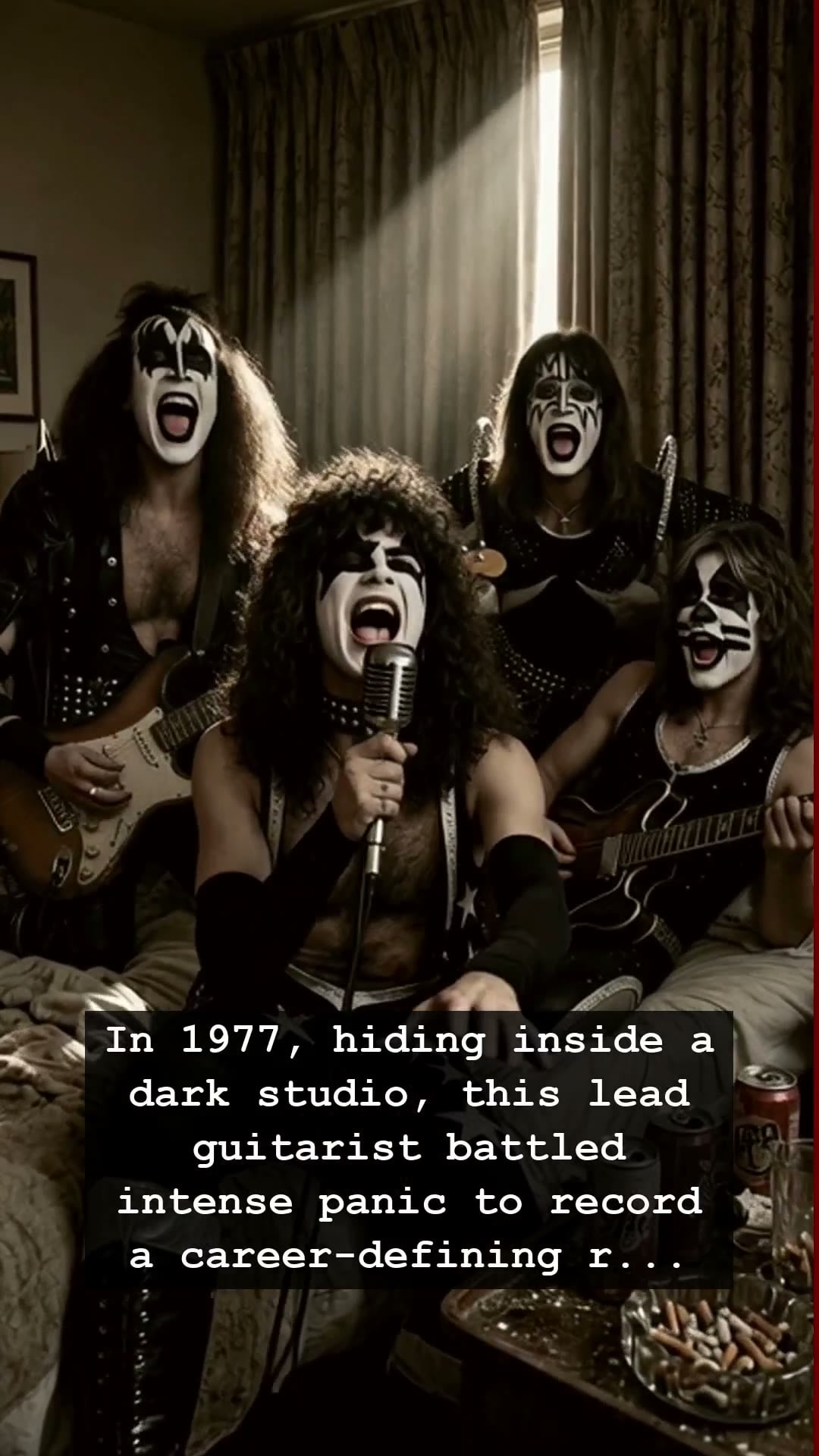
It was 1977, and the world of arena rock was reaching a fever pitch. In the dimly lit, claustrophobic confines of a recording studio, a man draped in the iconic greasepaint of a household name stood poised, his heart hammering against his ribs in a rhythm far more erratic than any track he had ever recorded. Ace Frehley, the enigmatic lead guitarist of KISS, was meant to be the living embodiment of the unshakable rock star. Yet, as he stared down the fretboard of his Les Paul, he was battling a paralyzing panic that threatened to derail his entire career. The song in question was Shock Me, a track that would eventually define his legacy, but at the time, it felt like an insurmountable mountain of anxiety and high-stakes expectation.
To understand the gravity of that moment, one must remember the atmospheric pressure of the late seventies. Music was becoming a spectacle of pyrotechnics and larger-than-life personas, and the members of KISS were at the very epicenter of this cultural shift. Behind the scenes, however, the heavy reliance on tour schedules and the relentless demand for perfection turned the studio into a pressure cooker. For Ace Frehley, this was his first time taking the lead on vocals, a move that felt both liberating and terrifying. He sought solace in the shadows of the studio, trying to drown out the noise of his own self-doubt. The air was thick with the scent of guitar amps and the lingering haze of cigarettes, a setting that felt worlds away from the screaming stadiums of the era.
Most fans remember the snarling, blues-infused guitar solo that rips through the middle of the song with surgical precision, unaware that it was birthed from such internal turmoil. Ace Frehley channeled every ounce of his distress into those notes, turning a moment of crippling vulnerability into a defiant roar. He had been electrocuted on stage just months prior, a trauma that lingered in his psyche, making the isolation of the recording booth feel even more intense. Yet, in that darkness, he found a creative clarity that many artists spend a lifetime chasing. He wasn’t just playing a riff; he was exorcising his demons through the strings, creating a piece of rock history that resonated with anyone who has ever felt the weight of the spotlight.
Even today, the legacy of that 1977 recording session remains a testament to the raw, unfiltered humanity that exists beneath the glam-metal exterior. As the era of the Walkman and the jukebox eventually gave way to the digital age, the visceral grit of tracks like Shock Me kept their edge. Ace Frehley proved that true rock and roll isn’t just about the loud explosions or the painted faces; it is about the quiet, desperate struggles that occur when the cameras are off and the musician is alone with their instrument.
Looking back, it is impossible to ignore the sheer significance of that performance. Ace Frehley not only conquered his panic that night, but he also cemented his status as the soulful heart of a band often criticized for being all style. The next time you find yourself listening to the classic records of the seventies, take a moment to listen closer to that solo. Beneath the polished production and the echoes of a bygone arena-rock golden age, you can still hear the tremors of a man standing on the edge, finding his way back to the light through the power of his music. It is a story of resilience that reminds us all that even our biggest heroes have moments where they are just as human as the rest of us.