
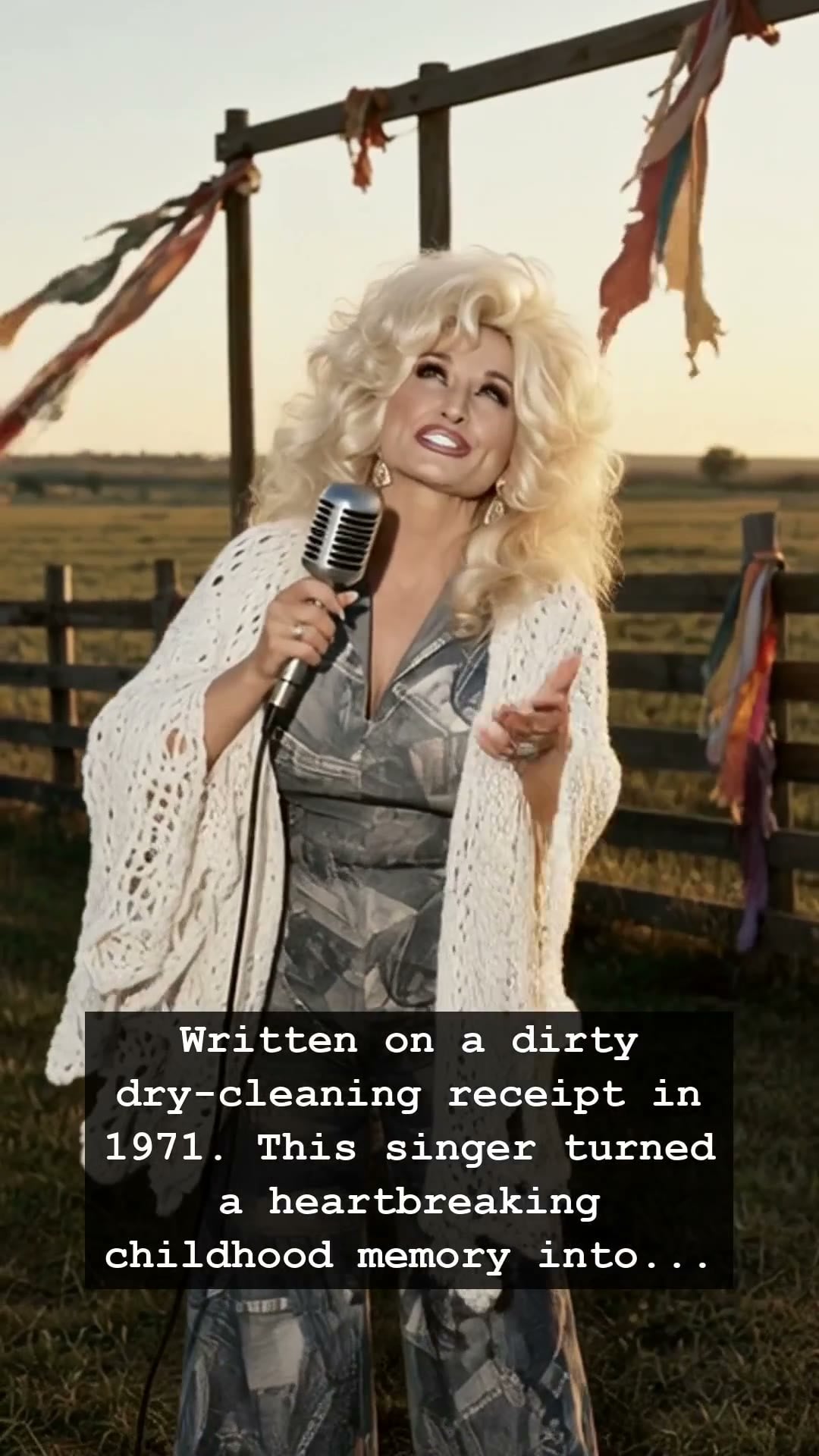
It was 1971, a time when the AM radio waves were saturated with the shifting tides of country music and the burgeoning folk-pop revolution. For Dolly Parton, however, the spotlight was not yet the blinding glare it would become in the era of stadium tours and massive crossover hits. Amidst the grueling grind of touring, while others might have been resting, Dolly Parton found herself staring at a dirty dry-cleaning receipt in the back of a bus. With nothing but a pen and the restless energy of a songwriter, she began to scribble the lyrics to what would become an immortal masterpiece: Coat of Many Colors.
The song was not born from the glamour of Nashville or the bright lights of a television studio. It was pulled straight from the raw, splintered floorboards of a childhood shack in the Great Smoky Mountains. Dolly Parton channeled the image of her mother, Avie Lee, meticulously sewing together tiny scraps of fabric—rags that others would have discarded—into a patchwork coat for her daughter. As she stitched, her mother told the biblical story of Joseph, imbuing the coat with a sense of love and purpose that far outweighed the poverty of their surroundings. This was a narrative of pride in the face of mockery, a sentiment that resonated deeply with anyone who had ever felt the sting of social rejection.
At the time of its release, the music industry was undergoing a seismic shift. The Jukebox era was fading, and the cultural landscape was being redrawn by the influence of artists who dared to be vulnerable. Dolly Parton stood at the vanguard of this change, proving that a simple, heartfelt story could hold its own against the theatrical excesses of the decade. By immortalizing that humble garment, she did not just write a song; she captured a ghost of American history. She invited the listener into her kitchen, into her struggle, and into the profound realization that being rich in love was a currency that could never be devalued by the world’s harsh judgments.
The brilliance of Coat of Many Colors lies in its enduring authenticity. While the charts eventually moved toward the synthetic sounds of the late 70s and the high-octane production of the 80s, this track remained an anchor for the soul. It reminds us of a time before digital noise, when a song was measured by the truth it carried rather than the algorithms that propelled it. Even now, decades later, when the melody drifts through the air, it evokes a specific, sepia-toned nostalgia for a simpler, albeit harder, time in the American experience.
Today, Dolly Parton is a global icon, a titan of industry, and a symbol of resilience. Yet, whenever she steps onto a stage, the audience waits for that moment of connection, for the story behind the rags and the stitches. Her ability to transform a piece of discarded paper into a timeless hymn of dignity is what cements her legacy. It is a testament to the power of human spirit and the way music can mend the frayed edges of our own memories. When you hear those opening chords, remember the woman who saw beauty in the scraps—a master storyteller who turned a childhood memory into a song for the ages.