
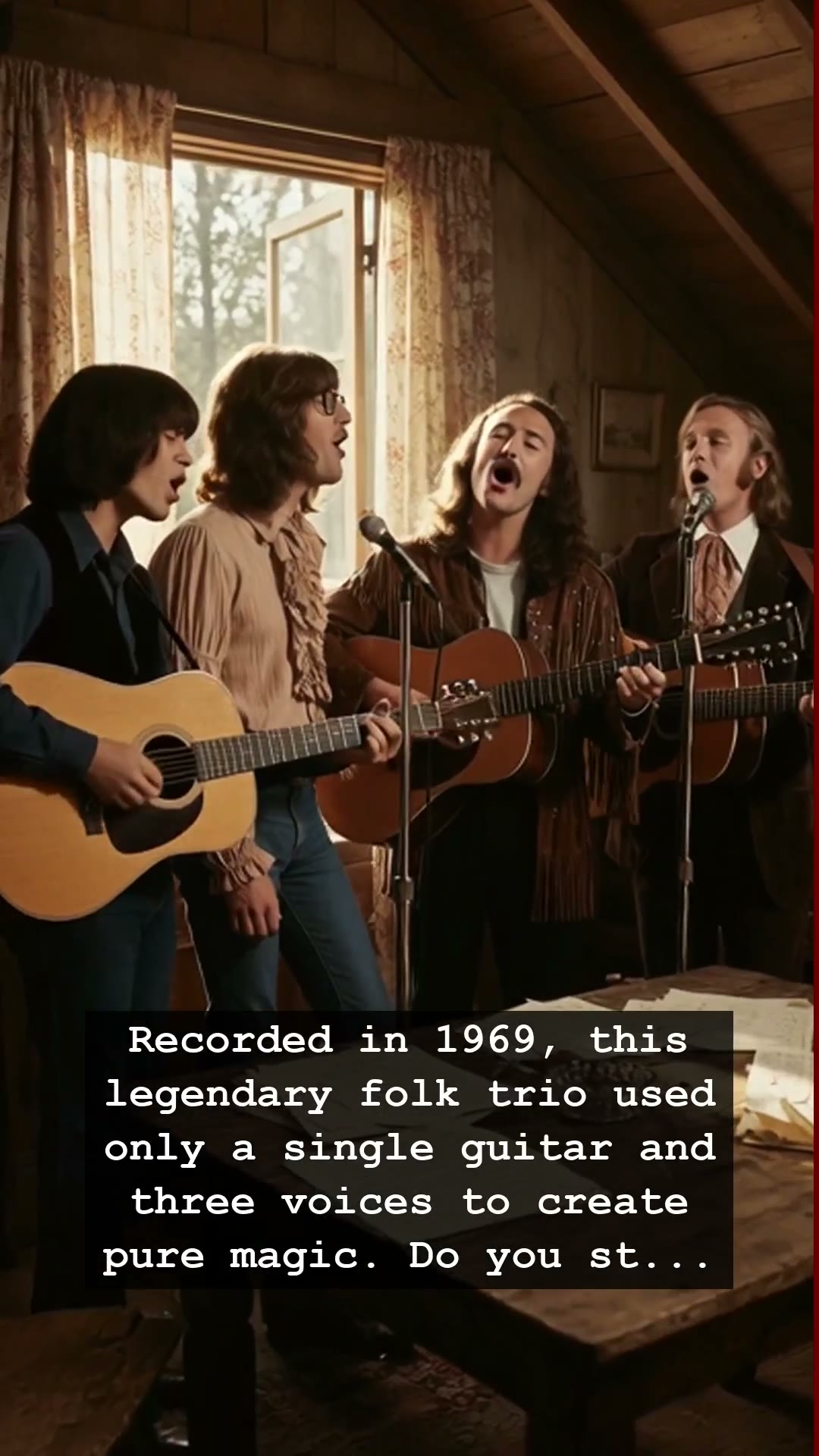
The year was 1969, a time when the world felt like it was shifting on its axis. While the psychedelic explosions of Woodstock echoed in the distance, three men walked into a quiet studio, leaving the chaos behind to chase a singular, fragile sound. Crosby Stills and Nash did not need a massive orchestra or the distortion pedals that would soon define the coming decade. Instead, they relied on something far more powerful: the raw, visceral alchemy of three distinct voices and a single acoustic guitar. It was a moment of pure magic, a sonic tapestry that seemed to suspend time itself for anyone fortunate enough to hear it over the crackle of a vinyl record.
To understand the gravity of Crosby Stills and Nash, one must look at the fractured landscape they emerged from. David Crosby, Stephen Stills, and Graham Nash were already veterans of their respective bands, carrying the emotional baggage of broken contracts and bruised egos. When they first harmonized in Joni Mitchell’s living room, they weren’t just rehearsing; they were stitching together the remnants of a generation. Their music became the soundtrack for a transitionary period in American history, bridging the gap between the idealistic folk movement and the introspective, sometimes turbulent singer-songwriter era that followed.
There is a haunting quality to their early recordings that feels almost impossible to replicate today. The way their voices bled into one another—Crosby’s jagged edge, Stills’ soulful grit, and Nash’s pristine sweetness—created a sound that felt both intimate and monumental. It was the anti-thesis to the booming arena rock that would soon take over the airwaves. While the rest of the world was turning up the volume, Crosby Stills and Nash turned inward, finding a resonance that tapped directly into the collective anxiety and hope of the late sixties. Their music wasn’t just heard; it was felt in the marrow.
Behind the seamless harmonies, however, lay the classic rock and roll struggle. The studio sessions for their debut album were famously tense, fueled by perfectionism and the clashing of three massive, uncompromising creative egos. These conflicts were the shadow side of their genius, a testament to the fact that creating something timeless often requires tearing yourself apart in the process. Yet, when the tape started rolling, the friction evaporated, leaving behind a crystalline sound that has outlived the drama, the substance-fueled nights, and the passing of decades.
Today, listening to these tracks on an old turntable or a streaming playlist evokes a powerful sense of nostalgia. It reminds us of a time when melody reigned supreme and songcraft was a form of religion. The legacy of Crosby Stills and Nash is not just in the hits, but in the silence that follows their final notes—a silence that still carries the weight of a generation. Close your eyes, let the needle drop, and listen to the echoes of 1969 as if hearing them for the very first time.