
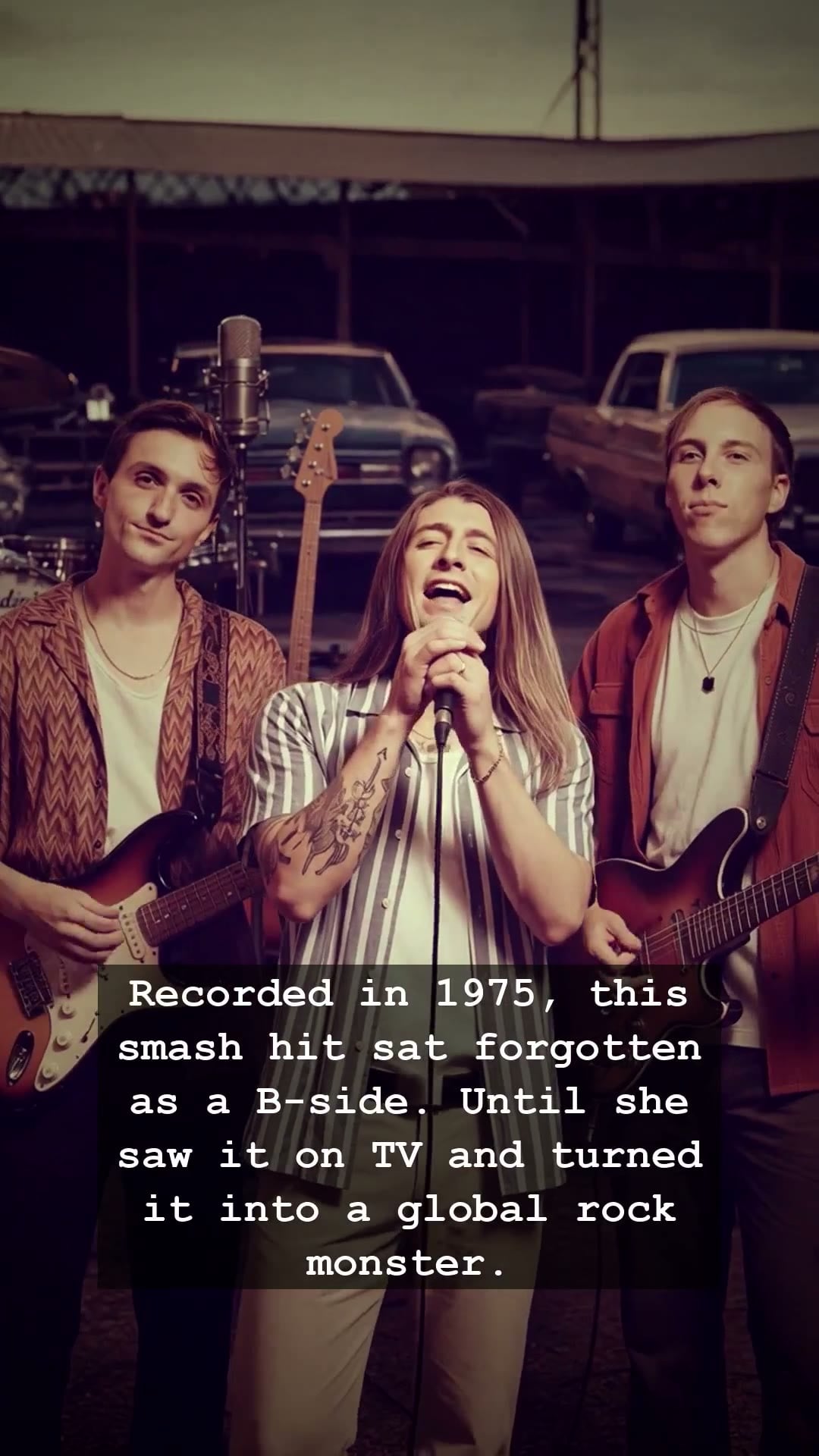
It was 1975, a year where the airwaves were dominated by stadium rock, and a band called The Arrows recorded a track that seemed destined for the dustbin of history. The song was I Love Rock ‘n’ Roll, a gritty, snarling anthem of teenage rebellion. Yet, upon its release, the record barely made a dent. It was relegated to a forgotten B-side, a mere footnote in the sprawling catalog of the era’s fleeting trends. Most listeners turned the dial, oblivious to the fact that they were ignoring a future global phenomenon that would eventually define the spirit of a generation.
Fast forward to a late-night television broadcast, a grainy, flickering screen in a lonely room. Joan Jett, a young woman with fire in her veins and a penchant for leather, happened to catch a performance of the song. In that split second, she heard more than just a melody; she heard a revolution waiting to happen. While the music industry was busy chasing the polished sheen of disco and the calculated gloss of pop, Joan Jett saw the raw, pulsating heart of rock and roll hidden within those chords. It was a moment of pure artistic destiny, the kind that changes the trajectory of rock history forever.
Joan Jett took that discarded song and injected it with her own uncompromising, punk-infused attitude. She transformed it from a minor curiosity into a jagged, stadium-shattering monster. When she finally hit the studio to record her version, the energy was electric. She wasn’t just covering a song; she was reclaiming it. Her raspy, defiant vocals cut through the static of the early eighties, turning the track into an unstoppable cultural force. It became the ultimate anthem for the Walkman generation, blasting through teenagers’ headphones and echoing across every jukebox from London to Los Angeles.
This transformation captures the very essence of Joan Jett. She was never one to play by the rules of an industry that wanted her to be a passive pop star. Instead, she embodied the grit of the burgeoning scene, mirroring the fierce independence that would later define the Grunge era. Joan Jett understood that rock music wasn’t just about technical perfection; it was about the raw, unfiltered expression of the human experience. Her decision to resurrect that forgotten B-side speaks to her innate ability to identify truth in a world of manufactured noise.
Decades later, the song remains a timeless pillar of rock culture, proving that a great hook can survive any period of obscurity. Joan Jett taught us that the best stories in music aren’t always the ones that gain immediate success; sometimes, they are the buried treasures waiting for the right person to light the match. Every time those famous opening chords hit the speakers, we are transported back to that electrifying moment of discovery. The legend of Joan Jett continues to resonate, reminding us that even the smallest spark can set the world on fire.