
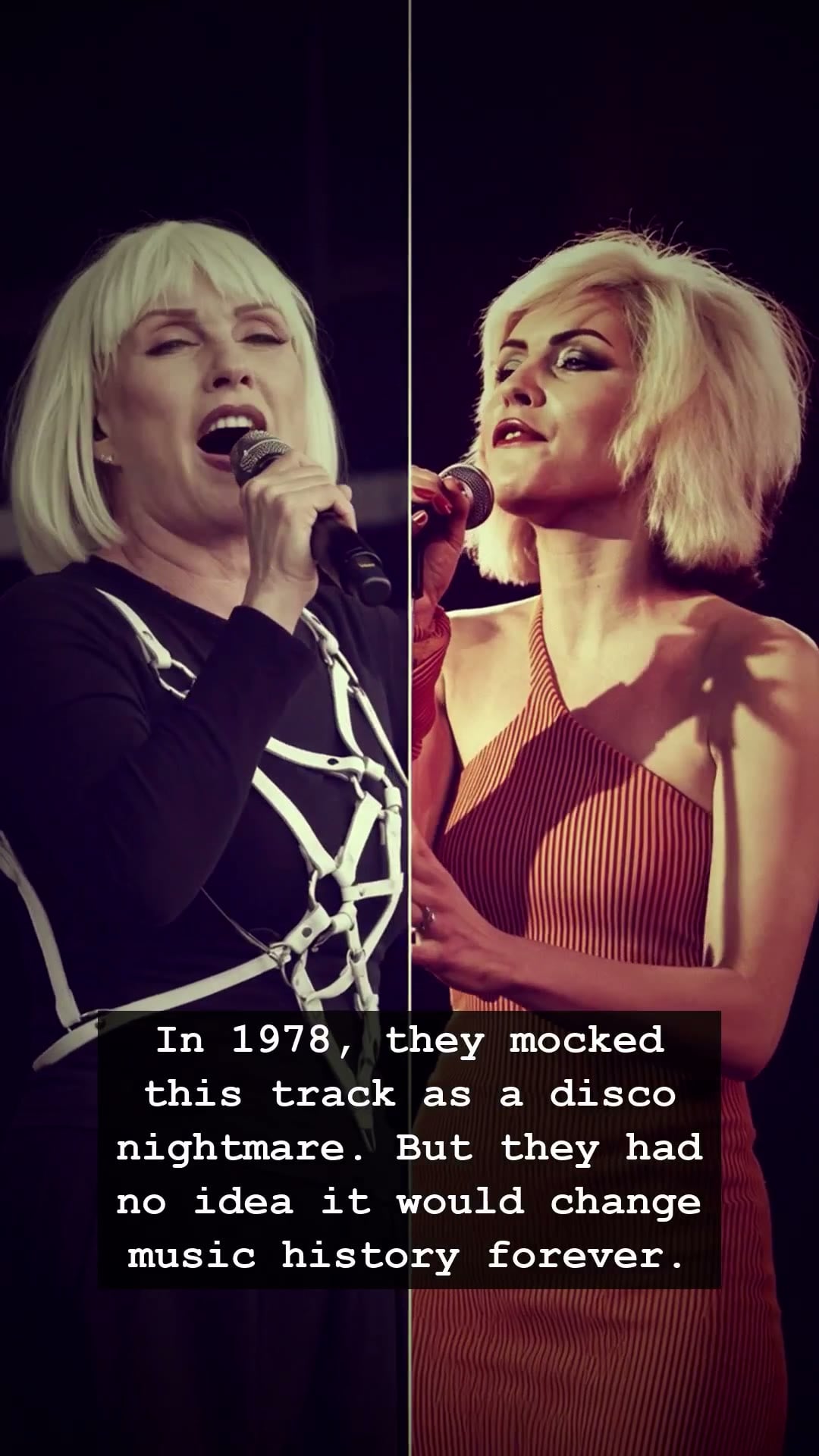
In 1978, the air in the underground New York City scene was thick with the scent of cheap cigarettes and the aggressive, distorted hum of CBGB amplifiers. It was a time when punk was a religion, and conformity was the ultimate sin. When the band members of Blondie first sat down to listen to the skeletal demo of Heart of Glass, they didn’t hear a masterpiece. They actually mocked it, labeling the infectious, pulsing rhythm a disco nightmare. To the purists, disco was the polished enemy of the raw, jagged aesthetic they had fought so hard to cultivate. Little did they know, this polarizing experiment would not only catapult Debbie Harry to superstardom but also rewrite the rules of music history forever.
At the center of this cultural storm was Debbie Harry, the icy-cool platinum blonde whose presence radiated a unique blend of vulnerability and street-smart defiance. While her bandmates scoffed at the track’s synthesized beat, Harry sensed a different kind of power. She saw past the genre labels of the era. She wasn’t interested in playing by the gatekeepers’ rules; she wanted to create a sound that could dominate the dance floors of Studio 54 while maintaining the edgy, nihilistic swagger of the Bowery. It was a daring gamble that bridged the gap between the gritty world of CBGB and the high-gloss, neon-soaked allure of mainstream radio.
As Heart of Glass began to climb the charts, the backlash from the punk underground was swift and vicious. Die-hard fans accused Blondie of selling out, viewing the disco-infused production as a betrayal of their authentic roots. They saw the transition from distorted guitars to rhythmic loops as a corporate surrender. Yet, for Debbie Harry, the transition was a creative evolution. She navigated the mounting pressure and the glare of the flashbulbs with a stoic, enigmatic grace. Despite the internal friction within the band and the external judgment from critics, they pushed forward, turning their back on the rigid expectations of the late seventies music scene.
Looking back, the track stands as a testament to artistic fearlessness. It captures the exact moment where the post-punk era collided with the inescapable allure of electronic soundscapes. It was the era of the Walkman and the burgeoning influence of MTV, where aesthetic mattered as much as melody. By refusing to stay in the corner defined by punk purists, Blondie created a timeless anthem that transcended generations. Debbie Harry proved that the greatest revolutions in music don’t come from following the trend—they come from having the audacity to mock the status quo until it becomes something entirely new.
Today, Heart of Glass remains a staple of our nostalgic landscape, reminding us of a time when boundaries were meant to be blurred. The story of its creation serves as a beautiful, messy reminder that true art often lives in the friction of opposing worlds. So, the next time you hear those shimmering, hypnotic synths, remember the woman who stared down her critics and changed the industry from the inside out.