
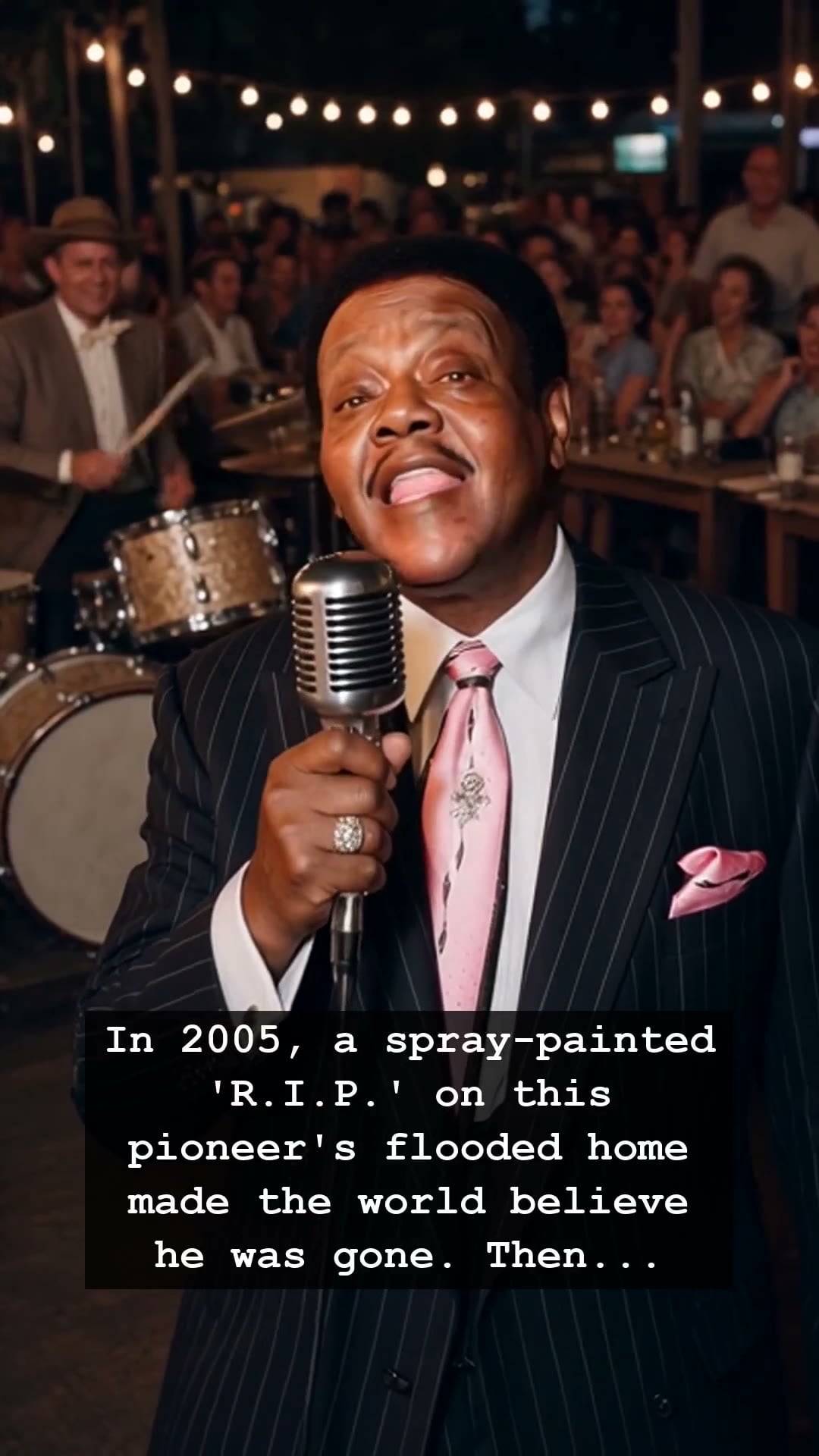
In the sweltering heat of post-Katrina New Orleans in 2005, a chilling sight greeted the world. Among the wreckage and the mud, a spray-painted sign on the side of a ruined home declared a heart-wrenching obituary: R.I.P. Fats Domino. To the millions who had grown up swaying to the gentle, rolling piano rhythms of the man who helped invent Rock ‘n’ Roll, it felt as though a piece of American music history had been swept away by the storm. The radio silence was deafening, and for a terrifying moment, the industry mourned a legend they believed was lost to the rising floodwaters of the Crescent City.
Fats Domino was not just an artist; he was the architect of a sound that bridged the gap between rhythm and blues and the burgeoning rock movement of the 1950s. Long before the era of MTV or the compact convenience of the Walkman, his music was the soundtrack of the Jukebox generation. Tracks like Blueberry Hill and Ain’t That a Shame defined a decade of optimism. He was a pioneer who sold over 65 million records, yet he remained a man deeply rooted in his hometown of New Orleans, refusing to leave the place that gave his soul its rhythm, even when the levees began to fail.
The drama of his presumed death captured the world’s attention, turning a local tragedy into a global story of survival. As rescue teams combed through the devastation, the mystery deepened. When he was finally located and airlifted to safety by the Coast Guard, the relief was palpable. Fats Domino had survived, but he had lost almost everything: his home, his gold records, and his prized piano, the very instrument upon which he had crafted his legacy. It was a stark reminder of the fragile human cost behind the glitz and glamour of musical stardom.
His survival became a symbol of resilience for New Orleans, a city that had weathered hurricanes and heartbreaks for centuries. In the years following, the focus shifted from the legend of his death to the reality of his profound influence. Fans began to revisit his discography, finding new meaning in the simple, joyful melodies that had once dominated the charts. The shock of the fake obituary served as a sobering wake-up call, forcing a generation to appreciate the living legends among them before their stories faded into the archives of time.
Today, the legacy of Fats Domino remains untarnished, standing as a testament to the endurance of early Rock ‘n’ Roll. He navigated the turbulent tides of an ever-changing industry, surviving personal loss and the unpredictable fury of nature, only to emerge as a survivor whose music continues to transcend generations. As we look back through the lens of history, we are reminded that some voices are simply too loud, too soulful, and too essential to be silenced by a storm. Whenever you hear those iconic piano keys strike, remember the man who stood his ground and outlasted the darkness.