
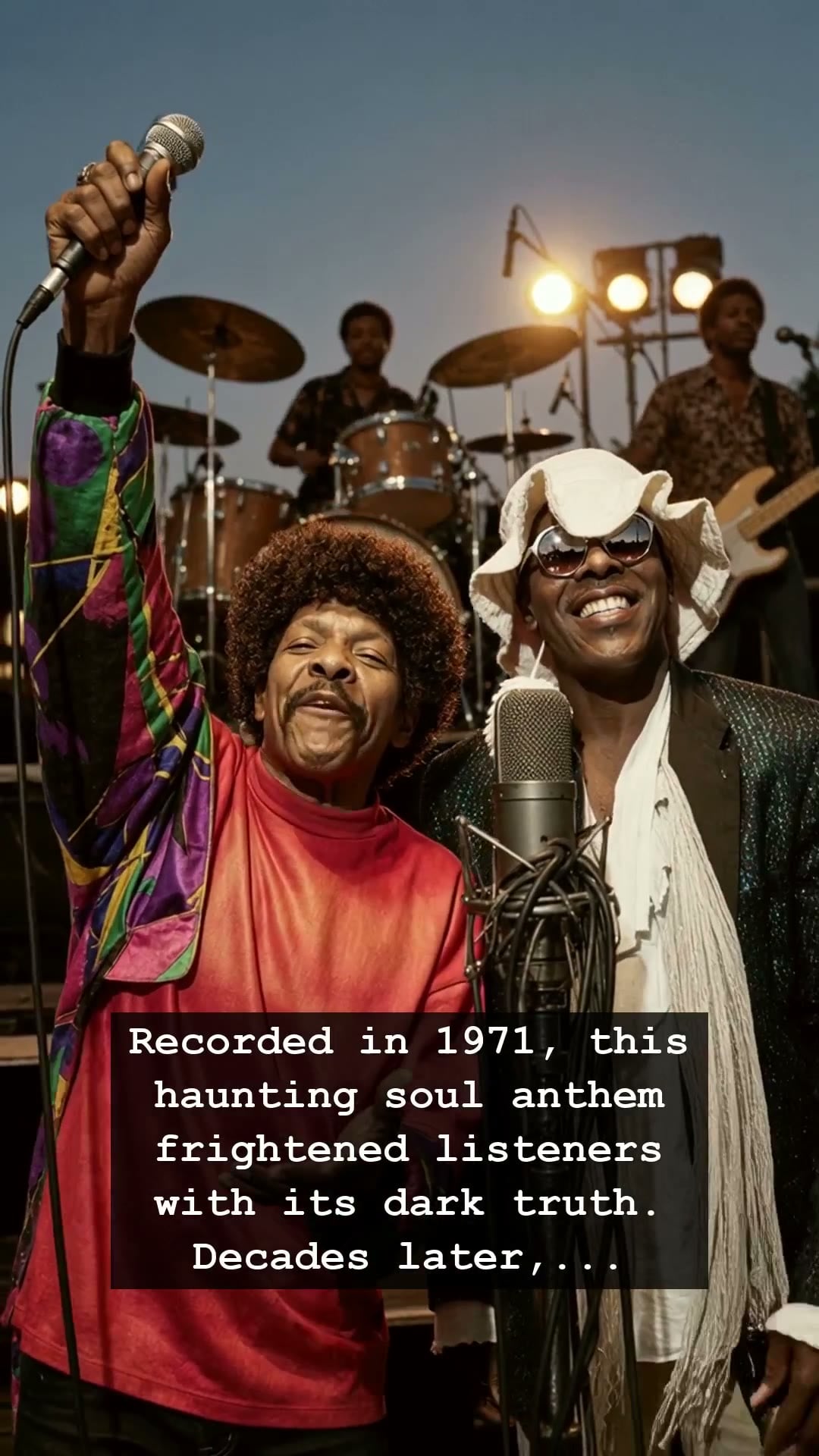
It was 1971, a year when the golden promise of the sixties had withered into a cold, jagged reality. While the radio waves were flooded with sunshine pop, one man was descending into a subterranean layer of sound that would forever alter the course of funk. Sly Stone, the visionary mastermind behind Sly and the Family Stone, released There’s a Riot Goin’ On. It was not the upbeat, psychedelic optimism of Woodstock; it was a murky, drug-fueled, and psychologically heavy confession that terrified listeners who were expecting a continuation of his previous hits. The album, and specifically its atmospheric production, felt like a ghost haunting the very studio where it was recorded.
At the center of this musical revolution was the eponymous masterpiece. Sly Stone had moved away from the bright horns and uplifting lyrics of his earlier work, choosing instead to bury his voice under layers of drum machines and thick, distorted basslines. The production was intentionally claustrophobic, mirroring the internal rot and isolation he felt while living in a cavernous Bel-Air mansion. To those listening through their grainy home speakers in the early seventies, the track sounded less like a song and more like a warning. It was a stark, sonic portrait of an artist losing his grip on the fame that had once embraced him with such fervor.
Sly Stone was once the king of the world, leading a band that shattered racial and gender barriers on stage. But by 1971, the sheen had worn off. The pressure of maintaining his status as a countercultural icon while spiraling into a dependency on substances created a dark, creative vacuum. The recording sessions for this album are now legendary for their erratic intensity; Sly would lock himself in the studio for days, obsessively layering sounds until they became unrecognizable. This wasn’t just funk music; it was the sound of a brilliant mind fragmenting in real-time, captured on magnetic tape for the world to witness.
Decades later, the haunting cadence of his work returned from the shadows to shock a new generation. When modern hip-hop producers began digging through the crates of the seventies, they found the eerie, fractured drum patterns of Sly Stone waiting to be unearthed. His influence transcended the era of the jukebox, finding a second life in the rhythmic loops of nineties boom-bap and beyond. Artists realized that what had been perceived as a chaotic failure in 1971 was, in fact, a visionary blueprint for modern urban music. The ghost of Sly Stone had not vanished; it had simply been waiting for the rest of the world to catch up to his darkness.
As we look back at the era of the Walkman and the slow death of the disco dream, Sly Stone remains a pillar of authentic, if tortured, musical genius. His legacy is not just the hits, but the raw, unfiltered truth he brought to the surface when he was at his lowest. Whether you are discovering these tracks for the first time or revisiting them with the wisdom of age, his music serves as a reminder that the most enduring art often comes from the most uncomfortable places. Do you still hear the echoes of his genius in the music of today?