
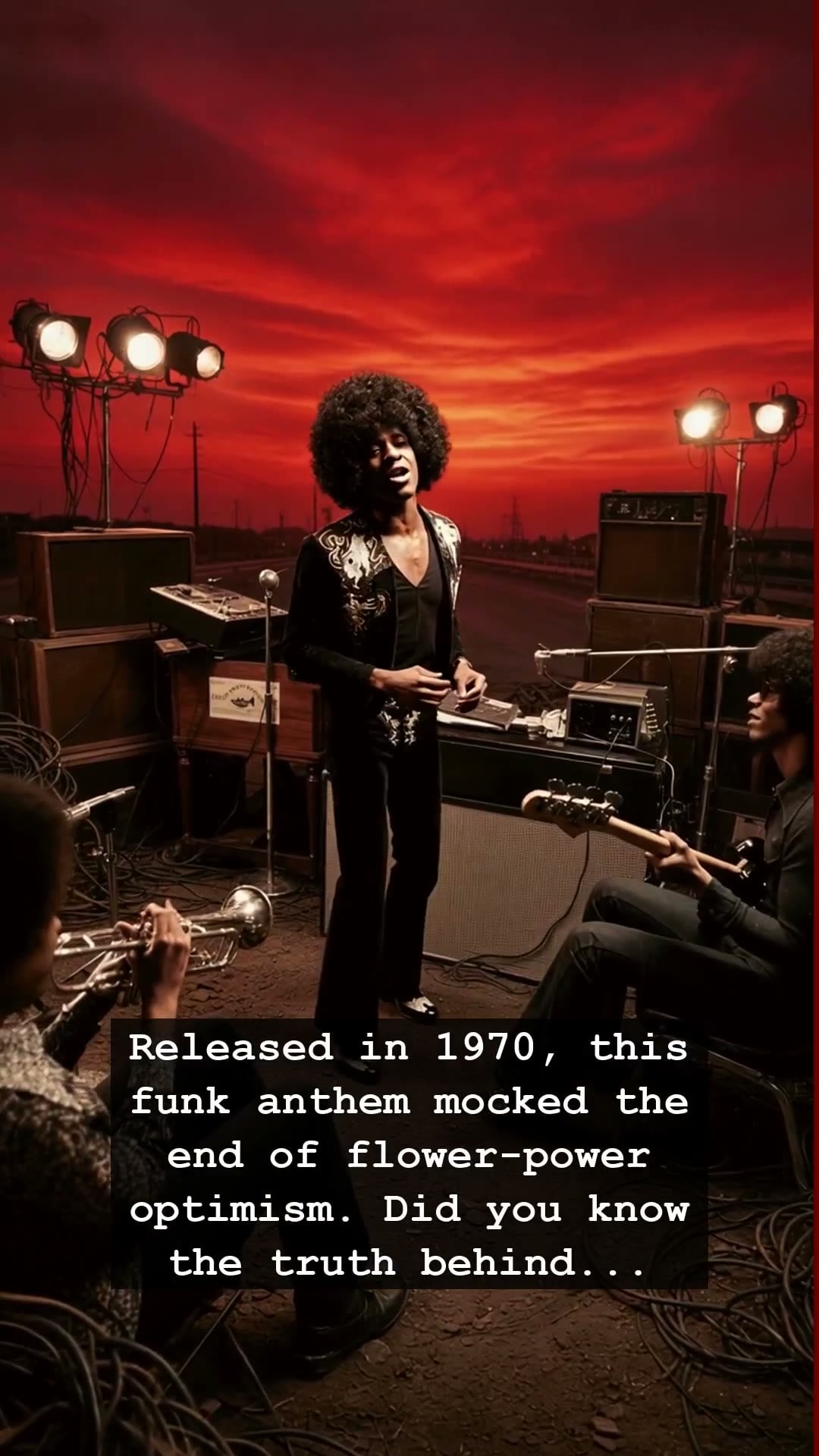
It began as a hazy summer of love, but by 1970, the glitter had turned to grit. The optimism that defined the sixties at Woodstock was dissolving, replaced by the jagged reality of a nation waking up from a Technicolor dream. Amidst this cultural hangover, Sly and the Family Stone dropped a track that felt less like a song and more like a funeral dirge for the counterculture. While the world expected another anthem of peace and unity, Sly Stone delivered something far more sinister: a dark, rhythmic betrayal that mocked the very flower-power movement that had propelled them to superstardom.
Sly and the Family Stone were the architects of a revolutionary sound, blending funk, soul, and psychedelic rock into a high-energy cocktail that ignited dance floors across the country. Yet, behind the scenes, the band was fraying at the edges. The relentless pressure of touring, combined with the allure of dangerous substances and the mounting friction between members, turned their communal joy into a pressure cooker. When they stepped into the studio to record the haunting anthem that would eventually shatter their reputation as the kings of optimism, they were no longer playing for the crowd; they were playing to settle a score with their own idealism.
The genius of the track lies in its cynical brilliance. Sly Stone purposefully borrowed the upbeat, syncopated chord structures of their earlier hits, only to drape them in ominous, biting lyrics that signaled the end of an era. It was a mirror held up to a generation, forcing them to look at the cracks in their utopian vision. Fans who once swayed to the positive vibrations of the late sixties were suddenly met with a cold, funky realization: the party was over, and the dream had curdled into something much harder and more unforgiving.
Listening to the record today, you can still feel the weight of that transition. It serves as a time capsule, capturing the exact moment when the psychedelic haze of the late sixties hit the cold concrete of reality. The precision of the basslines, coupled with the aggressive, stripped-back production, creates a sense of dread that remains palpable even decades later. It was a bold, almost reckless move for a band that had been the toast of the mainstream, but it was precisely this authenticity that solidified their legacy as musical provocateurs.
Even with the passing of time, the shadow of that 1970 masterpiece continues to haunt soul fans and music historians alike. Sly and the Family Stone proved that they were not just a dance band, but social commentators capable of articulating the collective disillusionment of a generation. As the era of the Jukebox gave way to the sharp, synthetic sounds of the late seventies, their legacy remained anchored in that pivotal shift. Next time you drop the needle on their records, listen closely for the ghost of that dying dream hiding beneath the funk, and let the echoes of a lost decade wash over you once more.