
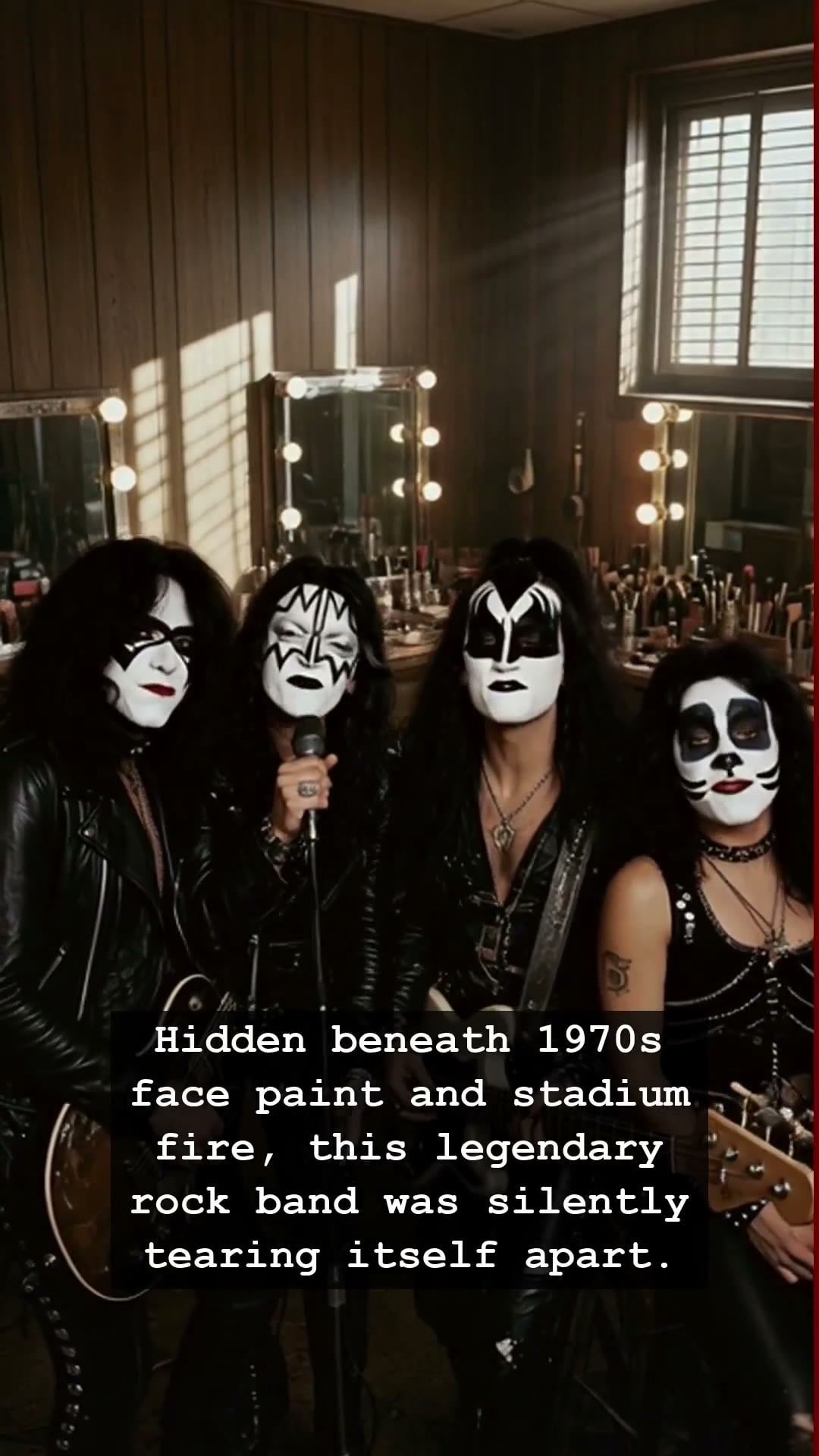
The year was 1975, and the world was changing. In the flickering glow of a million Jukeboxes, a new kind of spectacle was taking root. Amidst the hazy rise of stadium rock, four figures emerged from the smoke, faces painted in grotesque yet mesmerizing masks of greasepaint. They were KISS, the ultimate arena rock titans who promised to bring the fire, the blood, and the thunder to every living room in America. To the millions of teenagers clutching their vinyl records, they were gods of rock and roll. But beneath the leather, the platform boots, and the carefully crafted personas, the truth was far less glamorous. Behind the scenes, the band was a pressure cooker of ambition, ego, and deep-seated resentment that threatened to tear them apart at the seams.
While the public saw a united front of larger-than-life superheroes, the reality was a fractured brotherhood. The internal power struggle between Paul Stanley and Gene Simmons, and the growing alienation of Ace Frehley and Peter Criss, created a toxic atmosphere that turned every tour bus into a battleground. For the band, the makeup wasn’t just a gimmick to sell out stadiums; it was a necessary prison. It kept the real men hidden while the characters performed, effectively dehumanizing the very people who gave them life. By the time the seventies hit their stride, the constant friction of touring and the relentless demand for more, bigger, and louder spectacles left the members of KISS emotionally depleted.
The era itself added to the strain. This was a time when the industry demanded absolute perfection. The pressure to maintain the KISS brand during the transition into the eighties was immense, as shifts in musical trends and the looming shadow of disco threatened to bury traditional rock acts. The band lived on a razor’s edge, fueled by the excesses of the era and the crushing weight of fame. There were nights when the pyrotechnics felt less like a show and more like a distraction from the crumbling interpersonal bonds. When Ace and Peter eventually stepped away, it felt like the end of an era, leaving behind a legacy that was as broken as it was legendary.
Looking back, the story of KISS is a haunting reminder of the cost of total immersion in one’s craft. They transformed the concert experience forever, turning rock shows into massive, high-budget theatrical productions that defined the decade. Yet, their journey serves as a poignant study of the dark side of fame. The masks allowed them to become icons, but they also masked the pain and the human fragility that existed beneath the surface.
Today, the legend of KISS continues to cast a long shadow over music history. We remember them for the hits, the spectacle, and the sheer audacity of their performance. But if you listen closely to those vintage tracks, you can hear the ghost of a band fighting to keep its identity intact. They were the architects of an era, four men caught in a storm of their own making, forever trapped in the fire they lit for our entertainment.