
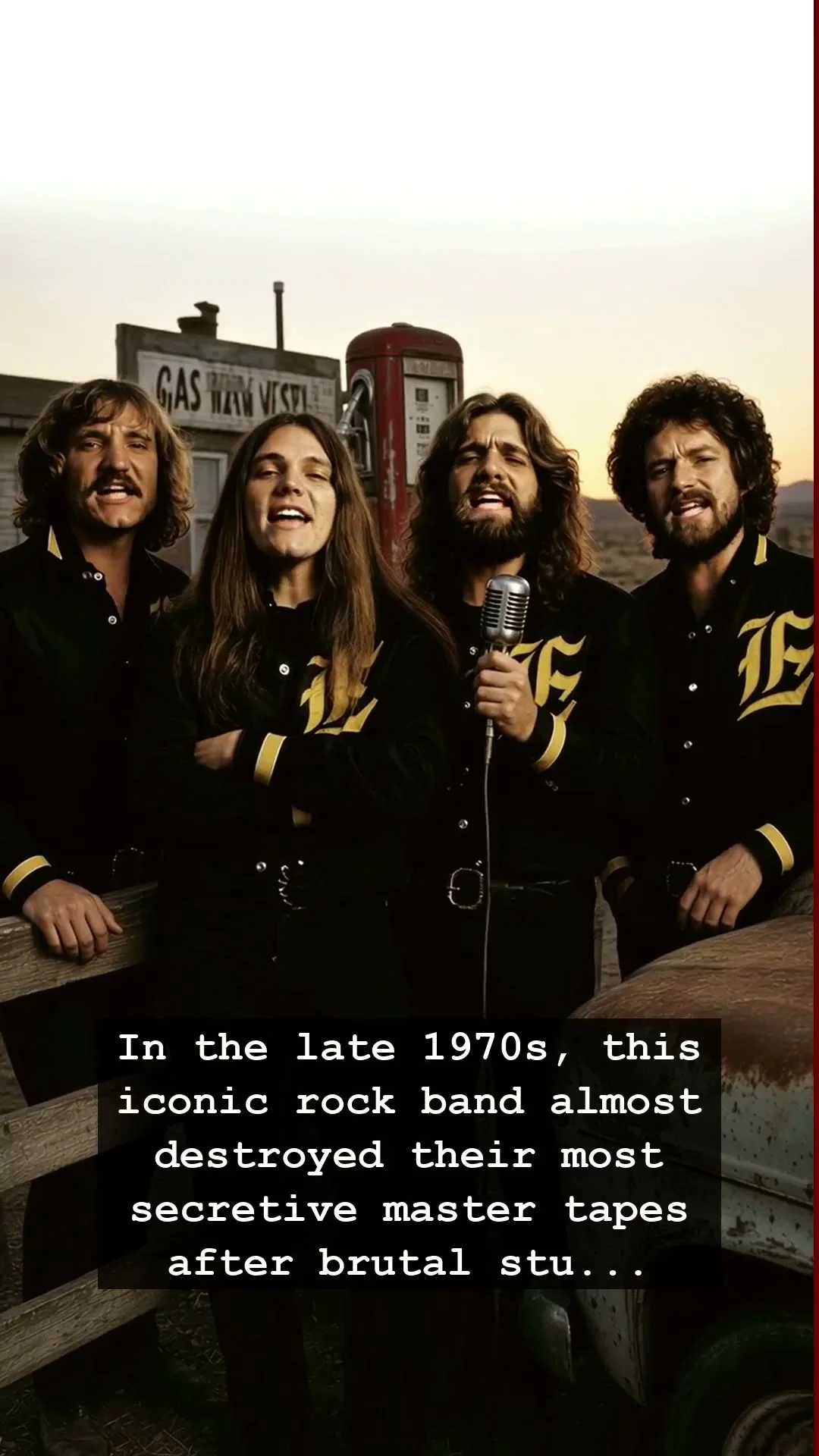
It was 1976, and the air in the Los Angeles recording studio was thick with the scent of stale cigarette smoke and resentment. The Eagles, once the golden boys of the California country-rock scene, were deep into the grueling sessions for their magnum opus, Hotel California. While the world saw them as the laid-back architects of the sunshine-soaked sound that defined the decade, the reality behind the soundproof glass was a powder keg waiting to explode. Tensions had reached a breaking point, and in a moment of pure, unadulterated fury, the band members nearly ordered the destruction of their most elusive master tapes, threatening to erase their own musical legacy before it could ever reach the spinning needles of home turntables.
To understand the madness, one must look at the pressure of the late 1970s. The Eagles were not just a band anymore; they were a global cultural phenomenon struggling under the weight of their own mythology. Cocaine-fueled all-nighters, bitter creative disputes, and the encroaching shadow of the punk rock explosion made the band feel like they were constantly looking over their shoulders. As they labored over complex vocal harmonies and intricate guitar solos, the friction between Don Henley and Glenn Frey became a recurring, toxic theme that threatened to dismantle the group. Every take was a battleground, and every silence in the control room felt like a precursor to a total collapse of their brotherhood.
There is a specific, haunting quality to the Eagles tracks from this era that seems to capture this underlying anxiety. It is the sound of perfectionism pushed to the brink of insanity. Listen closely to the layers of the production and you can almost hear the exhaustion embedded in the grooves. During those feverish, late-night sessions, the band wrestled with their own identities, caught between the fame that had stripped away their privacy and the artistic integrity they desperately wanted to maintain. It was a time when the Jukebox culture was evolving into something more corporate, and the Eagles were the kings of this shifting, high-stakes landscape.
In those volatile moments, the master tapes were not just pieces of magnetic plastic; they were symbols of a survival they weren’t sure they wanted to claim. The threat to destroy the tapes wasn’t just a tantrum; it was a desperate cry for release from the relentless, grinding engine of the music industry. Thankfully, cooler heads prevailed, and the tapes were saved from the scrap heap, allowing the world to receive a record that would become the soundtrack of a generation. The drama eventually subsided, but the scars remained, woven into the very fabric of the music.
Decades later, the legend of these secret, nearly-destroyed sessions serves as a reminder that even our most beloved icons were merely human, struggling with the crushing weight of expectation. The Eagles left us with a legacy of flawless melodies, but it is the knowledge of their struggle that makes their music hit differently today. When you drop the needle on your favorite track now, consider the ghosts in the machine—the arguments that were never recorded and the ego-driven battles that fueled the fire. It is a testament to their brilliance that even in the face of self-destruction, they crafted something so hauntingly timeless that we are still talking about it today. Do you think we lost a piece of rock history in those hours of silence, or did the tension actually make the music better?