
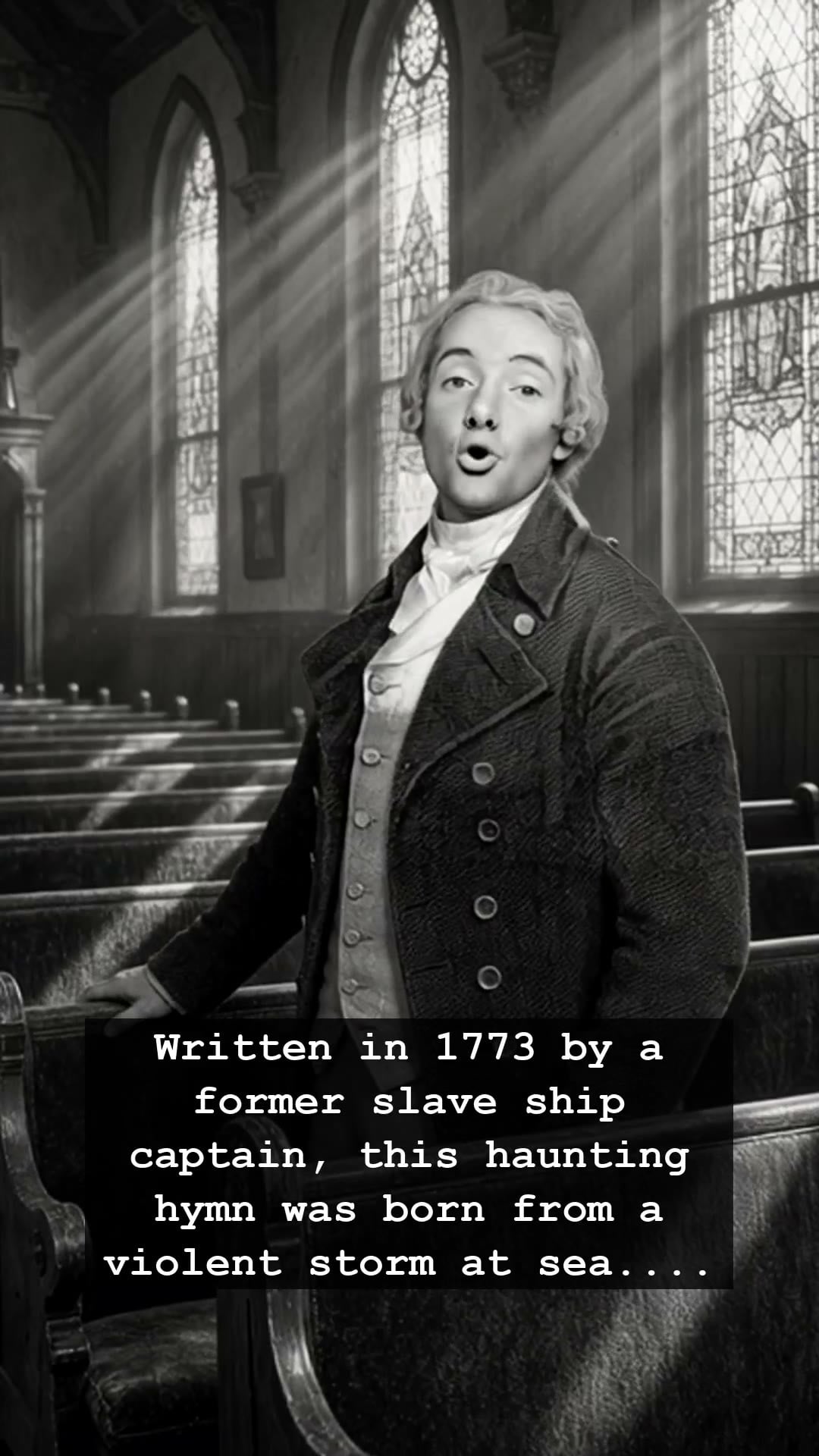
It is a melody so ubiquitous that it feels woven into the very fabric of human experience. From the solemn halls of national monuments to the quiet corners of rural churches, the haunting notes of Amazing Grace have offered solace for centuries. Yet, the story behind this legendary hymn is far removed from the serene cathedrals where it is often sung today. The anthem was not born in a place of peace, but forged in the crucible of a violent, life-altering storm that shattered the soul of a man named John Newton.
In the mid-18th century, John Newton was far from a saint. He was a hardened slave ship captain, a man who saw human beings as cargo and traded in the darkest of commodities. His life was defined by the harsh, salty spray of the Atlantic and the brutal indifference required to sustain the slave trade. In 1748, however, the ocean demanded a reckoning. A catastrophic storm battered his vessel, tossing the ship like a splinter in a tempest. Faced with imminent death and the cold reality of his own mortality, John Newton began to pray—a desperate, broken plea from a man who had never before felt the weight of his own sins.
That night, the terror of the churning sea became the turning point for John Newton. He survived, but he was no longer the same man who had boarded that ship. Over the following years, a slow and agonizing transformation took root. He left the horrors of the slave trade behind, eventually becoming an abolitionist whose voice helped turn the tide of public opinion in England. The lyrics he penned in 1773 were not merely poetic verses; they were a raw, unfiltered confession of a man who realized he was a wretch in need of grace.
When we listen to the hymn today, we are hearing more than just a melody; we are listening to the echoes of a conscience awakening. It stands as a powerful testament to the idea that no one is beyond the reach of redemption. John Newton’s life reminds us that history is often written in blood and darkness, yet the human spirit possesses a staggering capacity for change. It is a stark contrast to the glitz of modern music eras, yet it possesses a timeless gravity that far outlasts the temporary fads of any decade.
Throughout the late 20th century, even as we moved through the eras of jukeboxes, vinyl records, and the rise of global pop, this hymn remained an immovable pillar of our collective consciousness. It has been covered by artists across every genre, from folk icons to arena rockers, each adding their own layer of grief and hope to the words written by John Newton. It serves as a bridge across time, connecting us to a man who looked into the abyss and found something beautiful enough to change his path forever.
Today, as you sit back and revisit the classics that shaped the American spirit, take a moment to reflect on the man behind the music. John Newton left us a legacy that transcends the stage, the studio, and the passing trends of history. His story remains a haunting, beautiful reminder that grace is often found in the aftermath of our greatest storms. Do you remember the first time those words touched your heart, and can you hear the desperate, echoing truth within them now?