
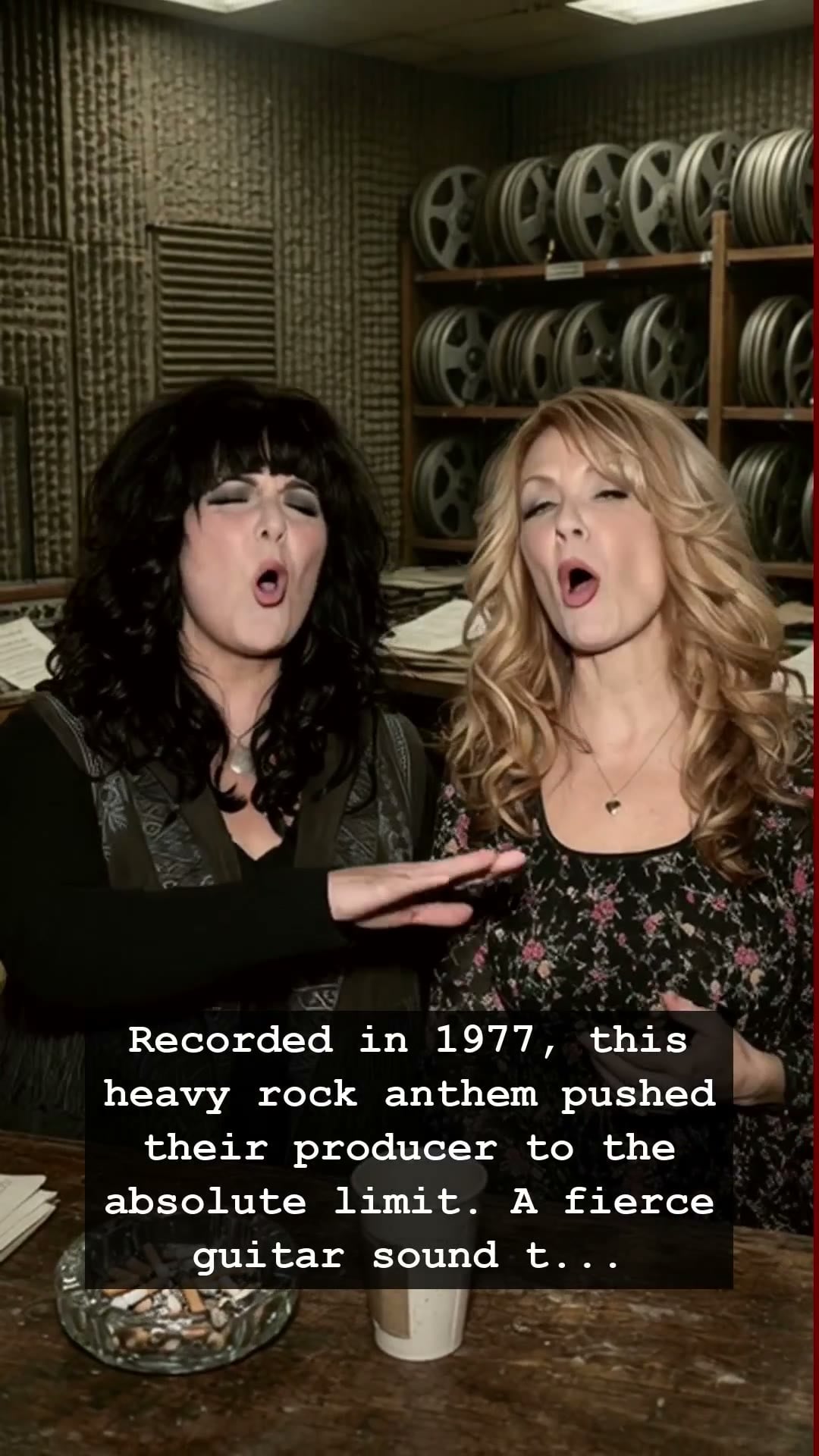
It was 1977, and the air inside the recording studio was thick with tension and the smell of ozone. A mixing board, pushed far beyond its intended capacity, hummed with a volatile energy that threatened to short-circuit at any second. This was not merely a recording session; it was a battleground where Ann and Nancy Wilson of the band Heart were forging a sound that would redefine the boundaries of arena rock. Their producer, sweating through his shirt, realized he was capturing something dangerously close to sonic perfection, a heavy guitar riff so primal and sharp that it seemed to vibrate the very walls of the building. The song, of course, was Barracuda, an anthem that would soon roar from every jukebox and stadium speaker across America.
The genesis of this legendary track was born from pure, unadulterated fury. While the world saw Heart as folk-inspired rockers, the band was battling a vicious smear campaign from their own record label. They were tired of being objectified, and their frustration fueled the snarling, aggressive opening chords of the track. As the needle drops on the original vinyl, you can still hear that raw, wounded energy that Heart poured into every beat. For the listeners of the late seventies, this song was a wake-up call, a testament to the fact that women in rock were not just muses—they were architects of the heavy, distortion-laden sound that defined the decade.
To hear Barracuda in 1977 was to experience the shift in musical gravity. This was the era of the Walkman’s infancy and the golden age of stadium tours, where bands had to be larger than life to captivate fifty thousand fans. Heart achieved this by blending Nancy Wilson’s intricate, razor-sharp guitar techniques with Ann’s powerhouse vocals, creating a wall of sound that felt massive yet deeply personal. The production techniques used during those grueling hours in the studio were revolutionary; the guitar tone was layered until it felt like a serrated blade cutting through the silence of the radio waves, setting a new benchmark for rock production that producers would study for decades to come.
Yet, behind the glory of the platinum records and the screaming crowds lay the darkness of the touring life. The pressure to repeat the success of 1977 was immense, leading to the exhaustion and internal friction that often plagues rock legends. Heart stood at the center of this hurricane, balancing the demands of fame with the desire to maintain their artistic integrity. The song stands today as a monument to their resilience during that turbulent chapter of rock history.
Even now, decades after the song first tore through the airwaves, the opening riff of Barracuda still has the power to stop you in your tracks. It transports us back to a time when music was visceral and dangerous, a time when a simple guitar line could change the course of rock and roll. It reminds us of a period when the studio was a workshop for rebellion and every note mattered. When you listen to it today, do you still feel that same jolt of electricity that hit the world back in 1977?