
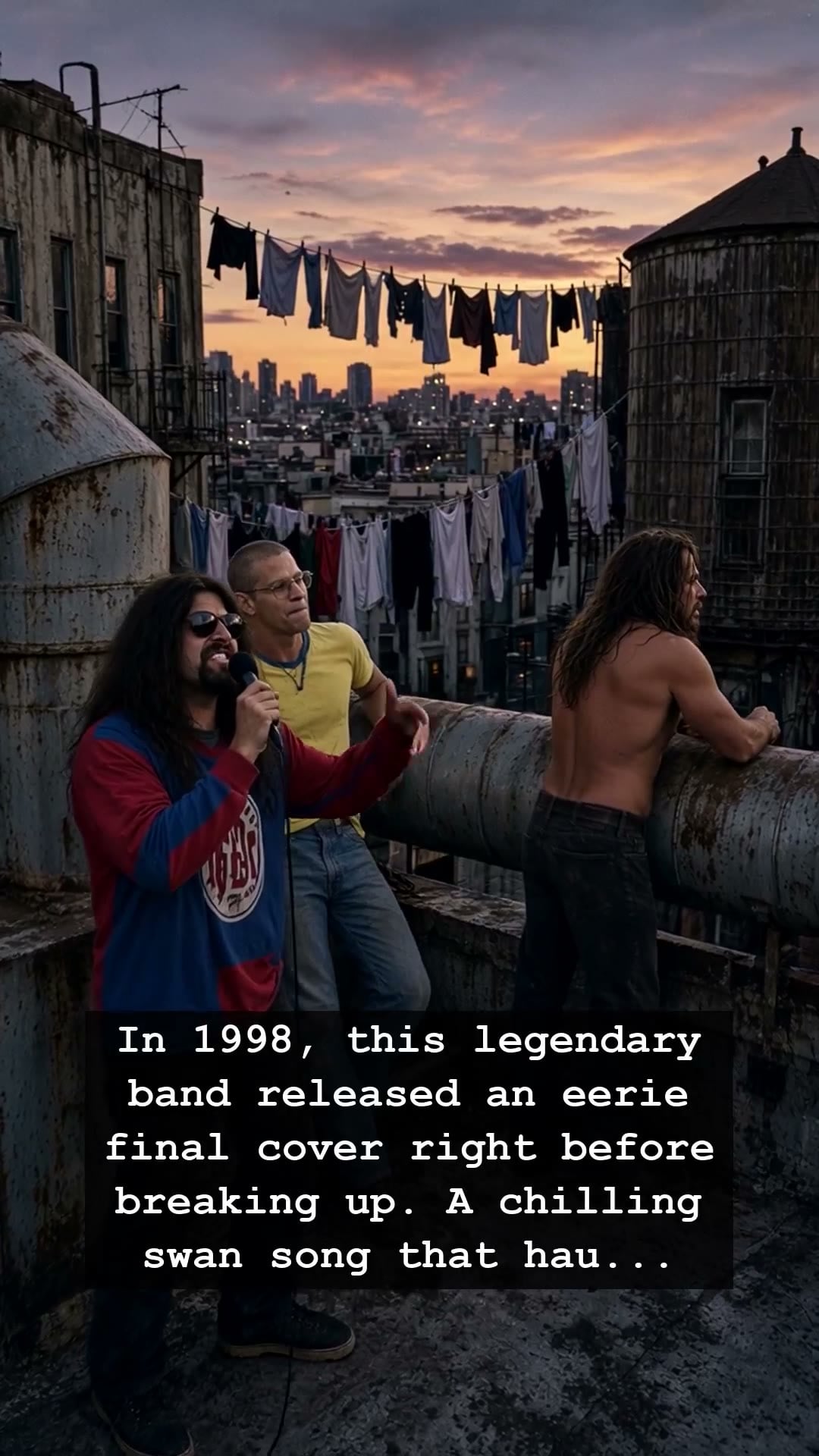
It was the dying breath of an era that refused to go quietly. In 1998, as the world braced for the digital uncertainty of the new millennium, the alternative rock scene felt the ground shift beneath its feet. Faith No More, a band known for defying categorization and disrupting the airwaves since the mid-eighties, suddenly went silent. But before they vanished into the void, they left behind one final, unsettling mystery: a cover song that felt less like a parting gift and more like a ghost story told in a cold, empty studio. That haunting swan song serves as a grim final chapter to a decade defined by raw, unfiltered emotional intensity.
The song was a cover of I Started a Joke by the Bee Gees, yet in the hands of Faith No More, the lighthearted original was transformed into something fragile, melancholic, and deeply eerie. Mike Patton, the band’s mercurial frontman, stripped away the irony that usually defined their work, delivering a vocal performance that sounded like a man standing on the edge of a precipice. It was a stark departure from the chaotic, genre-bending energy that had propelled them to fame. To listeners hearing it in 1998, it felt as though the band was dismantling their own legacy, piece by piece, right before our ears. The atmosphere was heavy, suffocating, and undeniably final.
Looking back at the late nineties, the music industry was experiencing a strange, hollowed-out transition. The explosive energy of the grunge movement had faded, and the polished veneer of commercial pop was beginning to dominate the MTV landscape. Faith No More, a group that had thrived on unpredictability, suddenly found themselves out of place in this shifting cultural climate. Their internal tensions, common among bands that burned as bright and fast as they did, had reached a breaking point. The friction that made them icons—the collision of heavy metal, funk, and experimental art—had finally caused the engine to stall. Choosing to bow out with such a spectral, vulnerable track was a bold artistic statement that mirrored the dissolution of their own identity.
What makes this swan song resonate today is its haunting authenticity. In an age where digital production often sands away the rough edges of human emotion, the 1998 Faith No More recording remains a raw, visceral experience. It captures the exact moment a creative force acknowledges its own end. It is a reminder of the time when artists could simply walk away, leaving their fans with questions rather than a calculated, televised reunion tour. That final track became the epitaph of a career that never took the easy road, proving that even in silence, a band could speak volumes.
Decades later, the legend of Faith No More persists, fueled by this final, chilling masterpiece. It stands as a testament to the idea that music is not just sound; it is a timestamp of our own personal histories. Whether you were there when it first hit the radio or discovered it in the quiet solitude of your own archives, the song lingers. It reminds us that every story has an end, but if you listen closely to the echoes, the music never truly dies. Does the haunting melody still echo in your mind, or have you finally let the silence take over?