
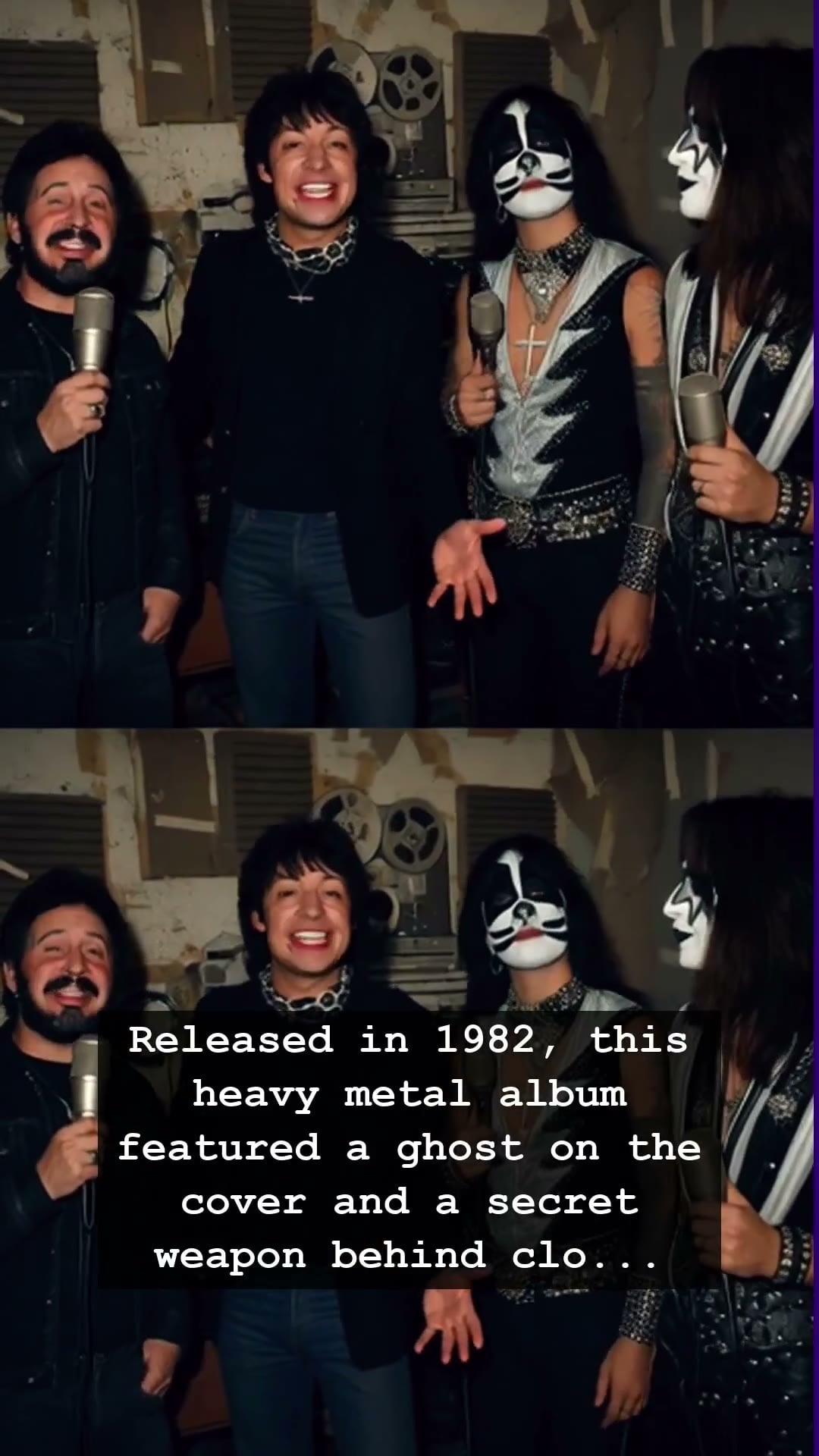
It was 1982, an era defined by the neon glow of MTV and the heavy thumping of hair metal radiating from every teenager’s Walkman. KISS, the kings of theatrical hard rock, stood at a precarious crossroads. Their fan base, the loyal KISS Army, was fracturing, and their commercial grip on the charts was slipping. Amidst this turmoil, the band released Creatures of the Night, an album that stands today as a dark, heavy masterpiece of the era. But look closely at the cover art and the production credits, and you will find a story that goes far deeper than greasepaint and leather. A haunting shadow looms over this record, involving a departed guitar hero and the secret weapon that saved the band from total oblivion.
While the legendary Ace Frehley appeared on the front cover of the album, his presence was merely a ghostly remnant of a relationship already dissolved. Behind the closed doors of the recording studio, the real magic was happening in total secrecy. The band was in shambles, struggling with internal ego clashes and the pressures of a fading glam aesthetic. To compensate for the lack of cohesion, they relied on a rotating cast of ghost musicians to carry the heavy lifting. These sessions were not just about notes and chords; they were a high-stakes gamble to redefine the KISS identity before the decade completely passed them by.
In these dimly lit studios, the true sound of the album was forged by unsung heroes whose names were buried in the liner notes, if they appeared at all. Steve Farris and Bob Kulick stepped into the void, laying down guitar tracks with a precision that Ace Frehley could no longer provide due to his mounting personal struggles. The band was essentially a shell of its former self, yet the sonic output was arguably some of the most aggressive, tightest, and most authentic heavy metal they had ever produced. It was a classic tale of rock and roll irony: the performance that saved the legacy was actually an elaborate smoke-and-mirrors act.
Looking back at 1982, it is easy to see why this story continues to fascinate. It captures the dark side of fame and the ruthless reality of the music industry, where the image is just as vital as the melody. Fans who lived through the era of the Jukebox and the rise of stadium rock understand the tension of those times. We loved the spectacle, but we were often shielded from the raw, human fragility behind the stage personas. The story of this album remains a testament to the fact that even the loudest rock gods were once mortals, desperate to survive the changing tides of their industry.
Today, the legend of this record resonates with those who cherish the history of American rock. Whether you are a long-time member of the KISS Army or a curious newcomer diving into the roots of 80s heavy metal, the drama of this era never loses its edge. It serves as a stark reminder that sometimes the most enduring music is born from the deepest cracks in the foundation. As we listen back to those soaring riffs, we aren’t just hearing a band; we are hearing the echo of a secret that defined a decade.