
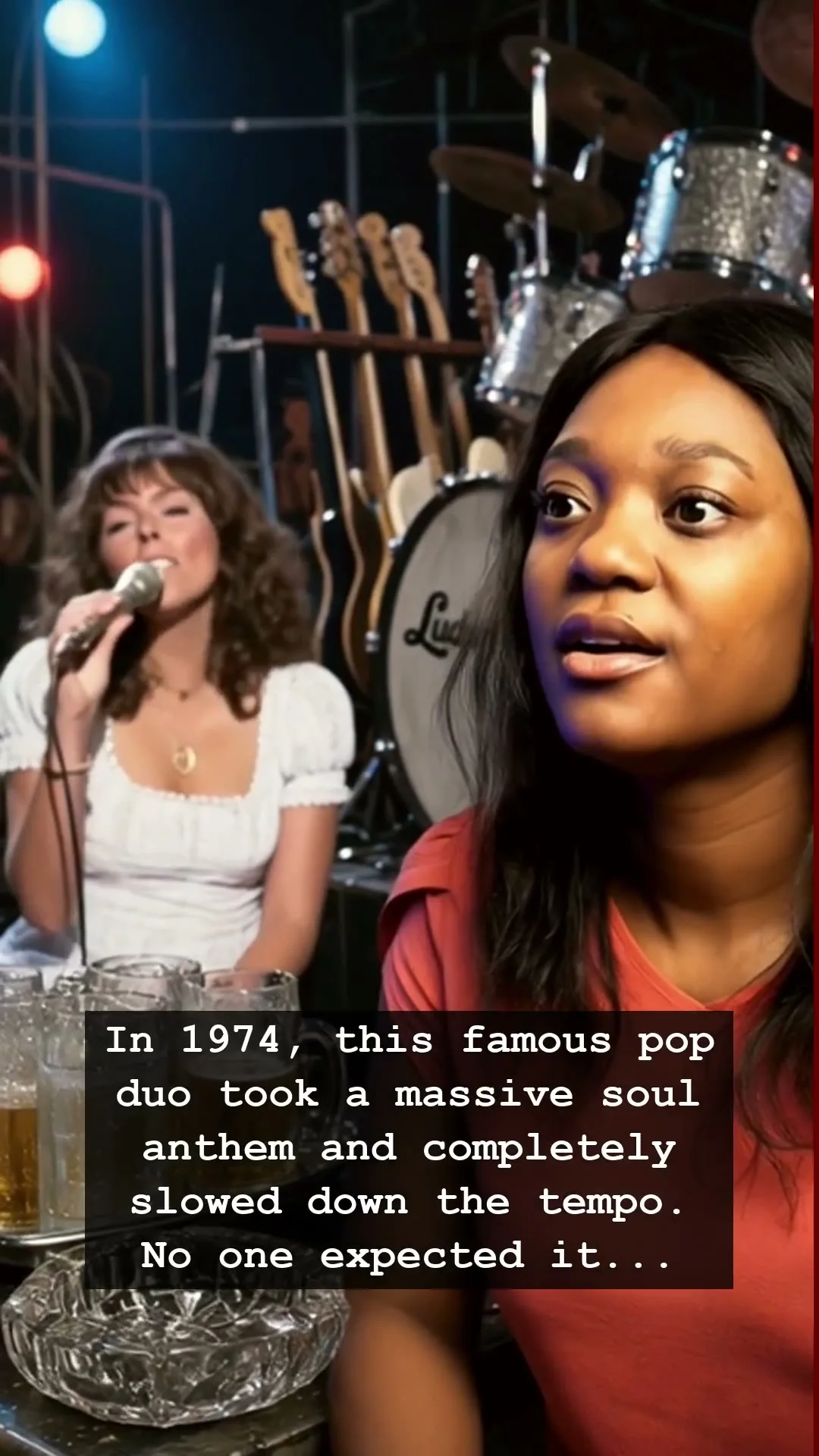
It was 1974, and the airwaves were dominated by the heavy distortion of arena rock and the budding, glitter-strewn promises of disco. In the midst of this sonic evolution, a brother-sister duo known for their pristine, wholesome pop image did the unthinkable. The Carpenters, masters of soft melodies, decided to take a gritty, high-energy Motown anthem and drain the fire right out of it. They slowed the tempo to a crawl, stripped away the frantic brass, and replaced it with Karen Carpenter’s haunting, velvet-smooth vocals. It was a gamble that industry insiders whispered would be their professional suicide, but when Please Mr. Postman hit the airwaves, it didn’t just survive; it climbed to the very top of the charts.
To understand the magnitude of this decision, one must remember the cultural landscape of the era. The Jukebox was a sacred device in every neighborhood diner, and Motown tracks were designed to get people moving, sweating, and dancing until dawn. When Richard Carpenter suggested stripping back such an iconic piece of soul history, he was essentially challenging the rhythmic heartbeat of pop culture. Yet, the Carpenters had an uncanny ability to find the hidden melancholic core in any song. By transforming a frantic cry for mail into a pensive, layered pop masterpiece, they tapped into a sense of yearning that resonated deeply with the generation listening on their new, portable cassette players and living through the shifting tides of the seventies.
Behind the polished harmonies and the televised smiles lay a complex, often strained reality. Richard was the architect of their sound, obsessively layering tracks in the studio until they shimmered, while Karen was the voice that carried the weight of that perfection. This tension often created a beautiful, if fragile, equilibrium. Recording Please Mr. Postman was a testament to their unique creative process—a calculated, almost surgical deconstruction of a song that had already been solidified in the cultural canon. They didn’t just cover it; they claimed it, turning a dance floor staple into a sophisticated, radio-friendly ballad that defined the mid-seventies aesthetic.
Even today, there is something profoundly unsettling and deeply comforting about the way the Carpenters approached their music. Their version of Please Mr. Postman remains a time capsule of an era where pop music was beginning to fracture into specialized genres. It captures the essence of a band caught between the traditional sounds of the past and the polished, over-produced future of studio music. Every time Karen’s voice cuts through the arrangement, we are transported back to a time of wood-paneled station wagons and long, lonely drives.
Looking back, the success of this track serves as a reminder that the most enduring music is often born from the most daring risks. The Carpenters were never just a soft-pop act; they were meticulous curators of emotion. As we listen today, we aren’t just hearing a number-one hit; we are hearing the heartbeat of a duo who dared to slow down the world, even for just a few minutes. Whether you remember hearing it on the radio for the very first time or discovered it through a dusty vinyl record, the magic of the Carpenters continues to linger, proving that great songs are truly timeless.