
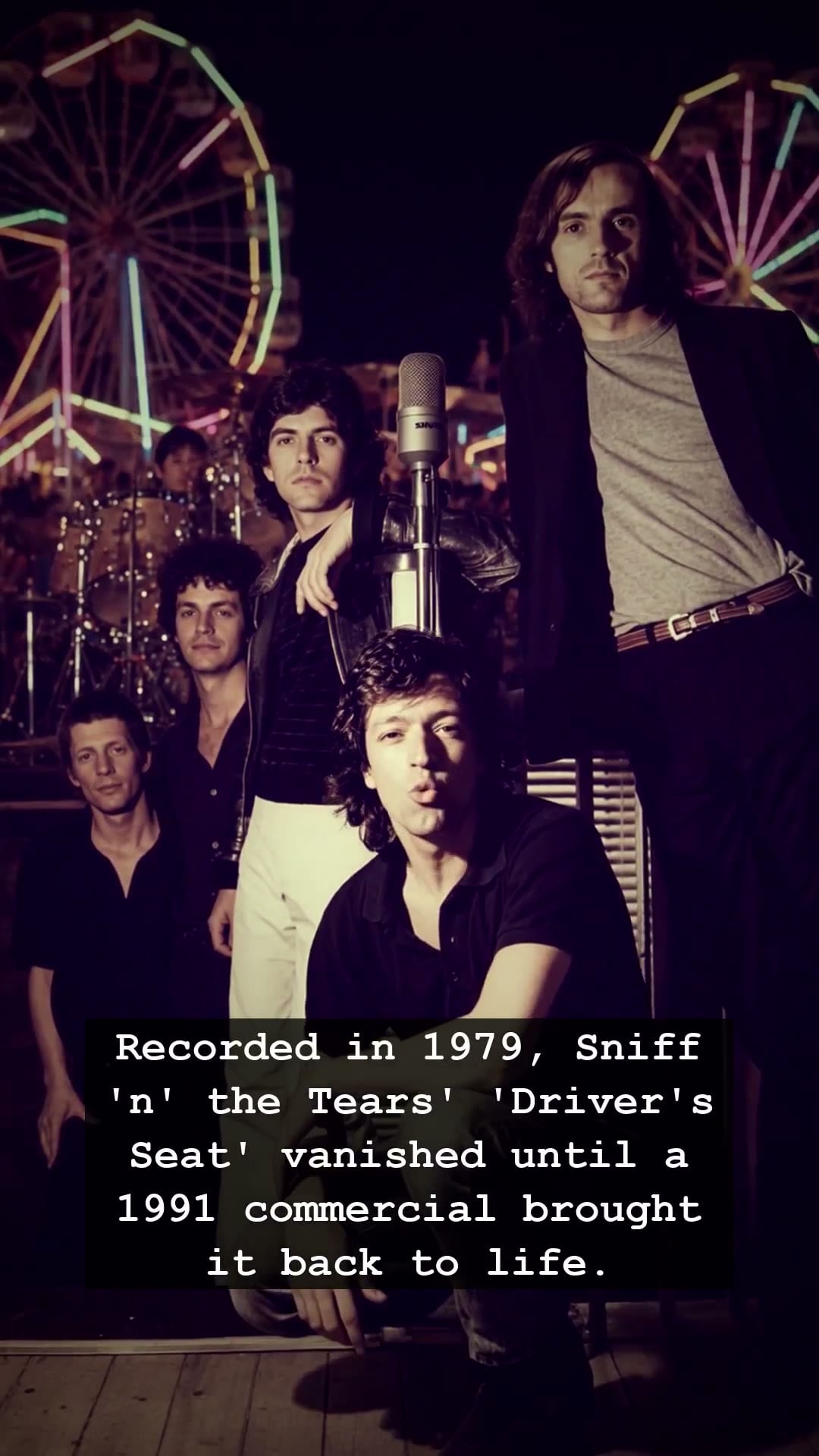
In the neon-soaked landscape of 1979, the airwaves were dominated by the polished pulse of disco and the dying embers of classic rock. Amidst this sonic chaos, a British band named Sniff ‘n’ the Tears released a track that felt like a haunting anomaly. Driver’s Seat was a sleek, driving piece of new wave brilliance, wrapped in a mysterious, melancholic aura that seemed destined for immortality. Yet, the fickle machinery of the music industry had other plans. Despite its undeniable hooks and that iconic, shimmering guitar riff, the song withered into obscurity almost as soon as it hit the shelves. For over a decade, it was a forgotten artifact, buried deep in the crates of vinyl collectors and the dusty corners of record store bins, seemingly lost to the annals of time.
To understand the tragedy of Sniff ‘n’ the Tears, one must look at the era. The late seventies were a turbulent time for artistic identity; bands were caught between the transition from the analog grit of the early seventies to the sterile, synthesizer-heavy production that would define the upcoming decade. Driver’s Seat was too sophisticated for the waning disco scene and perhaps too unconventional for the standard radio rotation of the day. It was a masterpiece without a home, a ghost in the machine of pop culture. The band faded from the spotlight, leaving behind a legacy that felt incomplete, waiting for a catalyst to breathe life back into their sound.
Then, the unimaginable happened. Twelve years later, in 1991, the world of television advertising changed the fate of this lost anthem forever. A stylish car commercial featured the song, and suddenly, the haunting melody that had vanished into the ether was everywhere. It was a bizarre, almost cinematic resurrection that bridged the gap between the era of the jukebox and the rising tide of MTV dominance. Audiences who had never heard Sniff ‘n’ the Tears were instantly captivated by the track’s infectious rhythm and the brooding urgency in the vocals. The song didn’t just chart; it exploded, proving that great music rarely dies—it simply waits for the right moment to reclaim its throne.
This phenomenon serves as a testament to the unpredictable nature of fame and the enduring power of a well-crafted melody. When Driver’s Seat returned, it wasn’t just a nostalgic callback; it felt brand new, stripping away the dust of the eighties to stand tall in the early nineties. For those of us who lived through the transition from analog tapes to the digital dawn, the story of Sniff ‘n’ the Tears remains a poignant reminder of how fragile, yet persistent, our cultural memories really are.
Today, the song stands as a bridge between generations, a reminder that the soundscapes of the past are never truly gone. Whether it was the cold pavement of 1979 or the bright screens of 1991, Sniff ‘n’ the Tears proved that brilliance eventually finds its audience. Next time you catch that opening riff, listen closely—it is the sound of a classic fighting back against oblivion.