
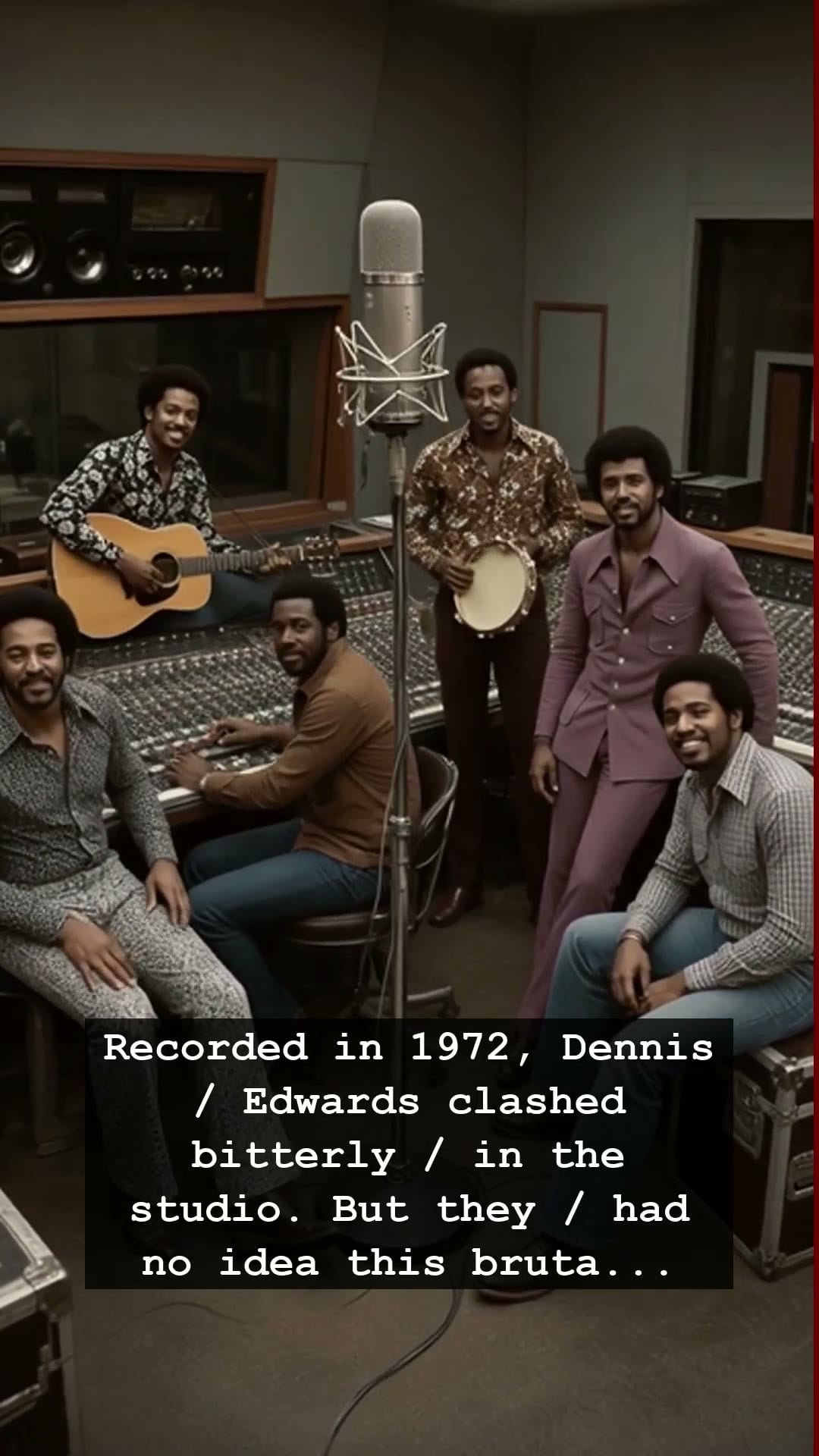
In the golden era of Motown, where the sounds of Detroit flowed like silk through a jukebox, perfection was the only acceptable standard. Yet, beneath the polished suits and perfectly synchronized choreography, tensions often simmered like a pot ready to boil over. The year was 1972, and the atmosphere inside the studio was thick with smoke, exhaustion, and ego. It was here that Dennis Edwards, the powerhouse voice of The Temptations, found himself at the epicenter of a psychological experiment that would inadvertently change music history. Producers were desperate for a new sound, a grittier edge to match the changing landscape of the seventies, and they decided to push their star to the absolute brink of his sanity.
Dennis Edwards was not a man to be trifled with, and his fiery temperament was as legendary as his baritone range. During the recording sessions for what would become their Grammy-winning masterpiece, the producers intentionally cultivated an environment of hostility. They picked apart his takes, criticized his phrasing, and questioned his emotional commitment to the lyrics. They wanted to capture the raw, unvarnished sound of a man reaching his breaking point. The air in the booth was heavy, and the friction between the seasoned vocalist and the production team was palpable. Every time Dennis Edwards stepped up to the microphone, he wasn’t just singing; he was fighting for his artistic soul against a team that seemed determined to dismantle his confidence.
What the producers didn’t realize was that they were mining a vein of pure gold. As the frustration mounted, the performance became increasingly visceral. Every growl, every strained note, and every flicker of genuine rage was captured on tape. It was an explosion of human emotion, fueled by the pressure of maintaining a legacy in an industry that treated artists as disposable commodities. This was the dark reality behind the hits we heard on the radio—a world where the line between a nervous breakdown and a musical breakthrough was razor-thin. Dennis Edwards poured every ounce of his indignation into the recording, creating a sound that was far more authentic than anything they had planned.
When the track was finally mixed and released, the public had no idea that the raw, stinging emotion they were hearing was the sound of a man pushed to his limit. It became an instant sensation, proving that sometimes the greatest art is born from the most volatile conflicts. The track swept the awards, cementing its place in the annals of soul history. Even decades later, when you hear that iconic arrangement, you can still feel the heat of the booth. It remains a testament to the fact that while fame and fortune are what the audience sees, the real story often lies in the shadows of the studio.
Today, the legacy of Dennis Edwards remains a vital thread in the tapestry of American music. His ability to channel personal turmoil into a universal experience is exactly why these tracks continue to resonate with listeners across generations. So, the next time you drop the needle on a vintage Motown record, remember that behind that polished groove, there might be a story of a struggle that nearly broke the artist. Music is more than just melody; it is the captured essence of a moment in time, preserved forever for those of us who still love the sound of the past.