
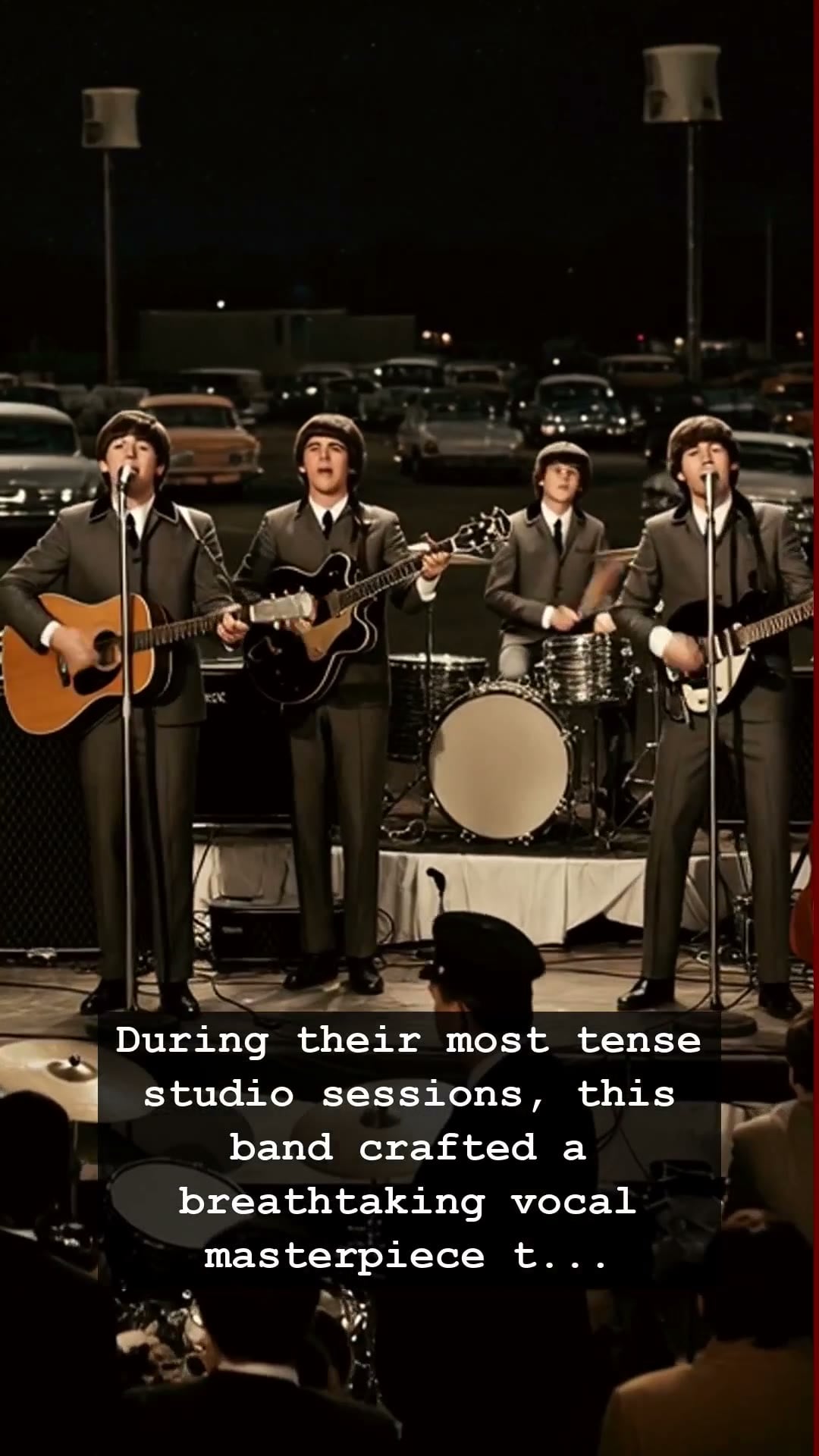
The year was 1969, and the air inside EMI Studios was thick with enough resentment to choke a legend. The Beatles were fraying at the edges. Tensions that had been simmering since the death of Brian Epstein had finally boiled over, turning the recording of the Abbey Road album into a high-stakes psychological battlefield. Arguments over creative direction and the looming specter of the band’s inevitable breakup had silenced the laughter that once defined their sessions. Yet, amidst the clashing egos and the exhaustion of a decade at the peak of global superstardom, a single moment of crystalline beauty emerged to silence the noise, if only for a few minutes.
That moment was the recording of Because. Inspired by Ludwig van Beethoven’s Moonlight Sonata played in reverse, John Lennon brought the idea to the band, and for a brief window, the hostility evaporated. Paul McCartney, George Harrison, and John huddled around a single microphone, their voices interlocking in a triple-tracked harmony that felt more like a religious experience than a studio take. George Martin, the master architect of their sound, watched from the booth in stunned silence. In that room, the internal politics didn’t matter. The weight of being The Beatles, the pressures of the late sixties, and the fatigue of being the most famous men on Earth vanished as their voices fused into a haunting, ethereal choir.
It is one of the great ironies of music history that this masterpiece of unity was born during the band’s most fractured period. While the world outside was transitioning from the psychedelic explosion of the mid-sixties to the grittier, more cynical dawn of the seventies, The Beatles remained the anchor of the cultural zeitgeist. Listening to the raw, unadorned harmonies of that track today, you can hear the ghosts of a friendship that was slipping away. It remains a testament to the fact that even when the machinery of the band was grinding to a halt, the sheer musical chemistry between these four men was something untouchable by human ego or circumstance.
This was the era of the burgeoning Jukebox culture and the sophisticated studio experimentation that defined the transition toward the seventies. Because did not rely on the frantic energy of the earlier British Invasion hits or the experimental studio wizardry that dominated Sgt. Pepper. Instead, it relied on something far more fragile and rare: pure, unfiltered human connection. It serves as a reminder of why The Beatles continue to haunt our collective memory. Their legacy is not just in the hits, but in these quiet, desperate moments of brilliance that defined the soundtrack of a changing world.
When we look back at the late sixties, we often focus on the spectacle of Woodstock or the dramatic shifts in fashion and politics. But the true heart of that era was recorded in the dimly lit corners of London studios, where legends like The Beatles were forced to face their own mortality. Every time the needle drops on a record player today, that song acts as a portal, pulling us back to a time when four men could still find a common language through harmony. It is a hauntingly beautiful reminder that even in the twilight of an empire, there is room for perfection. Do you still feel the chill when those voices come together?