
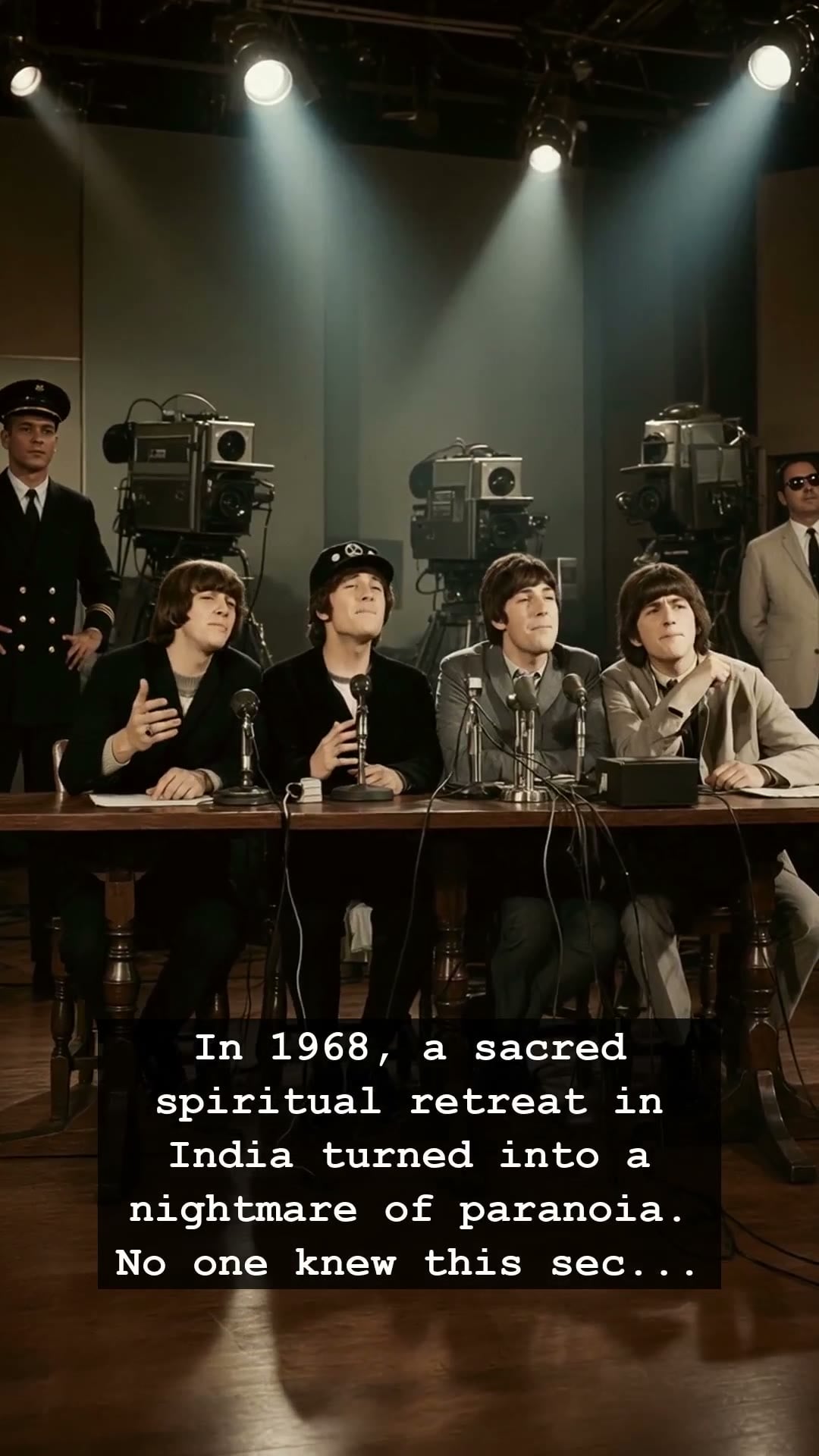
In the spring of 1968, the world viewed The Beatles as the untouchable titans of peace and love. Following the success of the psychedelic masterpiece Sgt. Pepper, the Fab Four retreated to the foothills of the Himalayas in Rishikesh, India, seeking spiritual enlightenment under the Maharishi Mahesh Yogi. To the public, it was a serene journey of meditation and transcendental consciousness. In reality, the ashram became a pressure cooker of isolation, mounting paranoia, and bitter personal accusations that would sow the seeds of their eventual collapse. The golden era of the world’s biggest band was quietly fracturing under the weight of their own mythology.
What began as a quest for inner peace quickly dissolved into a psychological nightmare. Stripped of the trappings of global superstardom, the members of The Beatles were forced to confront the cracks in their relationships without the distraction of studio sessions or touring. John Lennon, particularly, became deeply disillusioned, fueled by a cocktail of restless energy and brewing suspicion. Rumors of the Maharishi’s inappropriate behavior toward female attendees sparked a dark shift in the atmosphere. The spiritual retreat morphed into a space where egos clashed, and the silence of the Indian wilderness only amplified the tension between John, Paul, George, and Ringo. The brotherhood that had conquered the charts since the early sixties was beginning to drift apart.
This trip was the turning point that would lead to the stark, raw sound of the White Album. The seclusion allowed them to write prolifically, yet the songs produced were no longer the unified, polished pop of their earlier years. Instead, they were fragmented, jagged, and deeply personal. George Harrison, who had been the most dedicated to the spiritual teachings, found himself increasingly alienated by the cynical turn his bandmates took. The magic that had defined their creative unity was replaced by individual agendas, setting the stage for the infighting that would dominate their final years together. It was the end of the collective dream, hidden behind a thin veneer of incense and meditative chants.
The legacy of this period remains one of the most haunting chapters in rock history. Even decades later, when we hear the acoustic strumming of tracks born in that ashram, we are listening to the sound of an empire crumbling from the inside out. It serves as a reminder that even the biggest icons are not immune to the corrosive effects of fame and human fallibility. The Beatles were not just four musicians; they were a cultural movement that had reached a breaking point, trapped between their public image of perfection and the messy reality of their own lives.
Looking back at 1968, the ashram in India stands as a monument to the fragility of greatness. It was a time when the world was changing, moving away from the innocence of the early sixties toward the harder edges of the late decade. As we continue to spin their vinyl records and hum their timeless melodies, we are reminded that their music is as much about the silence between the notes as it is about the songs themselves. Do you still remember how those anthems felt before the world knew how broken the dream had become?