
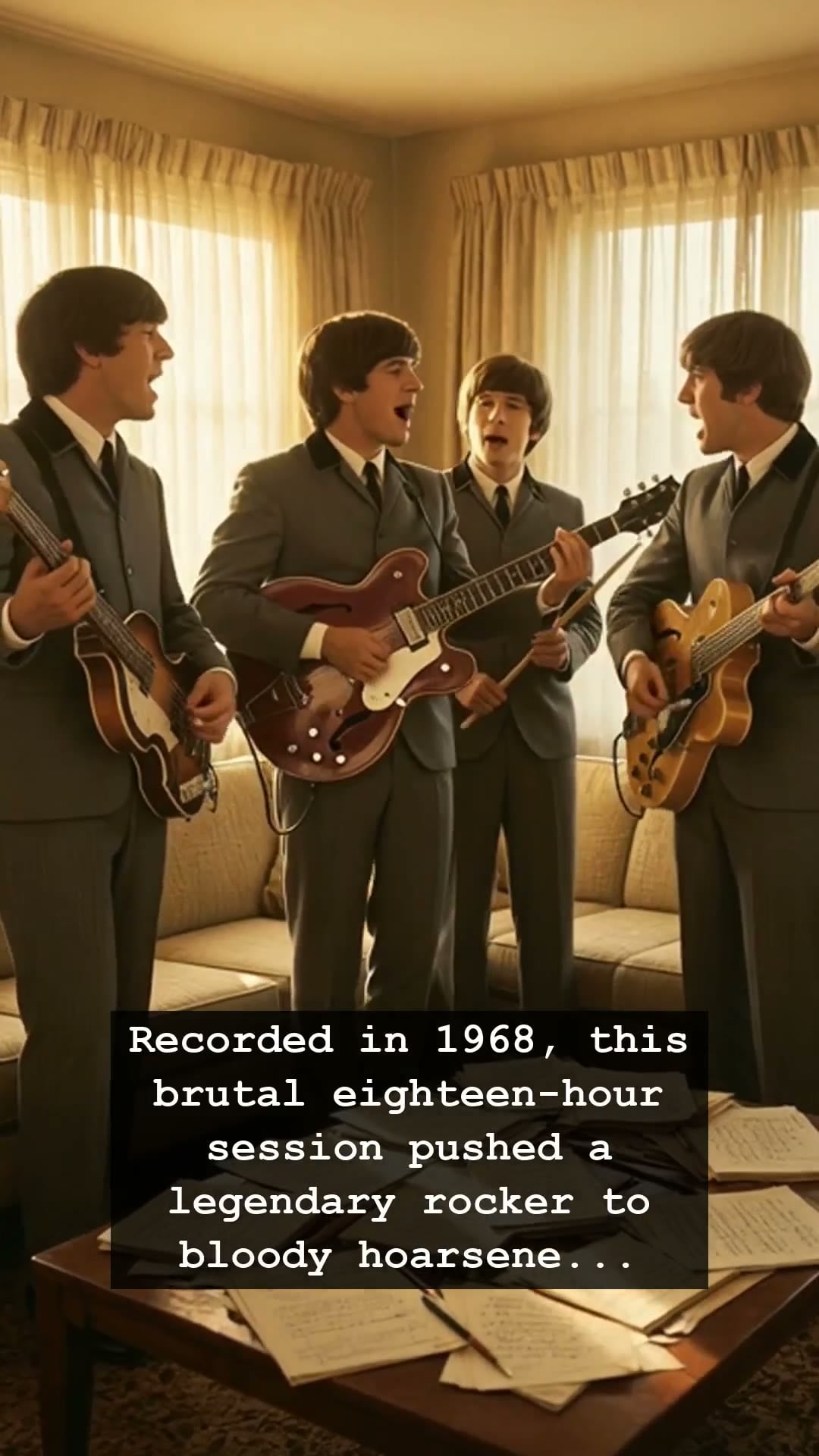
It was 1968, a year of global upheaval that echoed far beyond the walls of Abbey Road Studios. While the world outside was splintering under the weight of political protests and shifting cultural tides, The Beatles were retreating into the claustrophobic intensity of their White Album sessions. Among the many tracks recorded during this friction-filled era, one song stood out not for its melody, but for its visceral, bone-rattling aggression: Helter Skelter. This was the moment Paul McCartney decided that the polite, melodic pop that had made them the darlings of the sixties was no longer enough. He wanted to out-noise the competition, crafting a sound that felt like it was tearing itself apart from the inside out.
Locked away for an grueling eighteen-hour marathon session, McCartney pushed his voice to the absolute edge of human capability. There is a raw, terrifying reality to the recording that listeners often overlook today; he wasn’t just singing, he was screaming until his vocal cords physically bled. The atmosphere in the studio was thick with a strange mixture of creative exhaustion and competitive adrenaline. McCartney was chasing a sound he had heard described in a review of The Who—a sound of pure chaos and sonic distortion. He pushed the band into a frenzy, demanding a level of volume and feedback that had rarely been captured on tape before that historic summer night.
In that smoke-filled studio, surrounded by the vintage tube amps and the clinking of glasses, something tectonic shifted. By pushing his voice to the point of hoarseness and insisting on a distorted, thundering wall of sound, Paul McCartney accidentally birthed the blueprint for heavy metal. This wasn’t the polished production of their earlier years. This was the birth of the dark, aggressive ethos that would later define bands like Black Sabbath and Judas Priest. It was a violent departure from the whimsical ballads that had once defined their career, marking a definitive end to the innocence of the early decade.
The irony is profound. The Beatles, the architects of pop perfection, had unintentionally sparked a genre built on grit and grime. Whenever we listen to those distorted guitar riffs today, we are hearing the aftershocks of that single, punishing session. It serves as a reminder that even the most polished icons of music history were capable of tapping into something genuinely dangerous. The song remains a testament to the fact that sometimes, the greatest musical breakthroughs are born from desperation, exhaustion, and a reckless desire to break the status quo.
Decades later, the legacy of that eighteen-hour session still resonates within the DNA of modern rock. It captures the transition from the psychedelic sixties to the harder, heavier sounds that would dominate the arena rock era. The Beatles taught us that music is not just about harmony; it is about the raw, unfiltered release of tension. If you listen closely to the final screams on the record, you can still hear the history of heavy metal being written in blood and feedback. It remains an essential, haunting piece of musical mythology that proves even legends sometimes have to break themselves to make history.