
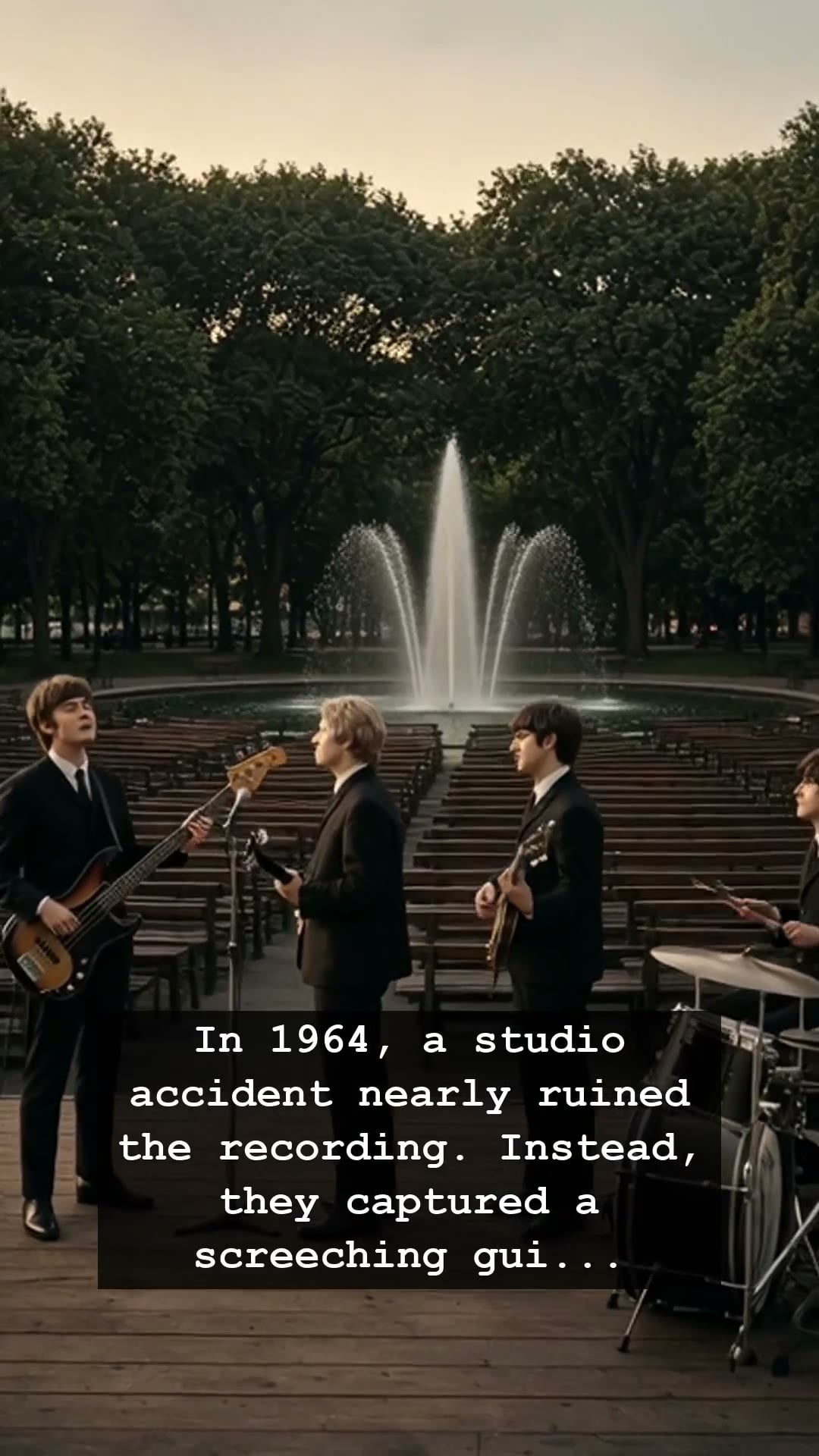
The year was 1964. The world was gripped by the height of Beatlemania, and the Fab Four were tucked away in the sanctuary of Abbey Road Studios, attempting to capture their next smash hit. Outside, the sounds of a changing decade were brewing—the promise of the mid-sixties was in the air, and the band was pushing the boundaries of what a pop song could actually be. While the public saw four lads with matching suits and infectious smiles, inside the recording booth, the atmosphere was thick with tension, cigarettes, and the relentless pressure to stay on top of the charts.
It was during a session for I Feel Fine that a moment of sheer chaos occurred. John Lennon was leaning his semi-acoustic Gibson guitar against an amplifier when a stray, high-pitched screech suddenly erupted, filling the studio with an aggressive, feedback-drenched wail. To the traditionalist engineers of the era, this was a disaster—a technical failure that should have been erased from the master tape immediately. Back then, recording was a sterile, pristine process, and noise like that was considered a mistake that could end a career before it truly took off.
But The Beatles were never ones to follow the rulebook. John Lennon, hearing the raw, electric energy of that screech, realized it was the exact spark they needed to kick off the track. Rather than silencing the sound, they leaned into it. They kept that haunting, feedback-heavy note, capturing a piece of sonic history that would echo through the decades to come. It was the birth of a revolutionary sound—a moment where the band decided that the imperfection was actually the masterpiece. It wasn’t just music anymore; it was an attitude.
This incident marked a turning point for rock and roll. The Beatles had essentially invited the chaotic, distorted voice of the amplifier into the mainstream. It was a stark contrast to the clean melodies of the early sixties, foreshadowing the gritty, psychedelic experimentation that would define the late sixties and beyond. When you listen to the track today, you can hear the defiance in that opening note—a subtle middle finger to the studio norms that had governed the music industry since the days of the Jukebox.
Reflecting on this, it is easy to see why The Beatles remained at the pinnacle of cultural influence for so long. They were fearless in their pursuit of new textures, turning ‘accidents’ into artifacts. Even decades later, that brief feedback hiss feels like a lightning bolt frozen in time. It brings us back to an era when music was forged by human hands and spontaneous inspiration, long before the digital precision of modern production took over.
Do you remember the first time you heard that opening ring? It remains one of the most iconic pieces of audio in the history of rock music. For those of us who grew up with the crackle of vinyl and the warmth of an old radio, that sound represents the moment the door was kicked wide open for everything that followed. It reminds us that sometimes, the most beautiful parts of our history come from the moments when everything goes perfectly wrong.