
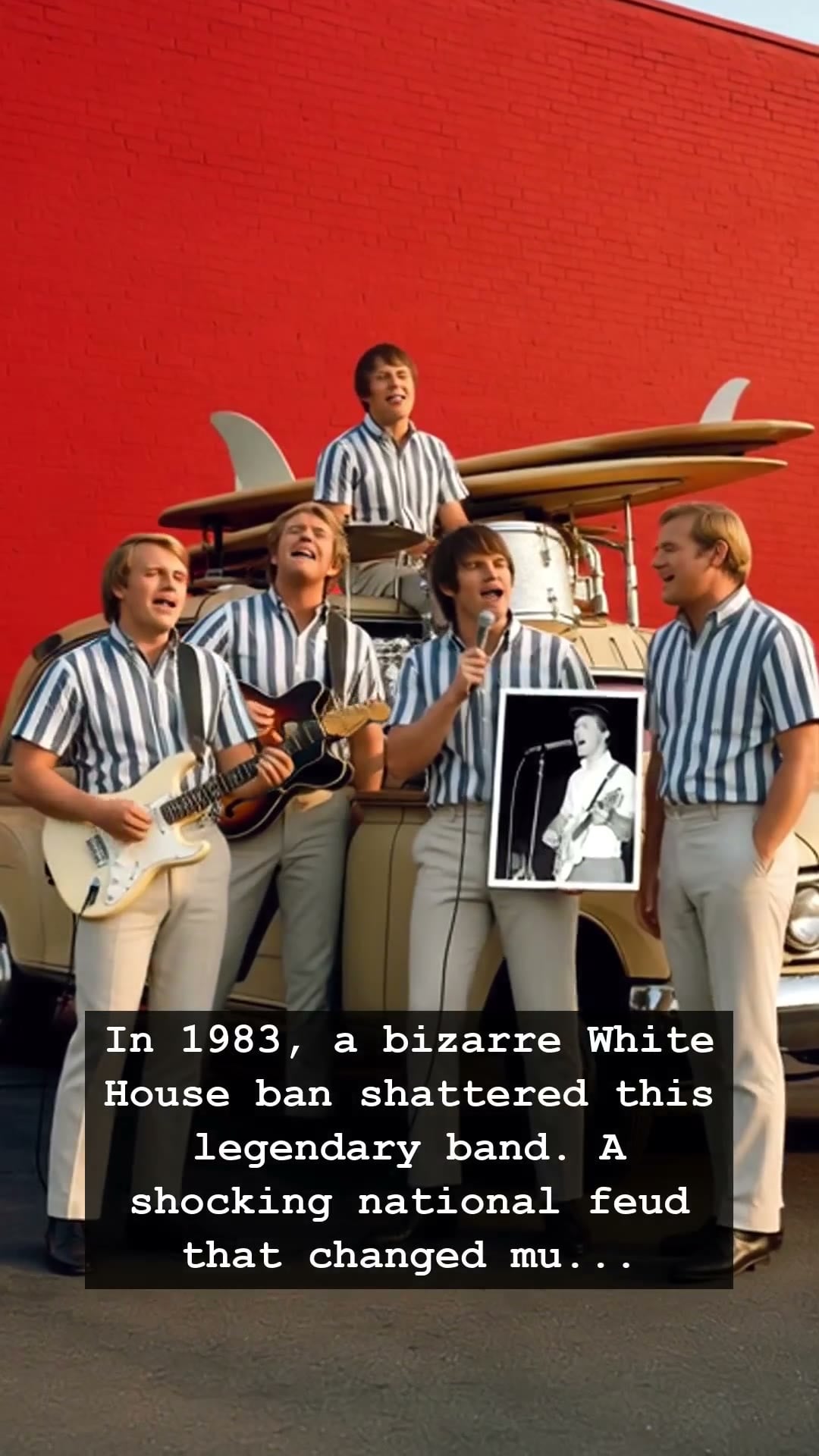
It was the summer of 1983, a time when the world was obsessed with the shiny allure of the emerging MTV era and the portable freedom of the Walkman. The Beach Boys, icons of the American Dream and the sun-soaked innocence of the 1960s, found themselves at the center of a political storm that would forever shatter their wholesome image. What began as a prestigious invitation to play the Independence Day celebrations at the National Mall turned into a bizarre, high-stakes ban that pit the legendary band against the highest office in the land. The Reagan administration, in a move that shocked the nation, suddenly declared that The Beach Boys were no longer suitable to perform for the country’s birthday, favoring a more sanitized version of patriotism.
The drama unfolded like a scene from a gritty documentary. Secretary of the Interior James Watt famously claimed the band attracted the wrong element—referring to the supposedly rowdy fans who gravitated toward their concerts. It was a stinging insult to a group that had defined the soundtrack of coastal America for two decades. For The Beach Boys, a band already grappling with the internal pressures of fame and the fragile mental state of genius Brian Wilson, the public humiliation was the final straw in a tumultuous period. The band members were left in a state of professional exile, caught in a national tug-of-war that highlighted the deepening divide between 1960s counter-culture sensibilities and the conservative shift of the Reagan years.
Looking back, the incident serves as a surreal time capsule. It reminds us of a decade where rock and roll was still treated as a genuine threat to the establishment, rather than the safe, commercialized commodity it would eventually become. The Beach Boys had survived the transition from surf rock pioneers to experimental psychedelic artists, but they were unprepared for the sting of political rejection. This feud sparked a massive cultural outcry, with supporters across the country defending the group’s legacy. It was a moment that proved even the most beloved American icons were not immune to the capricious nature of political drama and changing times.
Behind the scenes, the tension rippled through the group’s creative core. Brian Wilson, Mike Love, and the rest of the band had spent years navigating the treacherous waters of the music industry, from the competitive studio sessions that birthed their masterpieces to the grueling reality of constant touring. Being caught in the crosshairs of a White House scandal forced them to confront their status in a rapidly changing world. The music of The Beach Boys, once synonymous with good vibrations and endless summer days, suddenly felt heavy with the weight of political controversy, proving that behind every golden melody lies a story of human friction.
Even today, the 1983 ban remains a curious, dark footnote in music history. It reminds us that fame is a double-edged sword, and that even a band as legendary as The Beach Boys could have their harmony disrupted by forces far beyond their control. Whether you remember the headline or are just discovering the tragedy, it is a stark reminder of how fragile our cultural idols truly are. We still listen to their records today, finding comfort in those perfect vocal harmonies, while acknowledging that the legends who created them were just as susceptible to the chaotic drama of American life as any of us.