
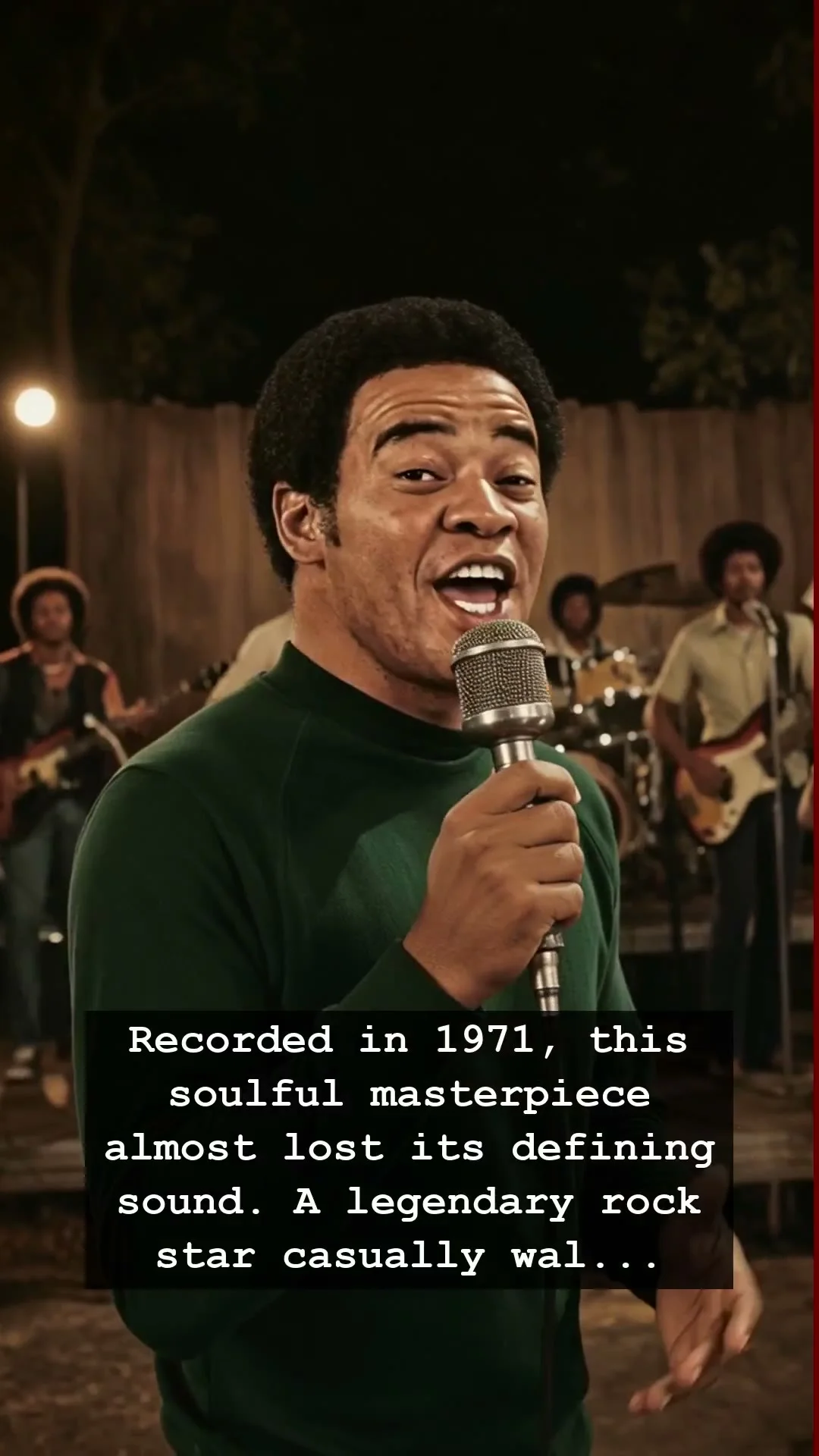
The year was 1971. The air in the recording studio was thick with the scent of tobacco and the creative electricity of an era defined by raw, unfiltered sound. Bill Withers, a man who had only recently traded his job installing toilets in aircraft bathrooms for the glitz and grit of the music industry, was putting the finishing touches on what would become a timeless soul classic. He possessed a voice that sounded like velvet dragged over gravel, but there was one missing element—a texture that could anchor the song in the listener’s soul forever.
At that exact moment, the legendary Stephen Stills, already a titan of the rock world known for his work with Buffalo Springfield and Crosby, Stills & Nash, happened to be wandering through the halls of the studio. It was not a scheduled meeting, nor was it a polished corporate collaboration. It was pure, spontaneous serendipity. As Stephen Stills listened to the track, he felt the resonance of the composition. Without much fanfare, he picked up a guitar, leaned into the microphone, and laid down a haunting, rhythmic foundation that would define the track’s signature aesthetic for decades to come.
This accidental collaboration serves as a time capsule of the 1971 musical landscape, a golden age when studios were sanctuaries for musical experimentation. Before the age of digital precision and polished synthesizers, music relied on these human moments of connection. Bill Withers had the heart, but Stephen Stills brought that distinct, earthy rock edge that transformed a simple soul ballad into a cultural artifact. It remains one of the most beautiful examples of how a chance encounter between two distinct musical worlds could reshape the trajectory of pop history.
Looking back, it is impossible to imagine the song without that signature guitar work. It echoed through the era of the Walkman, where teenagers would huddle over headphones to hear the nuances of the melody, and it continued to spin on jukeboxes across the country long after the psychedelic rock scene had shifted. The interplay between the soulfulness of Bill Withers and the grit of Stephen Stills encapsulates the very essence of the seventies—a decade where barriers between genres were being broken down by mere curiosity and a shared love for the craft.
Today, we look back at this story not just as a piece of trivia, but as a reminder of the fragility and beauty of art. Sometimes, the most iconic moments in music history are not the result of months of meticulous planning, but the outcome of a fleeting second where two legends share the same space. Bill Withers would go on to change the face of soul, and Stephen Stills remained a pillar of the rock establishment, but in that studio, they were simply two musicians creating magic. As we revisit these vinyl grooves, we are reminded that history is often written in the quiet, unexpected corners of a studio. Let this be a tribute to those accidental masterpieces that still move us today.