
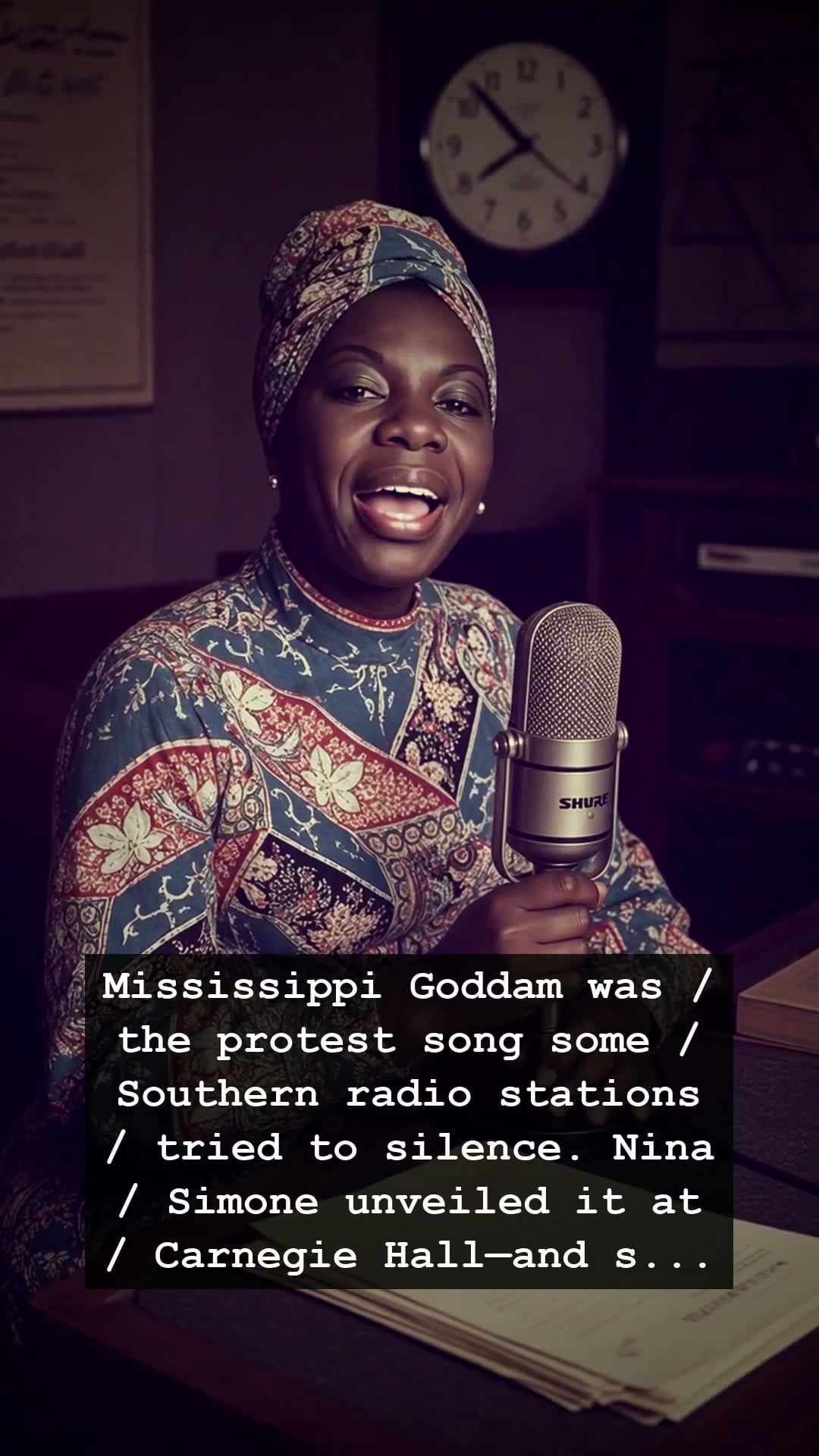
It started not with a whisper, but with a sharp, defiant strike of piano keys that felt more like a gunshot than a melody. When Nina Simone walked onto the stage at Carnegie Hall in 1964, the audience expected the jazz chanteuse they had grown to love. Instead, they were met with a woman who had reached her breaking point. The air in the room grew heavy, static with the anticipation of something dangerous. Nina Simone stood center stage, looked out at the sea of faces, and unveiled a track that would change the trajectory of American music forever: Mississippi Goddam. It was raw, it was angry, and it was entirely uncontainable.
The song was a direct, visceral response to the senseless murder of civil rights activist Medgar Evers and the horrific bombing of the 16th Street Baptist Church in Birmingham, which claimed the lives of four young girls. During an era defined by the rise of television and the growing influence of the radio, Nina Simone was tired of the slow, polite pace of the struggle for equality. She bypassed the standard tropes of protest songs, choosing instead to lean into a rhythmic, almost cabaret-style fury. It was a masterpiece of defiance that stripped away the veneer of mid-century civility, forcing the listener to confront the burning reality of the South.
In the aftermath of that historic performance, the backlash was swift and brutal. Across the American South, radio stations did not just ignore the song; they actively attempted to silence it. Some stations reportedly sent promo records back to the record label, physically snapped in half—a symbolic act of censorship against a voice they could not control. To these gatekeepers, Nina Simone was not just an artist; she was a threat to the status quo. Her music was dangerous because it was honest, and in 1964, honesty was a luxury that many powerful institutions were not prepared to afford.
Yet, even as the records were broken and the airwaves were restricted, the spirit of the song could not be contained. It echoed through the streets, finding a home in the hearts of those who walked the front lines of the civil rights movement. Nina Simone transformed her personal grief into a collective roar, proving that a single voice, backed by a piano and an unshakable moral compass, could stand up to the machinery of systemic hatred. She became the unexpected firebrand of the decade, moving far beyond the glitz of the era’s lounges.
Decades later, the weight of that moment at Carnegie Hall remains etched in the historical record. Listening to the track today, one can still hear the tremors of a nation in flux and the resolve of a woman who refused to be silenced. Nina Simone set a standard for what it means to be an artist with a conscience, reminding us that music is at its most powerful when it speaks truth to power. While those broken records are long buried, the legacy of Mississippi Goddam continues to resonate, challenging every generation to listen, reflect, and finally take a stand for what is right.