
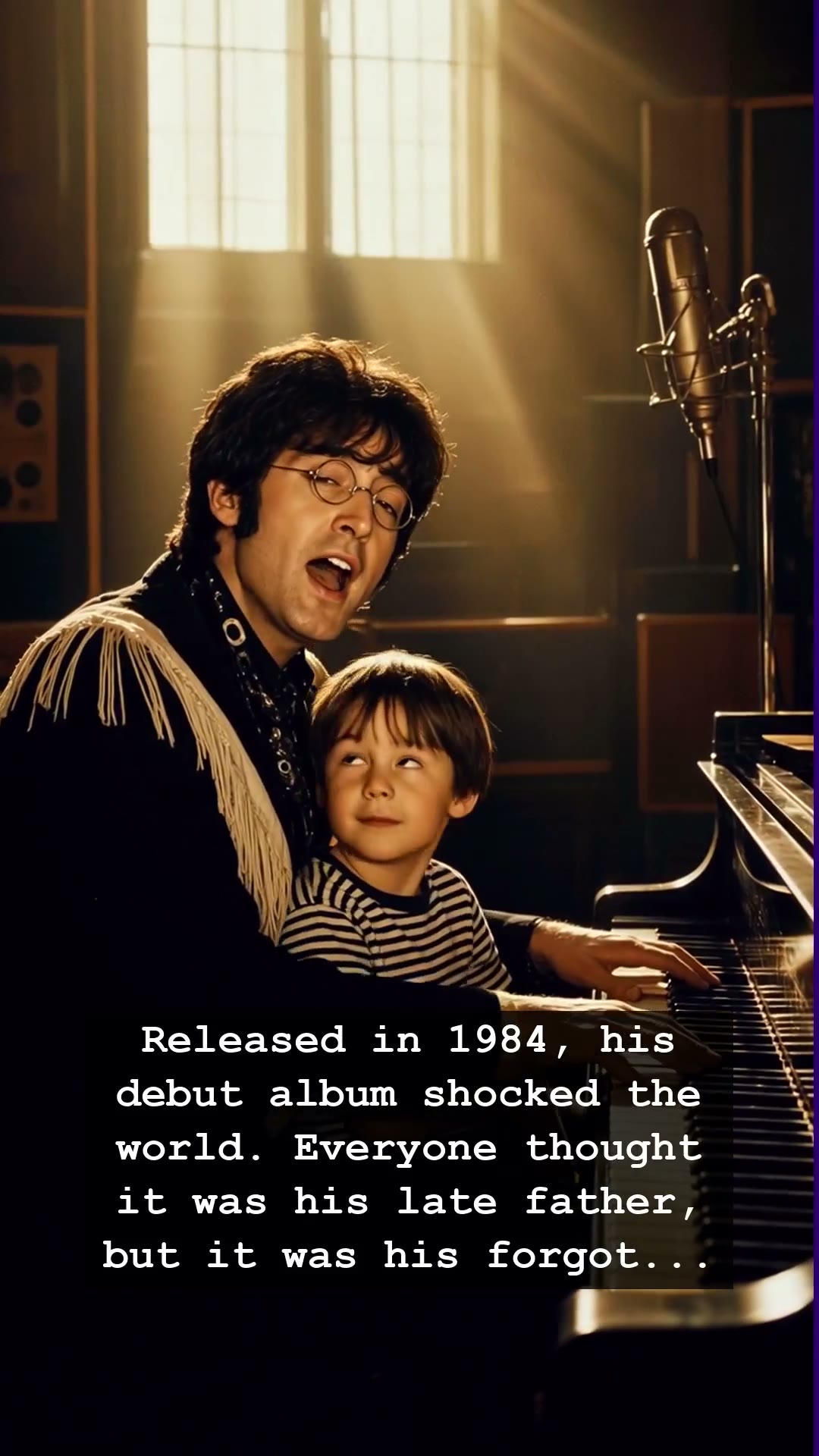
The year was 1984, an era defined by the neon glow of MTV, the rise of the Walkman, and the synth-pop revolution that had fundamentally altered the sound of the airwaves. Amidst this high-tech sonic landscape, a debut album titled Valotte emerged, sending an inexplicable chill down the spines of music fans across the globe. When the needle dropped on the record, listeners were met with a voice so hauntingly familiar, so eerily reminiscent of a lost icon, that many believed they were hearing a ghost. It was not John Lennon, the fallen Beatle, but his eldest son, Julian Lennon, stepping out from the colossal shadow of his father to claim his own musical identity.
The emotional weight of this debut was compounded by the complicated, fractured reality of Julian Lennon’s upbringing. While the world saw the legendary John Lennon as a global peace icon and the architect of modern rock, Julian lived the life of an estranged son, longing for a connection that remained perpetually out of reach. By the time 1984 rolled around, four years after the tragic shooting in New York, the public was starved for the sound that had defined their youth. Julian Lennon delivered that sonic DNA, but he did it with a vulnerability that felt entirely his own, creating a bridge between the classic soulful songwriting of the sixties and the polished, atmospheric production of the mid-eighties.
There is a profound, almost tragic irony in the success of Valotte. It was a masterpiece born from distance and the heavy burden of a legendary surname. During the recording sessions, the pressure to replicate the magic of the Liverpool sound was palpable, yet Julian Lennon resisted the temptation to become a mere imitation. Instead, he channeled the heartbreak of his childhood and the complex grief of losing a father he barely knew into timeless melodies. The title track, with its shimmering piano and soulful delivery, became a hallmark of the era, proving that Julian possessed the same innate, magnetic talent that had catapulted his father to the stratosphere of fame.
Looking back, the arrival of Julian Lennon on the scene was a cultural moment of high drama. The music industry was moving toward a more synthesized future, yet here was a young man reminding everyone of the raw, human soul inherent in songwriting. His story serves as a poignant reminder of the darker side of fame—the collateral damage suffered by those closest to the icons we adore. The conflict between the public image of the Beatles and the private, often painful reality of the Lennon family history creates a narrative that remains as compelling today as it was during the peak of the MTV era.
Even decades later, the ghost-like resemblance in Julian Lennon’s early work continues to resonate with those who miss the sincerity of that bygone era. It stands as a testament to the fact that music is not just sound; it is a hereditary, living history. As we look back through the lens of nostalgia, we are reminded that Julian Lennon didn’t just inherit a name; he inherited a legacy of profound feeling, carving out his own path in the vast, echoing halls of rock history.