
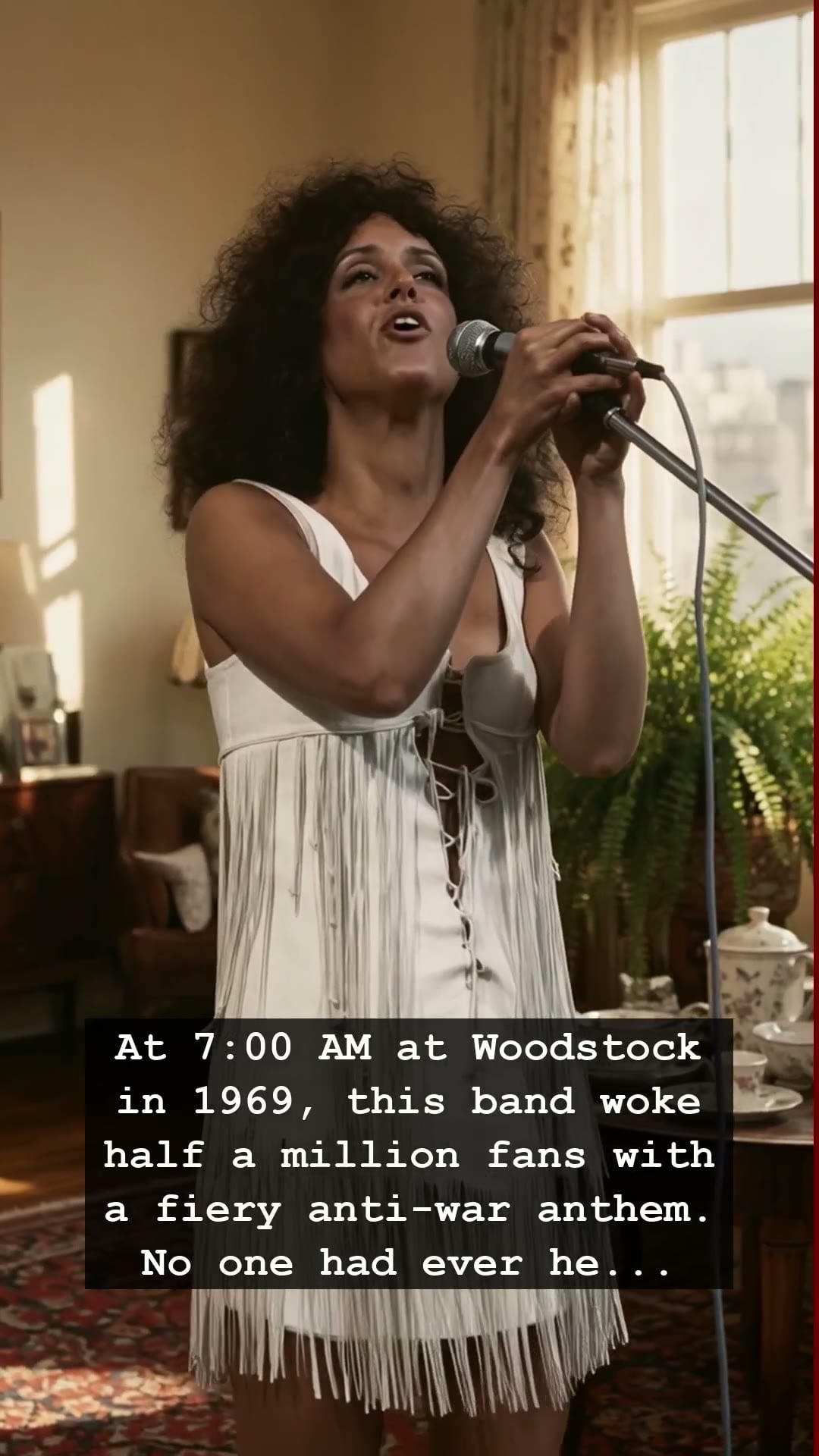
The golden sun was barely cresting over the horizon at Bethel, New York, on that hazy Sunday morning in August 1969. Half a million souls lay scattered across the muddy fields of Yasgur’s farm, exhausted by three days of peace, music, and an onslaught of unscripted chaos. Just as the world seemed to hold its breath in the quiet dampness of dawn, a jagged sound tore through the silence. It was 7:00 AM, and Jefferson Airplane was about to unleash a form of morning maniac music that would forever define the counterculture movement of the sixties.
Most bands perform under the glow of spotlights, but Jefferson Airplane took the stage in the harsh, unflattering glare of the early morning light. The audience was a sea of shivering bodies, coated in grit and skepticism, but the moment Grace Slick grabbed the microphone, the energy shifted violently. She famously addressed the tired masses, announcing, Now is the time for morning maniac music. With their signature psychedelic wall of sound, the band launched into a fiery set that felt less like a concert and more like a sonic uprising against the status quo of the Vietnam War era.
This wasn’t just another performance; it was a confrontation. The anti-war spirit that fueled Jefferson Airplane had reached a boiling point, and the sheer volume of their psychedelic rock acted as a wake-up call for an entire generation. As Marty Balin and Grace Slick traded vocal barbs, the music resonated with a raw, electric fury that felt dangerous. The band was at the height of their influence, existing in that fragile space between mainstream success and underground credibility, a balance that defined the late sixties before the industry became consumed by the corporate polish of the later decades.
Looking back, the set serves as a haunting snapshot of a time when music held the power to disrupt the national consciousness. While the Woodstock festival is often remembered for its peaceful hippie imagery, the reality of the Jefferson Airplane set was far more chaotic and aggressive. It was a moment of peak tension, captured in the hazy, drug-fueled atmosphere that characterized the end of the psychedelic dream. The band represented the darker, more cynical edges of the movement, standing in stark contrast to the softer folk sounds that echoed through other parts of the weekend.
Today, the legend of that dawn performance remains a cornerstone of rock history. It reminds us of a time when music was not merely entertainment, but a visceral rebellion against the machinery of war. Decades later, the echo of their amplifiers at Bethel still carries the weight of a generation that dared to scream at the sunrise. As we look back from the digital age, the grit and the drama of Jefferson Airplane at Woodstock continue to serve as a powerful testament to the transformative, often destructive, and always essential power of rock and roll.