
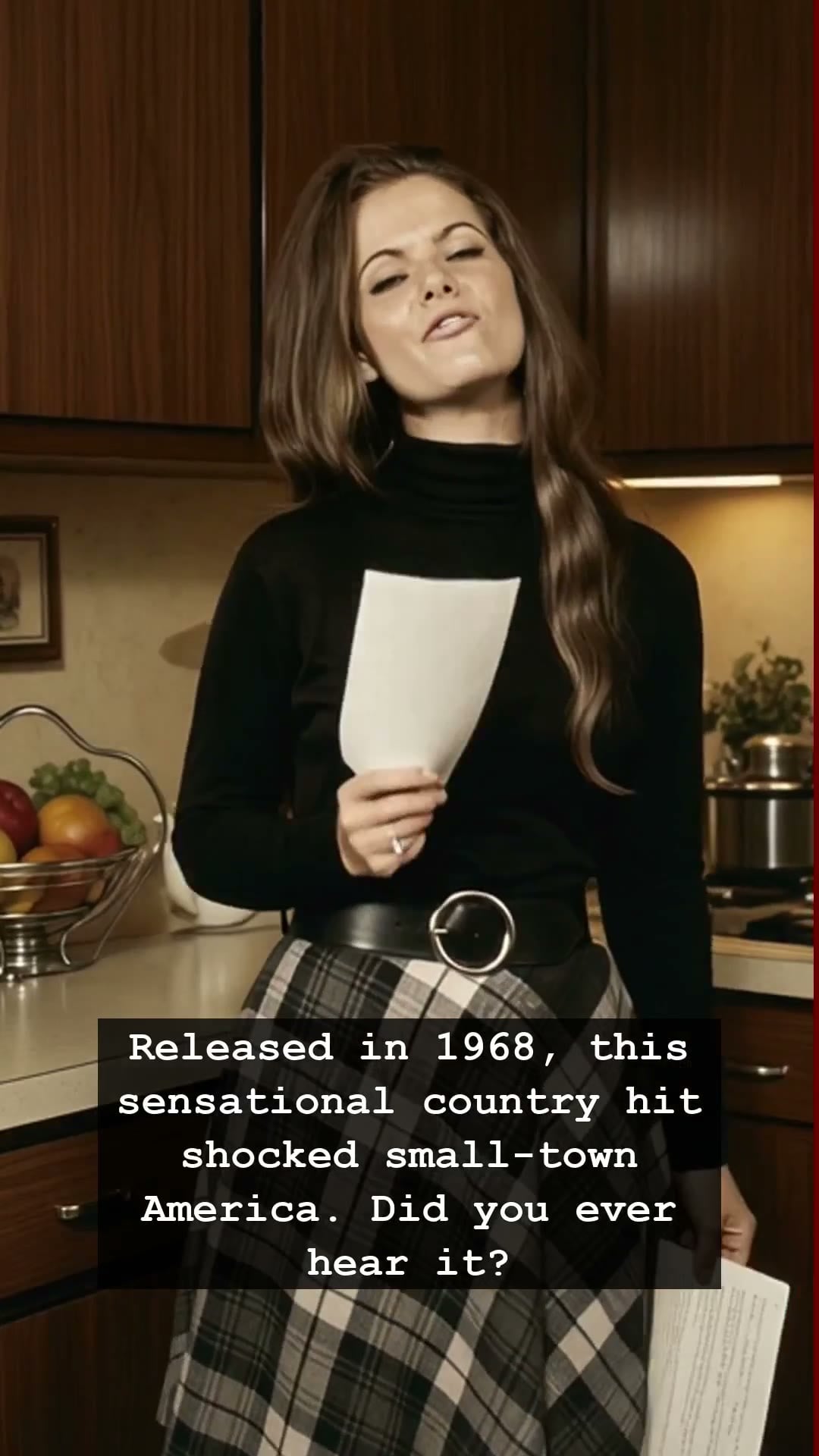
It was 1968, a year defined by turbulence, changing tides, and the relentless hum of the transistor radio. In the heart of conservative America, where small-town decorum was held up like a holy relic, a voice emerged from the South that shattered the status quo. Jeannie C. Riley, a former secretary from Texas, stepped behind the microphone to deliver a song that would become a cultural lightning rod. Harper Valley P.T.A. was not just a catchy country tune; it was a defiant, razor-sharp exposé of the hypocrisy lurking behind white picket fences, and it changed the trajectory of country music storytelling forever.
Written by the legendary Tom T. Hall, the song told the story of Mrs. Johnson, a widowed mother who walked into a school board meeting to call out the moral failings of the very people who dared to judge her. For audiences of that era, raised on the gospel of tradition, hearing a woman stand up to the established elite was nothing short of shocking. Jeannie C. Riley captured the Southern gothic tension perfectly, her voice dripping with a mix of defiance and righteous indignation. It was the anthem for every person who had ever felt the sting of a small-town rumor mill, transforming the jukebox into a weapon of social truth.
As the record climbed the charts, it brought a raw, unvarnished reality into American living rooms. At a time when the nation was grappling with the cultural fallout of the Vietnam War and the shifting youth identity of the sixties, Jeannie C. Riley became an unlikely beacon of rebellion. She wasn’t an arena rocker or a psychedelic icon, yet she possessed a grit that resonated deeply with a public tired of fake perfection. The track hit number one on both the Billboard Country and Pop charts, a rare feat that proved audiences were hungry for stories that didn’t just entertain, but challenged their own backyard secrets.
The pressure of sudden superstardom was a heavy shroud to wear. Following the massive success of the track, Jeannie C. Riley found herself thrust into a whirlwind of television appearances and grueling tours. The industry, ever hungry for another hit, often struggled to reconcile her image as a bold, outspoken rebel with the polished expectations of the Nashville establishment. Beneath the glamorous stage lights of the late sixties, the reality of fame for artists like her was often a lonely, exhausting trek, far removed from the bright, flickering screens of the burgeoning MTV era that would soon follow.
Today, the legacy of Jeannie C. Riley remains a cornerstone of the outlaw country spirit. She proved that a simple three-minute song could dismantle the arrogance of the elite and give a voice to the marginalized. Whenever we listen to those iconic opening chords, we are transported back to a time when music was the most powerful tool for truth-telling. Her story serves as a reminder that the best art often comes from the friction between our public faces and our hidden realities. As the needle drops on that classic vinyl, the spirit of Harper Valley continues to ring true, long after the gossip has faded.